Phang Nga Bay Day Trip: Sea Caves, a Stilt Village and the Island Bond Made Famous
Phang Nga Bay day trip beyond James Bond Island: sea cave canoeing through karst tunnels, the Koh Panyee stilt village, and longtail versus speedboat departures from Ao Por.
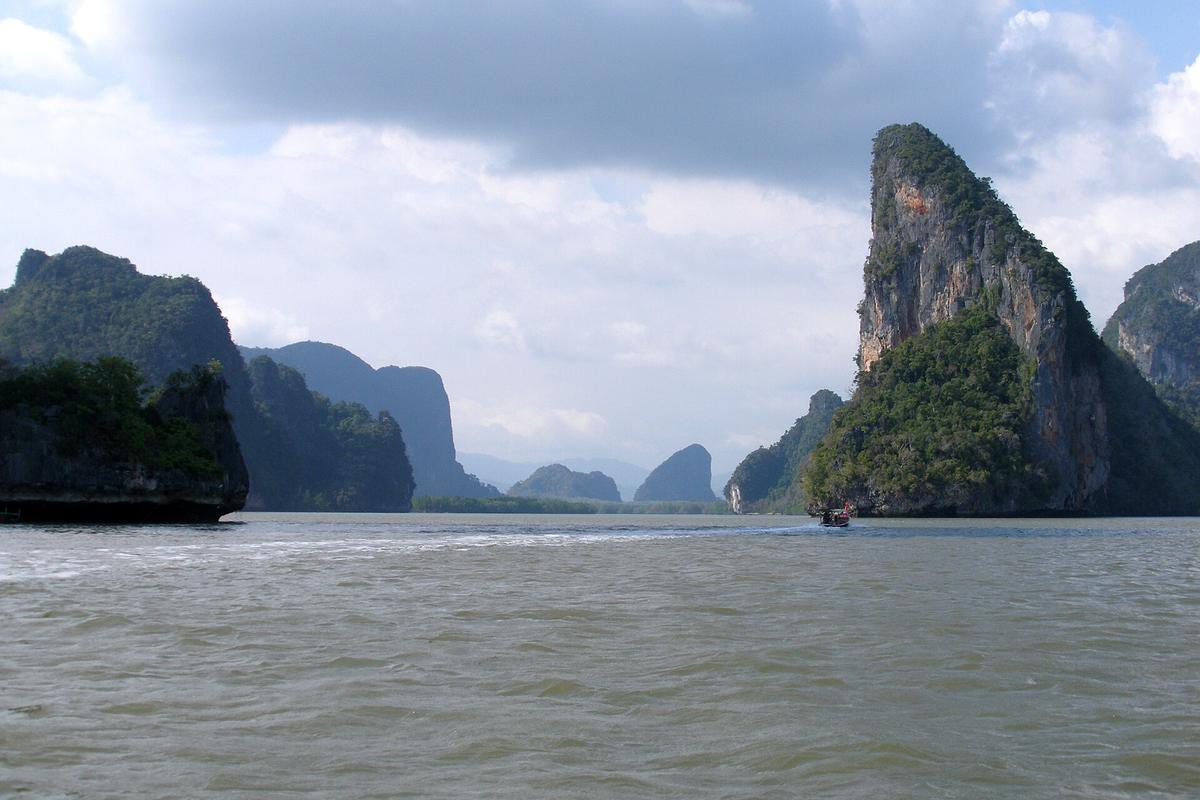

The standard Phang Nga Bay day trip stops at James Bond Island for a photo and calls it done. What you actually get with the right tour is sea cave canoeing via collapsed karst tunnels, a village built entirely on stilts, and mangrove channels that the speedboats cannot enter. From Phuket's northern piers, the boat ride northeast covers about 25 kilometres, threading between more than 40 Permian limestone karst islands that share their geology with Ha Long Bay and Krabi. Budget for the full day, 07:30 to 17:30. Bring cash for the national park fee and canoe tips. Neither is usually included in your tour price.
James Bond Island Tour: What the Photo Stop Actually Includes
Koh Tapu and Khao Phing Kan
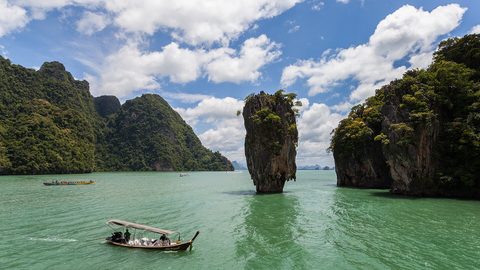
The rock the world calls James Bond Island is Koh Tapu, a 20 metre tall limestone spike that featured in The Man with the Golden Gun. Landing on Koh Tapu itself is prohibited. Your boat pulls up to the adjacent sand spit of Khao Phing Kan, the actual beach you walk on. Expect 30 to 45 minutes here. Enough time for the photograph and a quick walk around the base of the formation.
National Park Fees
Khao Phing Kan sits inside Ao Phang Nga National Park, established in 1981 and covering 400 square kilometres. The park fee for foreign adults is 300 THB, paid in cash at the checkpoint. Thai adults pay 60 THB, foreign children 150 THB, Thai children 30 THB. Your boat crew will warn you about this fee. Some operators bundle it into the price; most do not. Ask before you book.
Avoiding the Crowds
The failure case: group tours that arrive at 11:00 hit peak crowds of several hundred people on a beach barely 100 metres long. For a quieter shot, book a sunrise tour departing 05:00 to 06:00 or a sunset tour departing 11:00 to 13:00. The standard day tour departure of 07:30 to 09:00 lands you in the middle of the crush.
Phang Nga Bay Canoeing: the Hongs You Cannot Reach Any Other Way
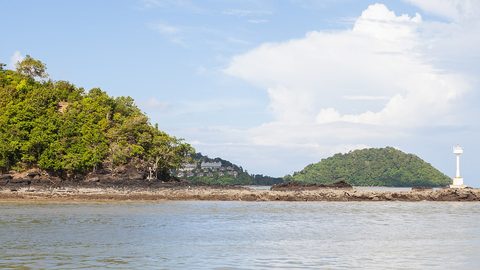
The karst islands of Phang Nga Bay are riddled with sea caves and collapsed cave systems called hongs. Hong translates to 'room' in Thai: a circular lagoon open to the sky, entered only by canoe or kayak via a low cave tunnel. No big boat or speedboat can get you inside. You paddle in at low to mid tide, because the tunnel ceiling drops as the tide rises.
Tidal access is the critical detail you rarely see on a brochure. The tide range in Phang Nga Bay runs two to three metres. At high tide, many cave mouths are fully submerged and the hong becomes unreachable. A good crew times the canoe segment for the low window. A bad one skips it altogether and calls the trip a James Bond Island tour. Confirm before you pay that canoeing via a sea cave into a hong is on the itinerary, not just a paddle around the boat.
Canoe guides paddle you through the tunnels in two person inflatable kayaks. You sit, they row. The customary tip is 100 to 300 THB per person and is not included in the tour price. Bring cash. Tuck your phone and camera into a dry bag, because the tunnel ceiling drips and the hull takes on water.
Mangrove Channels
Beyond the hongs, some tours push deeper into the mangrove forest that lines the bay's inner channels. The mangroves are calm, shaded, and nearly silent compared to the open bay. You see monitor lizards, mudskippers, and herons. A tour that skips the mangroves spent its time at the crowded beaches instead. If quiet water matters to you, this is the part to ask about before handing over your money.
Koh Panyee Floating Village: Lunch on Stilts Above the Sea
Koh Panyee is a Muslim fishing village built entirely on stilt houses over the water. Some 1,600 to 1,700 people live here, descended from three families of Indonesian fishermen who settled the island in the late 18th century. The village became a standard lunch stop on Phang Nga Bay tours because it is photogenic, built out over the emerald water with a mosque at its centre.
What you actually get at Koh Panyee depends entirely on when you arrive. Group tours that land at noon face a crowded elevated walkway lined with identical seafood restaurants and souvenir stalls. The food is adequate, the prices inflated. The real value of the stop is the 15 minutes you can use to walk to the back of the village, away from the restaurant strip, where the wooden boardwalks are quieter and you see actual residential life.
Floating Football Pitch
The Koh Panyee floating football pitch was built by the local youth team in 1986, assembled from salvaged wood and fishing rafts when the village had no flat land for a field. It became famous after a 2010 documentary and a Nike advertisement. Walk onto it during your lunch stop. It is a simple rectangular platform that bounces slightly as you step. Worth the detour from the restaurant queue, but you share the platform with the same crowd you are trying to escape.
Phang Nga Bay Longtail Boat vs Speedboat vs Big Boat
The boat type determines your entire day. Here are the options on the same axes.
| Feature | Longtail Boat | Speedboat | Big Boat |
|---|---|---|---|
| Passenger capacity | 2 to 8 people | 15 to 35 people | 30 to 80 people |
| Base price per adult (2024 rate) | 3,000 to 6,000 THB per boat per day (private) | 2,500 to 4,500 THB per adult | 1,800 to 2,800 THB per adult |
| Speed | Slow, 45 to 60 minutes to the bay | Fast, 25 to 35 minutes | Slow, 60 to 90 minutes |
| Comfort in swell | Moderate, open wooden hull gets wet | Rough, hard-chine hull slams in chop | Stable, enclosed cabin with toilets |
| Canoe access included? | Depends on arrangement | Often included | Often included |
| Seasickness risk | Low | Highest, especially green season | Lowest |
| Best for | Couples or small groups who want privacy | Budget travellers wanting speed and price | Families or anyone prone to seasickness |
Departure Pier: Ao Por Marina vs Bang Rong Pier
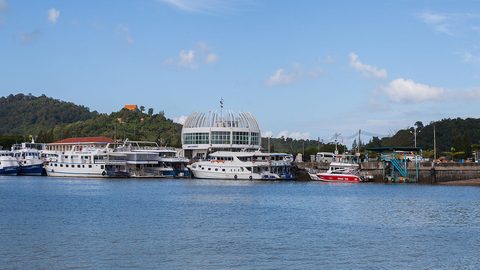
Most Phang Nga Bay tours depart from Ao Por Marina, a large modern facility about a 30 minute drive northeast of Phuket Town. Ao Por has parking, cafes, and a ticket hall. Book through a hotel desk or a walk in agent on Kata or Patong beach and a minibus will likely collect you and deliver you to Ao Por.
Bang Rong Pier is the secondary departure point, further north on the east coast. It is smaller and less polished. The advantage: the public ferry to Koh Yao Noi and Koh Yao Yai also departs from here, so you can combine a Phang Nga Bay trip with an overnight on those islands. The disadvantage: fewer tour companies and a rougher waiting area.
Tide Timing: the Single Most Common Failure Point
The tide determines whether you see a hong or a hole in the rock you cannot enter. High tide in Phang Nga Bay closes the cave mouths. Low to mid tide opens them. A tour that launches at 09:00 from Phuket reaches the bay around 10:00, which may or may not align with the low tide window for that specific day. The tide shifts by about 50 minutes each day.
Book through a company that checks the tide table for your specific date. The cheaper street agents in Patong sell the same seats for every departure regardless. If the tide is high at 10:00, you paddle around the outside of the islands and skip the caves entirely. The outfit still calls it a Phang Nga Bay canoeing tour. The difference between the guided canoe trip and the photo stop tour is access via a cave at the correct tidal height. Ask the booking agent: 'Does the canoe go inside the cave or only around the outside?' The correct answer is 'Inside the cave.' Anything else is a ticket to boat photography.
Green Season: May to October
Phang Nga Bay shelters from the northeast monsoon. Even in green season, the bay is calmer than the open Andaman Sea. You still get afternoon storms, moderate swell, and rain squalls that reduce visibility. Speedboats are rougher than big boats in these conditions. Seasickness risk peaks on a speedboat in green season.
The advantage of green season is low crowds. The disadvantage: afternoon storms can force crews to cut the canoe segment short. Booking a tour from May through October? Pay the extra for a big boat or longtail charter, not a speedboat. You lose less time to weather and you stay drier. Bring a change of clothes regardless. The canoe hull collects water and the rain comes without warning.
What to Bring: the Specific Items You Will Wish You Had
- Dry bag for phone, camera, and cash. Your tour boat provides life jackets but not waterproof storage.
- Cash for the national park fee (300 THB foreign adult) and canoe guide tip (100 to 300 THB per person). No card accepted at either point.
- Sunscreen and a hat. The karst cliffs radiate heat and there is almost no shade on Khao Phing Kan beach.
- A towel and change of clothes for the ride back. The canoe seat stays wet, the boat hull may have standing water, and afternoon storms soak you at sea.
- Water. Some crews provide one small bottle. You need more.
Online Booking vs Street Agent: the Price Gap
Booking online through a reputable comparison site is 10 to 30 percent cheaper for the same trip compared to buying from a walk in agent on Patong beach road. The street agent adds 200 to 800 THB commission per person. You also get to read recent reviews and check whether the outfit actually stops for canoe access or rushes through.
If you do book on the street, pay after the tour, not before. Many agents take a deposit and disappear. If they refuse a post tour payment arrangement, walk to a different desk. There is a desk selling the same tour every 50 metres along the strip.
Who Phang Nga Bay Suits and Who Should Skip it
Phang Nga Bay suits anyone comfortable with a structured itinerary, moderate crowds, and a lunch stop that is a tourist attraction in itself. Active travellers who can sit in a canoe without complaining about wet legs get the best version of the bay. Families with children old enough to wear a life jacket and follow instructions in a small canoe find it manageable. First time Thailand visitors who want the James Bond Island photo stop plus the extra layer of caves and a stilt village get the right value.
Skip Phang Nga Bay if you want solitude. The bay is a designated national park with more than 40 islands and it still feels crowded because almost every tour stops at the same checkpoints. Skip it if you are prone to seasickness on rough water in green season. Skip it if you cannot tolerate a loud engine under an open roof for 40 minutes. The typical tour returns you to Phuket between 17:00 and 18:30, after a day of direct sun, sea spray, and waiting in a queue for the one toilet on the boat. That is the reality the brochure leaves out.
Read next
-
 Phuket Hotels by Property Type and Price Band Without the Hype
Phuket hotels range from gated luxury resorts in Bang Tao to walkable guesthouses in Phuket Town. Price band and location matter equally.
Phuket Hotels by Property Type and Price Band Without the Hype
Phuket hotels range from gated luxury resorts in Bang Tao to walkable guesthouses in Phuket Town. Price band and location matter equally.
-
 Where to Stay in Phuket Which Beach Area Matches Your Trip
Where to stay in Phuket depends entirely on which beach area matches your trip. Patong, Kata, Bang Tao and Rawai are not interchangeable.
Where to Stay in Phuket Which Beach Area Matches Your Trip
Where to stay in Phuket depends entirely on which beach area matches your trip. Patong, Kata, Bang Tao and Rawai are not interchangeable.
-
 Phuket Flights Direct Routes Airlines and HKT Airport Arrival Guide
Phuket flights and HKT airport guide covering direct routes, airlines, arrival procedures, visa queues, and the real cost of getting from the airport to Patong.
Phuket Flights Direct Routes Airlines and HKT Airport Arrival Guide
Phuket flights and HKT airport guide covering direct routes, airlines, arrival procedures, visa queues, and the real cost of getting from the airport to Patong.
-
 Phuket Things to Do Worth Your Days and What to Skip
Phuket things to do range from the Big Buddha and Wat Chalong to speedboat day trips. Some earn your days; many do not.
Phuket Things to Do Worth Your Days and What to Skip
Phuket things to do range from the Big Buddha and Wat Chalong to speedboat day trips. Some earn your days; many do not.
-
 Best Time to Visit Phuket Month by Month Weather and Crowds
Best time to visit Phuket is November to February for dry weather and calm seas, but prices jump 50 to 100 percent. Monsoon months bring beach closures.
Best Time to Visit Phuket Month by Month Weather and Crowds
Best time to visit Phuket is November to February for dry weather and calm seas, but prices jump 50 to 100 percent. Monsoon months bring beach closures.
-
 Getting Around Phuket Without Losing Your Mind or Your Cash
Getting around Phuket means navigating tuk-tuk monopolies, blocked ride-hail zones, and fixed fares. Plan your transport before you book a hotel.
Getting Around Phuket Without Losing Your Mind or Your Cash
Getting around Phuket means navigating tuk-tuk monopolies, blocked ride-hail zones, and fixed fares. Plan your transport before you book a hotel.
-
 Phuket Old Town
 is a compact Sino-Portuguese quarter of shophouse cafes, dim sum trolleys and street art that most beach visitors never make the 45-minute drive to see.
Phuket Old Town
Phuket Old Town is a compact Sino-Portuguese quarter of shophouse cafes, dim sum trolleys and street art that most beach visitors never make the 45-minute drive to see.
-
 Big Buddha
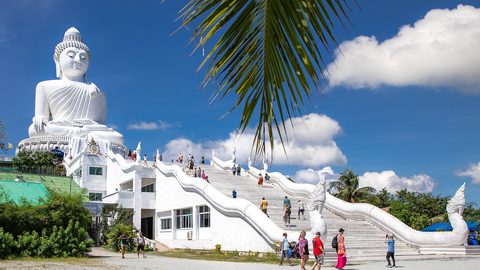
 Phuket is a free, unfinished marble statue on Nakkerd Hill with the best panoramic island view, reached by a steep road that tuk-tuks charge a premium to climb.
Big Buddha
Big Buddha Phuket is a free, unfinished marble statue on Nakkerd Hill with the best panoramic island view, reached by a steep road that tuk-tuks charge a premium to climb.
-
 Thailand Travel Guide From First Timers To Island Hoppers
A realistic Thailand travel guide covering regions, seasons, and pacing so you avoid the classic Bangkok Chiang Mai island mistake.
Thailand Travel Guide From First Timers To Island Hoppers
A realistic Thailand travel guide covering regions, seasons, and pacing so you avoid the classic Bangkok Chiang Mai island mistake.