Phuket Food: The Distinct Local Cuisine Almost No Visitor Actually Eats
Phuket food has a distinct Hokkien-influenced southern Thai cuisine. Mee Hokkien, oh aew and moo hong are rarely found on tourist menus.
Phuket Food: the Distinct Local Cuisine Almost No Visitor Actually Eats
At 7:15 AM on Thalang Road, a waiter in a white singlet slides a bamboo steamer onto your table. Under the lid: har gow, siu mai, a glutinous rice parcel wrapped in a banana leaf. The trolley he pushed through the dining room came from a kitchen that has been doing this since 1965. This is dim sum in Old Phuket Town, and it is your first clue that Phuket food is not pad Thai, not green curry, and not the menu on Bangla Road. It is a Peranakan and Hokkien kitchen that arrived with tin-mining immigrants generations ago. Almost nobody eating at a Patong beachfront restaurant has tasted it.
What Makes Phuket Food Distinct from the Rest of Thailand
The difference starts with the pantry. Phuket's local cuisine descends from Straits Chinese and Hokkien cooks who adapted their stir-fries and braises to southern Thai ingredients. The result is a set of dishes found nowhere else in Thailand, and a separate set of southern Thai curries that are the spiciest in the country.
If you order a curry from a generic beachfront menu, you will get a mild, sweet, coconut-heavy version aimed at European palates. The real thing is gaeng tai pla, a fermented fish viscera curry that clears your sinuses and tests your tolerance. Or khua kling, a dry-fried minced meat curry with no coconut milk and a wall of dried chilli heat. Or gaeng som, a sour orange curry with fish that tastes of tamarind and turmeric.
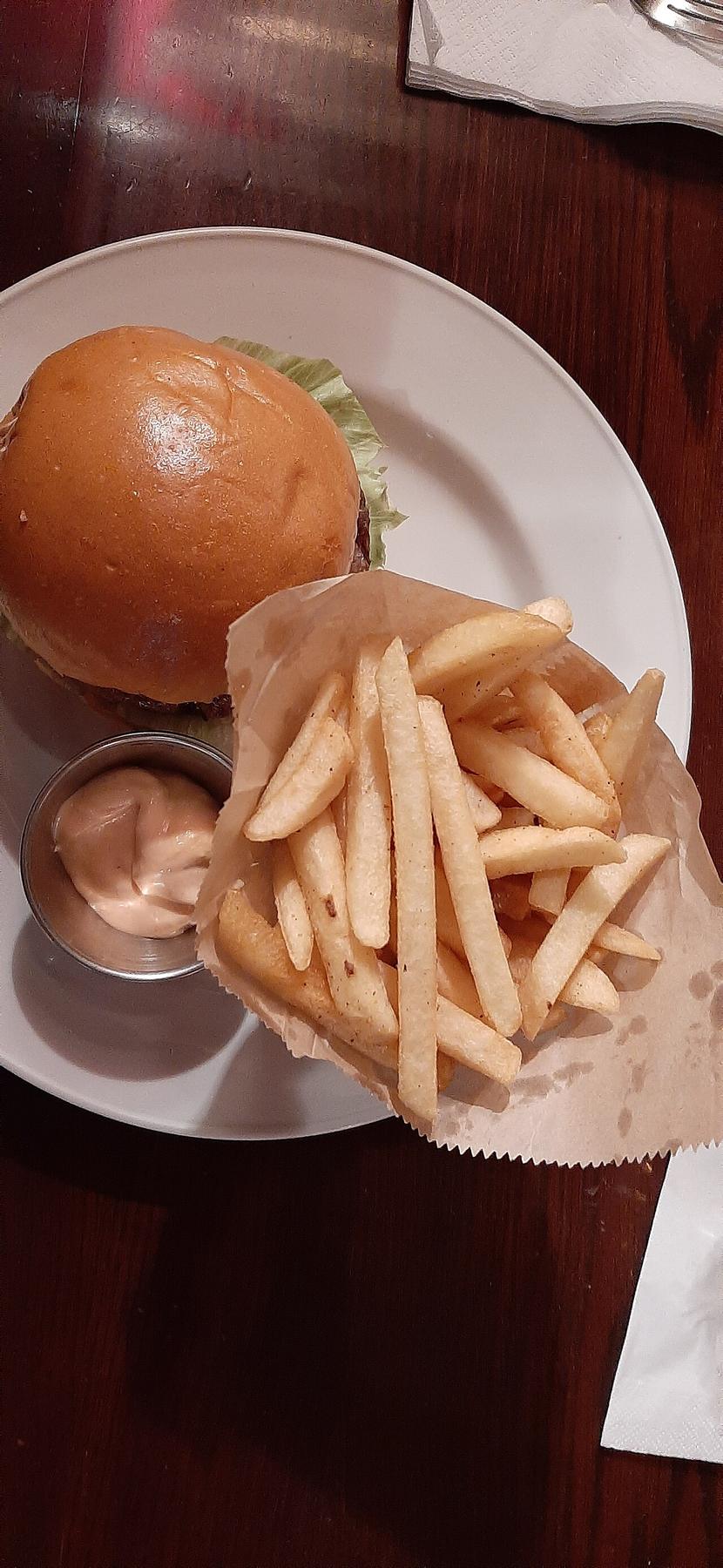

Phuket Local Dishes You Need to Name at the Counter
Hokkien Peranakan Dishes to Order
Five dishes define the Hokkien Peranakan side of Phuket Town. Mee Hokkien is stir-fried yellow wheat noodles in a pork broth with squid, prawns, and pork slices. It is the Phuket-specific version of a noodle dish you will not find in Bangkok. Moo Hong is braised pork belly seasoned with white pepper and garlic, sweeter and more peppery than the national version you might have tried. O Tao is an oyster omelette that uses taro starch instead of egg, giving it a denser, chewier texture. Loba is five-spice braised offal and fried tofu sliced and served with a sweet dark sauce. Pu Phat Pong Karee is yellow curry crab with egg, a rich stir-fry that coats whole crab pieces in a creamy, mildly spiced sauce.
| Dish | What It Is | Where To Find It In Phuket Town |
|---|---|---|
| Mee Hokkien | Stir fried yellow wheat noodles with pork and seafood in pork broth | Mee Ton Poe, Soi Phutorn, on the eastern edge of Old Phuket Town |
| Moo Hong | Braised pork belly with white pepper and garlic | Tu Kab Khao, 8 Phangnga Road, a restaurant inside a restored Sino Portuguese mansion |
| O Tao | Oyster omelette with taro starch, chewy and dense | Lock Tien, on the corner of Soi Rommanee and Thalang Road, open evenings only |
| Loba | Five spice braised offal and fried tofu with sweet sauce | Lock Tien, same stall as the O Tao, served as a combination plate |
| Pu Phat Pong Karee | Yellow curry crab with egg, whole crab pieces | Raya Restaurant, 48 Dibuk Road, a heritage house with a century old recipe |
| Kanom Jeen Nam Ya | Fermented rice noodles with rich fish curry sauce | Kanom Jeen Pa Noi, a breakfast stall on Phuket Road near the morning market |
| Oh Aew | Shaved ice dessert with red beans, grass jelly, and banana | Lock Tien, same stall, the dessert is served after the savoury dishes |
Phuket Town Restaurants Where Locals Actually Eat
The Old Town Restaurants Worth the Ride
The restaurants listed in the table above are not secret. They are just not on the beach. Every one of them sits inside the grid of Old Phuket Town, a neighbourhood of Sino Portuguese shophouses on Thalang Road, Phangnga Road, and Dibuk Road.
Tu Kab Khao is the most formal option, a converted mansion with blue painted shutters and a courtyard. The moo hong here is the best on the island, and the crab curry with betel leaves arrives with a side of raw vegetables to balance the heat. Raya Restaurant is an older mansion with wooden floors, ceiling fans, and a kitchen that has been cooking the same family recipes since the 1950s. Order the pu phat pong karee and the gaeng som. Blue Elephant, the Phuket outpost of the Bangkok cooking school, runs a fine dining version of Peranakan cuisine in the former governor's mansion on Krabi Road. It is expensive by local standards, around 800 to 1500 THB per dish, but the tasting menu is a structured introduction to the cuisine if you have only one meal.
Phuket Street Food That is Actually from Phuket
Morning Dim Sum on the Trolley Circuit
Phuket street food is concentrated in two zones: the morning dim sum circuit and the evening stalls around Lock Tien. The dim sum ritual happens between 7:00 AM and 10:00 AM. The trolleys circulate through restaurants on Phuket Road, Dibuk Road, and Soi Phutorn. You point at what you want, the waiter stamps a card, and you pay by the number of steamer baskets at the end. A few baskets with a pot of Chinese tea costs pocket change.
Evening Stalls at Lock Tien
At the other end of the day, from 17:00 to 22:00, the Lock Tien corner on Thalang Road and Soi Rommanee becomes a cluster of metal tables and plastic stools. This is where you eat O Tao, Loba, and Oh Aew in sequence. The Oh Aew dessert is the palate cleanser after the savoury dishes: shaved ice, red beans, grass jelly, banana, and a drizzle of palm sugar syrup. It is unique to Phuket. You will not find it outside the island.
Phuket Night Markets: Where the Weekend Crowd Eats
Phuket Town Markets
The Phuket Weekend Market, also called Talad Tai Rot, operates on Saturday and Sunday from 16:00 to 22:00 on the southern end of Phuket Town near the bus terminal. It is a sprawling market with hundreds of food stalls, and it is where Phuket families come to eat on their days off. The food here covers the full range of southern Thai street food: grilled seafood, kanom jeen with nam ya, roti with curry from the Muslim vendors near the northern end, and fresh fruit shakes. The Sunday Walking Street Market on Thalang Road runs the same hours but focuses on prepared food and desserts. Choose this one. The street is closed to traffic and the stalls sit between the old shophouses, so you graze from one end to the other.
Patong's Convenience Option
The Patong equivalent is Malin Plaza on Rat U Thit 200 Pi Road, open daily from 17:00 to 23:00. The food here is more generic, aimed at the tourist crowd staying in Patong, but it is convenient if you are based on that side of the island and cannot get to Phuket Town.
Rawai Seafood Market: Buy the Catch, Pay a Cook
At the southern tip of the island, Rawai Beach has a row of fishermen's stalls selling the morning catch. The transaction works in two stages. Walk the line of stalls, choose your fish, crab, or prawns, and pay by weight. Then carry the bag to one of the restaurants behind the stalls and pay a cooking fee of roughly 100 to 150 THB per kilogram. The restaurant grills the fish, stir fries the crab with curry paste, or steams the prawns with garlic. The cooking fee covers the labour, the seasonings, and the side dishes of rice and vegetables.
This is the most direct way to eat fresh seafood on Phuket. The cost for a whole meal runs 400 to 600 THB per person including the seafood and the cooking fee. Skip the beachfront restaurants on the Rawai strip itself. Their menus feature the same indifferent international food that defines every beach road on the island.
Who Phuket Food Suits and Who Should Skip it
Phuket food suits a traveller willing to leave the beach for one evening. Take a 150 THB Grab ride into Old Phuket Town, order by pointing at what the next table has, and eat while sitting on a plastic stool. It does not suit the resort guest who wants dinner within a five minute walk of the hotel lobby, or the family that needs an English menu with pictures and a kids section. The failure case is the traveller who eats every meal on Bangla Road and leaves Phuket believing the island has no local cuisine. They are wrong. They never find out.
Common Questions
Is Phuket food just Thai food, or is it different?
Phuket food is a separate cuisine. The Hokkien and Peranakan influences create dishes like mee hokkien, moo hong, and o tao that do not exist in Bangkok or northern Thailand. The southern Thai curries are also the spiciest in the country. A generic restaurant on Bangla Road serves adaptations; the real dishes are in Phuket Town.
Where do I find the best Phuket street food?
The Lock Tien corner on Thalang Road and Soi Rommanee in Old Phuket Town, open evenings. For morning food, the dim sum trolleys on Phuket Road and Dibuk Road between 7:00 AM and 10:00 AM. The Phuket Weekend Market on Saturday and Sunday from 16:00 to 22:00 is the largest street food gathering.
What is the one Phuket dish I must try?
Mee Hokkien. It is the dish that most directly represents the Hokkien Chinese migration that shaped Phuket's food. The best version is at Mee Ton Poe in Phuket Town. Order it with extra pork broth on the side.
Can I eat Phuket local dishes on Patong Beach?
Almost never. The beachfront restaurants on Patong, Kata, and Karon serve menus designed for international tourists: pad Thai, green curry, massaman curry, burgers, pizza. The local dishes are concentrated in Phuket Town, about 30 to 45 minutes by tuk tuk or Grab from Patong.
How does the Rawai seafood market work?
Buy raw seafood by weight from the fishermen's stalls on Rawai Beach. Then pay a separate restaurant 100 to 150 THB per kilogram to cook it. The restaurant adds rice and vegetables. Expect to spend 400 to 600 THB per person total.
Read next
-
 Phuket Hotels by Property Type and Price Band Without the Hype
Phuket hotels range from gated luxury resorts in Bang Tao to walkable guesthouses in Phuket Town. Price band and location matter equally.
Phuket Hotels by Property Type and Price Band Without the Hype
Phuket hotels range from gated luxury resorts in Bang Tao to walkable guesthouses in Phuket Town. Price band and location matter equally.
-
 Where to Stay in Phuket Which Beach Area Matches Your Trip
Where to stay in Phuket depends entirely on which beach area matches your trip. Patong, Kata, Bang Tao and Rawai are not interchangeable.
Where to Stay in Phuket Which Beach Area Matches Your Trip
Where to stay in Phuket depends entirely on which beach area matches your trip. Patong, Kata, Bang Tao and Rawai are not interchangeable.
-
 Phuket Flights Direct Routes Airlines and HKT Airport Arrival Guide
Phuket flights and HKT airport guide covering direct routes, airlines, arrival procedures, visa queues, and the real cost of getting from the airport to Patong.
Phuket Flights Direct Routes Airlines and HKT Airport Arrival Guide
Phuket flights and HKT airport guide covering direct routes, airlines, arrival procedures, visa queues, and the real cost of getting from the airport to Patong.
-
 Phuket Things to Do Worth Your Days and What to Skip
Phuket things to do range from the Big Buddha and Wat Chalong to speedboat day trips. Some earn your days; many do not.
Phuket Things to Do Worth Your Days and What to Skip
Phuket things to do range from the Big Buddha and Wat Chalong to speedboat day trips. Some earn your days; many do not.
-
 Best Time to Visit Phuket Month by Month Weather and Crowds
Best time to visit Phuket is November to February for dry weather and calm seas, but prices jump 50 to 100 percent. Monsoon months bring beach closures.
Best Time to Visit Phuket Month by Month Weather and Crowds
Best time to visit Phuket is November to February for dry weather and calm seas, but prices jump 50 to 100 percent. Monsoon months bring beach closures.
-
 Getting Around Phuket Without Losing Your Mind or Your Cash
Getting around Phuket means navigating tuk-tuk monopolies, blocked ride-hail zones, and fixed fares. Plan your transport before you book a hotel.
Getting Around Phuket Without Losing Your Mind or Your Cash
Getting around Phuket means navigating tuk-tuk monopolies, blocked ride-hail zones, and fixed fares. Plan your transport before you book a hotel.
-
 Phuket Old Town
 is a compact Sino-Portuguese quarter of shophouse cafes, dim sum trolleys and street art that most beach visitors never make the 45-minute drive to see.
Phuket Old Town
Phuket Old Town is a compact Sino-Portuguese quarter of shophouse cafes, dim sum trolleys and street art that most beach visitors never make the 45-minute drive to see.
-
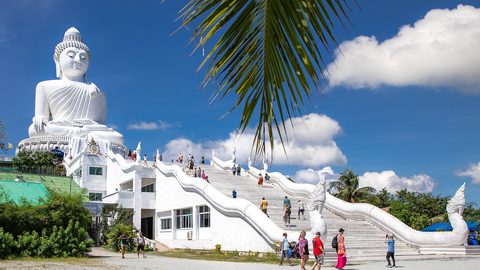 Big Buddha
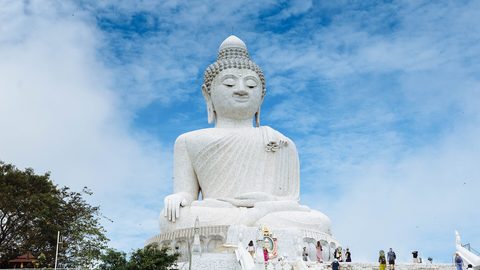
 Phuket is a free, unfinished marble statue on Nakkerd Hill with the best panoramic island view, reached by a steep road that tuk-tuks charge a premium to climb.
Big Buddha
Big Buddha Phuket is a free, unfinished marble statue on Nakkerd Hill with the best panoramic island view, reached by a steep road that tuk-tuks charge a premium to climb.
-
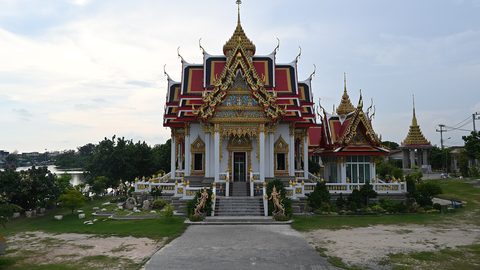 Thailand Travel Guide From First Timers To Island Hoppers
A realistic Thailand travel guide covering regions, seasons, and pacing so you avoid the classic Bangkok Chiang Mai island mistake.
Thailand Travel Guide From First Timers To Island Hoppers
A realistic Thailand travel guide covering regions, seasons, and pacing so you avoid the classic Bangkok Chiang Mai island mistake.