Getting Around Ho Chi Minh City: Grab App, Street Crossing, and Saigon Survival Tactics
Getting around Ho Chi Minh City: Grab app tactics, airport transfers from Tan Son Nhat, and how to cross a Saigon street without stopping or running.
Ho Chi Minh City Getting Around is Not About Taxis. it is About One App
The common assumption about Ho Chi Minh City getting around is that you will rely on metered taxis, the kind you flag on the street. That assumption will strand you, overcharge you, or both. The real system is ride hailing through a single super app that runs the city: the Grab app. You book, you see the fixed price upfront, you pay by card or cash, and you move. Without it, you are negotiating on a hot kerb with drivers who know exactly what you should pay and will charge you more.
Download the Grab app before you leave home. The terminal Wi Fi is unreliable, and the SMS verification step sometimes fails on foreign numbers. If that happens, you cannot book a ride until you sort it out, and you will be stuck at Tan Son Nhat with touts offering rides at three times the rate. Set it up on your home Wi Fi. Link a credit card. Do this before departure.
.jpg)
Saigon Transport Guide: What Actually Moves You
Ride Hailing: The Dominant Layer
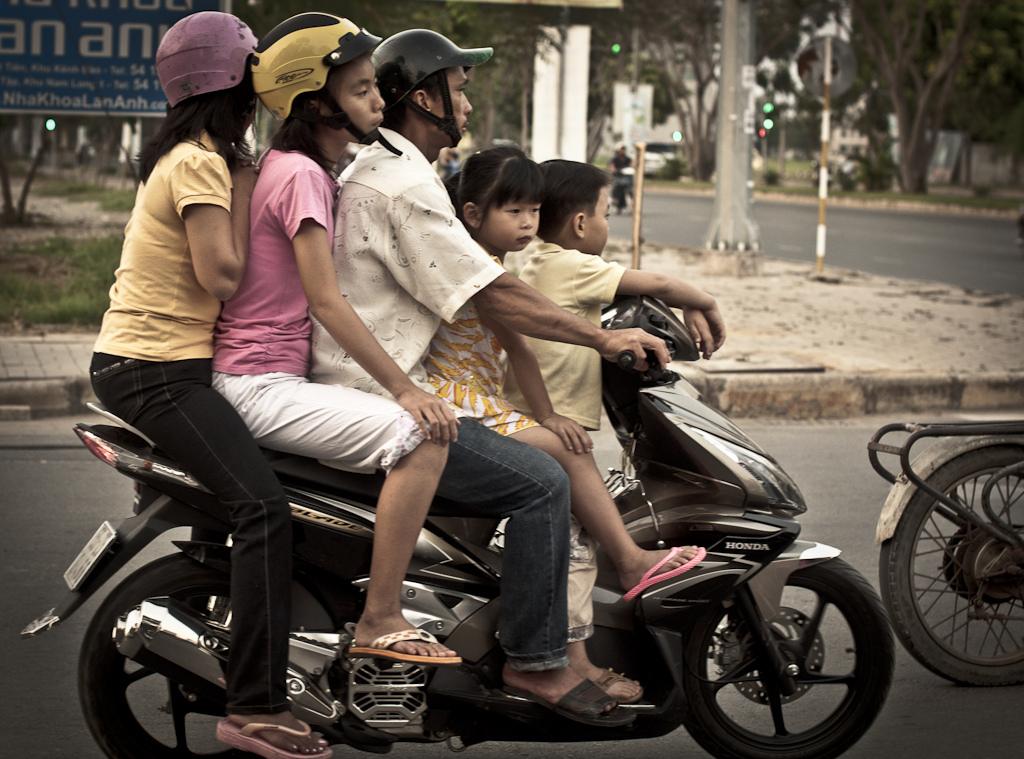
Saigon has four layers of transport, and you will use three of them. The dominant layer is ride hailing: GrabCar, GrabBike, and the smaller competitor Be. Both apps show an upfront fixed price before you book. A GrabCar from the centre to outlying neighbourhoods runs about 40,000 to 80,000 VND. A GrabBike for the same trip costs 15,000 to 30,000 VND. The motorbike option is faster through traffic but leaves you exposed to rain, exhaust, and bag snatching risk.
Metered Taxis: The Backup
The second layer is metered taxis, but only two companies are trustworthy: Vinasun (book on 028 3827 2727) and Mai Linh (028 3838 3838). Every other taxi company in Ho Chi Minh City runs rigged meters or takes long routes. These two do not. Use them as a backup when the Grab app fails during rush hour or heavy rain, or when you are at a location where drivers keep cancelling.
Public Transport: Bus and Metro
The third layer is public transport. Bus 109 from the terminal to Ben Thanh costs 20,000 VND and runs from 05:30 to 01:30. Bus 152 costs 6,000 VND but may add a luggage surcharge. The HCMC Metro Line 1 opened on 22 December 2024. It runs 19.7 km from Ben Thanh to Suoi Tien in Thu Duc City. It has 14 stations, three underground and eleven elevated. Fares range from 7,000 to 20,000 VND for a single trip, or 40,000 VND for a day pass. Operating hours are 05:00 to 22:00. The metro does not serve the terminal or Cholon. It is useful only if you are heading to Thu Duc or want the novelty of riding Vietnam's first urban metro.
The fourth layer is walking, but only in the central core. All other neighbourhoods are not walkable. Pavements in Saigon are an obstacle course of parked motorbikes, food stalls, and broken tiles. You will spend half your walking time on the road itself.
How to Use Grab Ho Chi Minh City: Verification, Columns, and Cancellations
Verification Before You Leave
Open the Grab app at home. Enter your phone number. The app sends an SMS code. On some foreign numbers, that code never arrives. If it does not, you cannot use the app until you buy a local SIM. Buy a Viettel or Mobifone SIM at the official counter inside Tan Son Nhat immediately after baggage claim. A month of data costs around 200,000 VND. Avoid street resellers. Once the SIM is active, verification works instantly.
Designated Pick Up Columns At The Terminal
When you exit the arrivals hall, do not walk to the main road. Every ride hailing service has designated pick up columns outside the terminal. The Grab app shows you your column letter. Walk to it. Your driver will arrive there. Trying to meet a Grab driver anywhere else at Tan Son Nhat creates confusion and cancellations.
Cancellation Patterns In Rain And Rush Hour
Grab drivers cancel bookings during rush hour, 07:00 to 09:00 in the morning and 16:30 to 19:30 in the evening, and during heavy rain. A driver accepts your ride, waits a minute, and cancels because a better fare appeared, or because the rain made the trip slow. When this happens, rebook immediately. If it happens twice, switch to a Vinasun taxi by phoning 028 3827 2727. Do not stand on the kerb waiting for the third cancellation. The app is the central nervous system of moving around this city, but that system breaks under load, and you need a backup plan.
Tan Son Nhat Airport Transfer Saigon: Your First and Last Ride
Tan Son Nhat sits 7 km from the centre. A taxi via Vinasun or Mai Linh takes 20 to 40 minutes and costs 100,000 to 150,000 VND. A GrabCar is slightly cheaper but subject to the same rush hour delays. The public bus is the budget option. Bus 109 drops you near Ben Thanh Market for 20,000 VND. It runs until 01:30, so it works for late arrivals.
There is no train or metro connection to the terminal. The HCMC Metro does not serve it. Do not look for a railway transfer. Your options are app based car, metered taxi, or bus. That is the full list.
Saigon Traffic Survival: Crossing the Street and Riding in it
The Street Crossing Technique
Saigon traffic is the hardest in Vietnam to learn. 10 million motorbikes share the roads with cars, buses, and pedestrians who do not own the pavement. The street crossing technique is a literal survival skill. You walk at a slow, steady, predictable pace. You do not stop. You do not run. You do not make eye contact with drivers. The traffic flows around you because it expects you to keep moving. If you stop mid road, you become unpredictable, and that is when you get hit. If you run, drivers cannot adjust their line. Walk like you own the space, and the space will open.
Phone Snatching and Bag Security
Inside a car or a GrabBike, keep your bag zipped and your phone in a pocket or a bag, not in your hand. Phone snatching by riders on motorbikes is a real risk in this city. Riders cruise slowly, grab a phone from a passenger's hand, and accelerate away. Hold your phone loosely at your peril. If you need to check the map, pull it out inside the vehicle, look at it, and put it back. Do not sit in a GrabBike with your phone out for the whole trip.
Motorbike pavement parking forces pedestrians onto the road. In the central core, you will walk on the street as often as you walk on the footpath. Accept it. It is not a design flaw; it is the design. The city is built for two wheelers, and you are a guest in that system.
If you want to drive yourself, motorbike rental costs 120,000 to 250,000 VND per day. The rental company will hold your original passport as deposit. Do not rent a motorbike in Ho Chi Minh City if you have never ridden in Southeast Asian traffic. This is not the place to learn. The accident rate for first time riders in this city is high.
Walking Districts and the Metro Reality
The central core is the only walkable area in Ho Chi Minh City. The zone around Nguyen Hue walking street, the Central Post Office, and the Saigon Opera House is compact enough to cover on foot. Everything else requires wheels.
The HCMC Metro Line 1 connects Ben Thanh to Suoi Tien. It does not help you reach the leafy villas of outlying neighbourhoods, the Cholon markets, or the snail street. It serves commuters heading to Thu Duc City, not visitors. The day pass costs 40,000 VND (2024 rate, published by HCMC Metro Authority and subject to revision). If you are staying centrally and want a cheap ride to an elevated station for the view, take it. If you think it will solve your transport problems, it will not.
The Saigon Waterbus runs from Bach Dang to Linh Dong in Thu Duc. It costs 15,000 VND and operates 06:30 to 19:30. It is scenic but slow and limited in reach. Use it for a river cruise on the cheap, not for getting anywhere on time.

| Mode | Cost D1 To D3 | Speed | Best For |
|---|---|---|---|
| GrabCar | 40,000 80,000 VND | Medium | Comfort, air con, safety |
| GrabBike | 15,000 30,000 VND | Fast | Short trips, solo travel |
| Vinasun Taxi | Similar to GrabCar | Medium | Backup when app fails |
| Bus 109 | 20,000 VND | Slow | Airport transfer on a budget |
| Metro Line 1 | 7,000 20,000 VND | Fast | Thu Duc City only |
Local Friction: What Goes Wrong Daily
Two things will frustrate you every single day. First, motorbikes parked on the pavement force you onto the road. You will walk in traffic. There is no alternative. Second, Grab drivers cancel rides during rush hour and rain. The 07:00 to 09:00 window and the 16:30 to 19:30 window are unreliable. If it is raining, expect longer waits and more cancellations. A third daily reality: sidewalk dining means you eat excellent food while inhaling exhaust fumes. The banh xeo at Banh Xeo 46A or the broken rice at Com Tam Moc taste incredible, but they taste that way an arm's length from a stream of motorbikes. That is the trade off.
Bag and phone snatching happens. Riders work in pairs. One drives, one reaches. They target phones held loosely in a hand, bags hanging on the street side of a body, and cameras dangling. Keep your phone in your front pocket. Keep your bag cross body on the side away from the road. If you carry a camera, loop the strap around your wrist and keep the camera in your hand, not swinging.
The xe om, the informal motorbike taxi driver found on street corners, is a Saigon institution. They quote a price. You negotiate. They do not have a meter. The ride is fine for locals who know the going rate, but for a visitor, the Grab app price is the fair price, and the xe om quote will be higher. Use Grab. Paying cash inside Grab or Be is straightforward. Both apps accept international credit cards and cash. You can also link Vietnamese digital wallets like MoMo or ZaloPay, but you do not need them.
Who This City Fits and Who it Does Not
Ho Chi Minh City suits the urban adrenaline junkie who wants a sensory overload of motorbikes, street food, and colonial architecture. It suits the digital uPhone looking for a low cost, high energy base with excellent 4G coverage. It suits the second time Southeast Asia traveller ready for grit over temples, and the street food obsessive willing to sit on a tiny plastic stool roadside. Three full days is the minimum: one for central landmarks and war history, one for Cholon markets and temples, and one for the food crawl and a night out.
It does not suit first time travellers to Asia who want a gentle introduction. It does not suit anyone with serious mobility issues, because the pavements are an obstacle course of broken concrete and parked motorbikes. It does not suit people who hate noise, humidity, or constant haggling. There is no beach. The quiet green space is minimal. The city is exhausting. That is the point, but only if you want it to be.
Common Questions
Is the Grab app safe to use in Ho Chi Minh City?
Yes. Grab is the dominant ride hailing service in Southeast Asia. Drivers are registered, trips are tracked, and the fare is fixed upfront. Never get into an unmarked car or a taxi that does not use the meter. Grab eliminates that risk.
How do I cross the street when there is no traffic light?
Walk at a slow, steady, predictable pace. Do not stop. Do not run. The motorbikes will flow around you. The technique works because drivers expect pedestrians to keep moving. If you freeze or dart, you become dangerous.
What do I do if my Grab driver cancels and I am stranded?
Rebook immediately. If the second driver cancels, call Vinasun on 028 3827 2727. Do not accept a ride from a street tout. The fare will be double or triple the correct rate.
Do I need a local SIM card for ride hailing apps?
Yes, because SMS verification may fail on a foreign number. Buy a Viettel or Mobifone SIM at the official terminal counter after baggage claim. A month of data costs around 200,000 VND. The Grab app works reliably after that.
Can I use the metro to get from the terminal to my hotel?
No. The HCMC Metro Line 1 does not serve Tan Son Nhat. It connects Ben Thanh to Suoi Tien in Thu Duc City. Use a GrabCar, a Vinasun taxi, or Bus 109 from the terminal.
Read next
-

 Ho Chi Minh City Hotels From Converted Villas to Skydeck Towers by Price Band
Ho Chi Minh City hotels sorted by property type and price band, from converted District 3 villas to skydeck towers near the Saigon River.
Ho Chi Minh City Hotels From Converted Villas to Skydeck Towers by Price Band
Ho Chi Minh City hotels sorted by property type and price band, from converted District 3 villas to skydeck towers near the Saigon River.
-
 Ho Chi Minh City Where to Stay District by District for Every Travel Style
Where to stay in Ho Chi Minh City: a district-by-district breakdown of Saigon neighbourhoods from chaotic District 1 to the expat calm of Thao Dien.
Ho Chi Minh City Where to Stay District by District for Every Travel Style
Where to stay in Ho Chi Minh City: a district-by-district breakdown of Saigon neighbourhoods from chaotic District 1 to the expat calm of Thao Dien.
-
 Flying to Ho Chi Minh City Airport Guide and the Airlines That Serve SGN
Airlines flying into Tan Son Nhat Airport (SGN), terminal details, and a step-by-step arrival guide for getting from the plane into Ho Chi Minh City.
Flying to Ho Chi Minh City Airport Guide and the Airlines That Serve SGN
Airlines flying into Tan Son Nhat Airport (SGN), terminal details, and a step-by-step arrival guide for getting from the plane into Ho Chi Minh City.
-
 Ho Chi Minh City Things to Do Ranked From War History to Wholesale Flower Markets
Ho Chi Minh City things to do ranked with honest verdicts: which Saigon war-history sights, markets, and temples earn your three days and which to skip.
Ho Chi Minh City Things to Do Ranked From War History to Wholesale Flower Markets
Ho Chi Minh City things to do ranked with honest verdicts: which Saigon war-history sights, markets, and temples earn your three days and which to skip.
-
 Ho Chi Minh City Best Time to Visit Month by Month Avoiding Tet Closures and Monsoon Flooding
Ho Chi Minh City best time to visit month by month: dry season windows, Tet holiday closures that empty the city, and the monsoon flooding to avoid.
Ho Chi Minh City Best Time to Visit Month by Month Avoiding Tet Closures and Monsoon Flooding
Ho Chi Minh City best time to visit month by month: dry season windows, Tet holiday closures that empty the city, and the monsoon flooding to avoid.
-
 Ho Chi Minh City Itinerary for 3 Days of War History Markets and Street Food
A 3-day Ho Chi Minh City itinerary: District 1 war history on day one, Cholon markets on day two, and a Saigon street-food night on day three.
Ho Chi Minh City Itinerary for 3 Days of War History Markets and Street Food
A 3-day Ho Chi Minh City itinerary: District 1 war history on day one, Cholon markets on day two, and a Saigon street-food night on day three.
-
 War Remnants Museum
The War Remnants Museum in Ho Chi Minh City is the most emotionally affecting stop in the city. Here is what to expect and how to prepare.
War Remnants Museum
The War Remnants Museum in Ho Chi Minh City is the most emotionally affecting stop in the city. Here is what to expect and how to prepare.
-
 Reunification Palace
The Reunification Palace in Ho Chi Minh City is famous for its tank gate, but the basement war command bunker is the part that explains the building.
Reunification Palace
The Reunification Palace in Ho Chi Minh City is famous for its tank gate, but the basement war command bunker is the part that explains the building.
-
 Ben Thanh Market
 in Ho Chi Minh City is a tourist trap for souvenirs but genuinely good for lunch. Here is what to eat and what to skip.
Ben Thanh Market
Ben Thanh Market in Ho Chi Minh City is a tourist trap for souvenirs but genuinely good for lunch. Here is what to eat and what to skip.