How to Spend 3 Days in Ho Chi Minh City: Start With the War Remnants Museum and Take One Day Outside the City
Three days in Ho Chi Minh City works best with the War Remnants Museum on day one, Cholon's markets on day two, and a day trip out of the city on day three.
.jpg)
The most common mistake visitors make in Ho Chi Minh City is treating the itinerary like a buffet, grabbing whatever looks famous in any order. The War Remnants Museum is not a morning filler before shopping. The Cu Chi Tunnels are not a casual afternoon after a lie-in. And Ben Thanh Market is not worth the 45 minutes most guides allocate to it. Three days here needs a sequence, not a list. The emotional weight of the war history demands fresh eyes, not tired ones. The food culture needs its own night, not a rushed meal between landmarks. The day trip outside the city needs to earn its place by fitting the rhythm, not by being famous.
This itinerary arranges 3 days so that each day does work the others cannot. Day one faces the hard history and the colonial core of District 1 while your mind is still sharp. Day two goes deep into Cholon and District 3, where the morning light and the midday heat dictate the moves. Day three gives you the escape hatch: a half day at Cu Chi or a quick Mekong taste, capped by a final night eating snails on plastic stools in District 4. You will not see everything. You will see the right things in the right order.
Ho Chi Minh City 3 Day Itinerary: the Case Against the Backpacker Strip
Pham Ngu Lao and Bui Vien Street, the backpacker enclave in District 1, is a loud, drunken anomaly that has convinced thousands of travelers that Ho Chi Minh City has no charm. It has charm. It just does not live on that strip. Staying there and wandering no further is the reason so many people write the city off as gritty without reward.
The real Ho Chi Minh City is a visceral assault of 10 million motorbikes, relentless commerce, and tropical heat that leaves you simultaneously exhausted and electrified. This is not a postcard. This is a chaotic, modernizing megalopolis where luxury towers overlook street food stalls on broken pavements. Crossing the road requires a leap of faith into moving traffic that somehow parts around you. The lack of quiet green space can feel suffocating. If that sounds like your kind of place, this three day itinerary is for you. If you want gentle, clean, and relaxing, go to Chiang Mai.
Day 1: War Sites and District 1 Landmarks
Start early. The War Remnants Museum at 28 Vo Van Tan in District 3 opens at 07:30, and you want to be inside by 08:00. The standard visit runs 2 to 3 hours. You will need every minute. The entry fee for 2024 was 40,000 VND, paid at the ticket office. No advance booking is required, and none is available. The museum presents the war from the Vietnamese perspective. The third floor photographic exhibitions are what most visitors remember longest. Go before lunch. Your stomach and your emotional reserves will not handle this after a heavy meal.
Lunch and the Reunification Palace
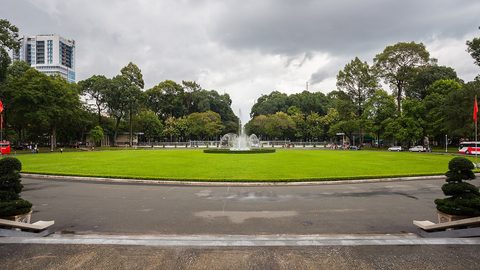
Eat after the museum, before 12:30. Banh Xeo 46A, the city's benchmark sizzling crepe, sits in a chaotic alley not far from District 1. If you want a seated option, Com Tam Moc for broken rice with charcoal grilled pork chop is a Saigon staple that fuels the afternoon well. Then walk to the Reunification Palace at 135 Nam Ky Khoi Nghia. It closes at 16:00, so arrive by 13:30 at the latest. Budget 1.5 to 2 hours. The 65,000 VND entry fee (2024 rate, set by the palace ticket office) buys access to a time capsule of the moment the war ended. The tank parked outside is the one that crashed through the gates in 1975. The interior looks exactly as it did that day.
Late Afternoon: The Colonial Pair and Coffee
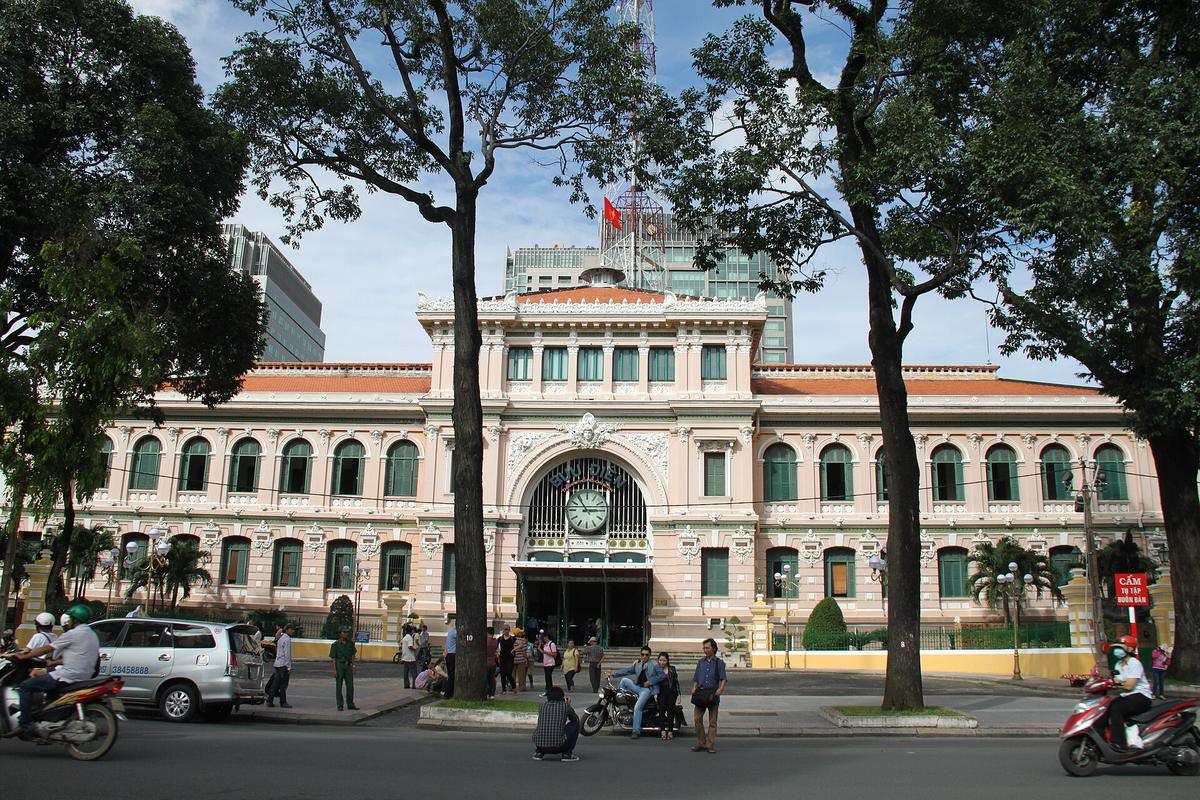
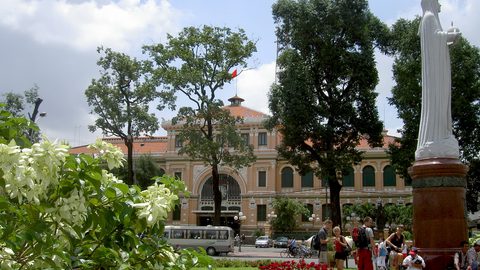
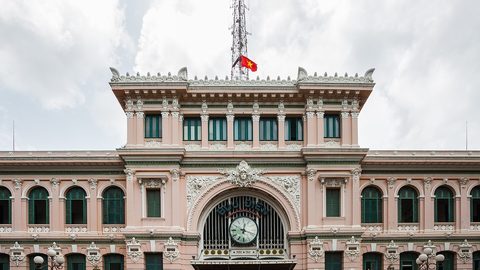
Walk from the palace to the Notre Dame Cathedral Basilica at 01 Cong Xa Paris. It has been under renovation since 2017 with no confirmed completion date, so you can only see the exterior. That is fine. It takes three minutes. Cross the square to the Saigon Central Post Office at 2 Cong Xa Paris, open 07:00 to 18:00, entry free. The arched ceilings and functioning colonial interiors are worth 15 minutes. Then head to the Cafe Apartments at 42 Nguyen Hue. This vertical block of independent cafes is best reached by walking up the stairs; the lift is slow. Arrive around 16:00 or 17:00 for a ca phe sua da overlooking the pedestrian street below. Nguyen Hue Walking Street restricts vehicles from 18:00 to 22:00 daily, so your evening view from the Cafe Apartments window will be of a boulevard filling with families, skaters, and inflatable cartoon characters.
Dinner: District 1, But Not Bui Vien
Skip the backpacker street for dinner. Banh Mi Huynh Hoa opens at 14:30 and sells out most nights before 21:00. It is a monstrous, butter laden baguette that draws queues. If the line is too long, find a sidewalk cart for bo la lot: betel leaf wrapped beef grilled over charcoal and eaten with rice paper and herbs. End the night on Nguyen Hue Walking Street, watching the chaos from a bench. You will sleep well.
Saigon Itinerary District 1: Why the Core Matters on Day One
District 1 holds the French colonial bones, the skyscrapers, the backpacker alley you should avoid at night, and the single most important museum in the country. Clustering these together on day one is not arbitrary. The war history and the colonial architecture tell the same story from different angles. Seeing them in succession gives you a narrative arc that Sunday brunch and a river cruise cannot touch. The Reunification Palace, the Post Office, and the Cathedral form a single afternoon walk. The Cafe Apartments sits on the same boulevard. There is no need for Grab rides between 13:00 and 17:00 if you pace yourself. That efficiency is the reason this itinerary works at all.
Day Trip from Saigon 3 Days: Choosing Cu Chi Over the Mekong
Day three offers two clear options: Cu Chi Tunnels or the Mekong Delta. For a three day itinerary, choose Cu Chi. The Mekong Delta day trip from Ben Tre or My Tho runs 8 to 10 hours door to door, including 2 hours each way by car, a boat ride, a coconut candy workshop, and a lunch that feels engineered for tour groups. It is not bad. It is just too long for the time you have. Cu Chi Tunnels take 4 to 5 hours including travel, leaving your afternoon and evening free for the food crawl that makes this city worth three days.
Cu Chi sits about 70 kilometers northwest of District 1. The half day tour covers the Ben Dinh or Ben Duoc sites. The 2024 entry fee was 110,000 VND for Ben Dinh and 90,000 VND for Ben Duoc, set by the Cu Chi Tunnels management authority. Book through a tour operator or arrange a private car via Grab. The tunnels themselves are claustrophobic and narrow, widened for tourists but still tight enough that tall travelers will crawl rather than walk. You will see trap doors, booby traps, and rice paper making. You will also hear gunfire from a nearby shooting range. It is a sobering morning.
If you must see the Mekong, go. But know that you will return to District 1 at 18:00 or later, exhausted and damp, and your final evening will be a rushed noodle bowl rather than a proper night out. The itinerary recommends Cu Chi, and the itinerary is right.
Saigon Food Itinerary 3 Days: the Final Night on Vinh Khanh Street
The food culture of Ho Chi Minh City does not fit into lunch breaks between landmarks. It requires its own dedicated evening, ideally the final one. After your Cu Chi half day, rest, shower, and head to Vinh Khanh Street in District 4 after 18:00. This is snail street. Dozens of stalls serve oc: shellfish in coconut, tamarind, and chili. You sit on tiny plastic stools on the pavement, you order by pointing at buckets of live snails, and you inhale exhaust fumes while eating some of the best food of your life. It is not comfortable. It is the whole point.
Start with oc len xao dua, mud snails stir fried with coconut milk and lemongrass. Follow with oc huong nuong tieu, sea snails grilled with black pepper and peanuts. Drink a cold Saigon beer. Watch the motorbikes part around your chair. This is the edition of the city that guidebooks cannot package.
If snails are not your thing, District 4 has other options. Com Tam Moc is worth a second visit. Find a banh xeo stall that still has its charcoal grill lit. Eat on the street, not in a restaurant with air conditioning. The food tastes better when you are sweating and the traffic is inches from your elbow.
.jpg)
Day 2: Cholon and District 3 Culture
Day two belongs to Cholon, Ho Chi Minh City's Chinese quarter, and the cultural pockets of District 3. Start at Binh Tay Market in District 6, at 57A Thap Muoi, open from 06:00 to 18:00. Arrive by 07:00 or 08:00, before the wholesale activity peaks and the heat rises. Binh Tay is the authentic version of what Ben Thanh Market pretends to be: chaotic, grimy, and genuinely local. You will find medicinal herbs, dried seafood, and fabrics stacked to the ceiling. Buy nothing heavy. The value here is the atmosphere, not the souvenirs.
Temples and Assembly Halls
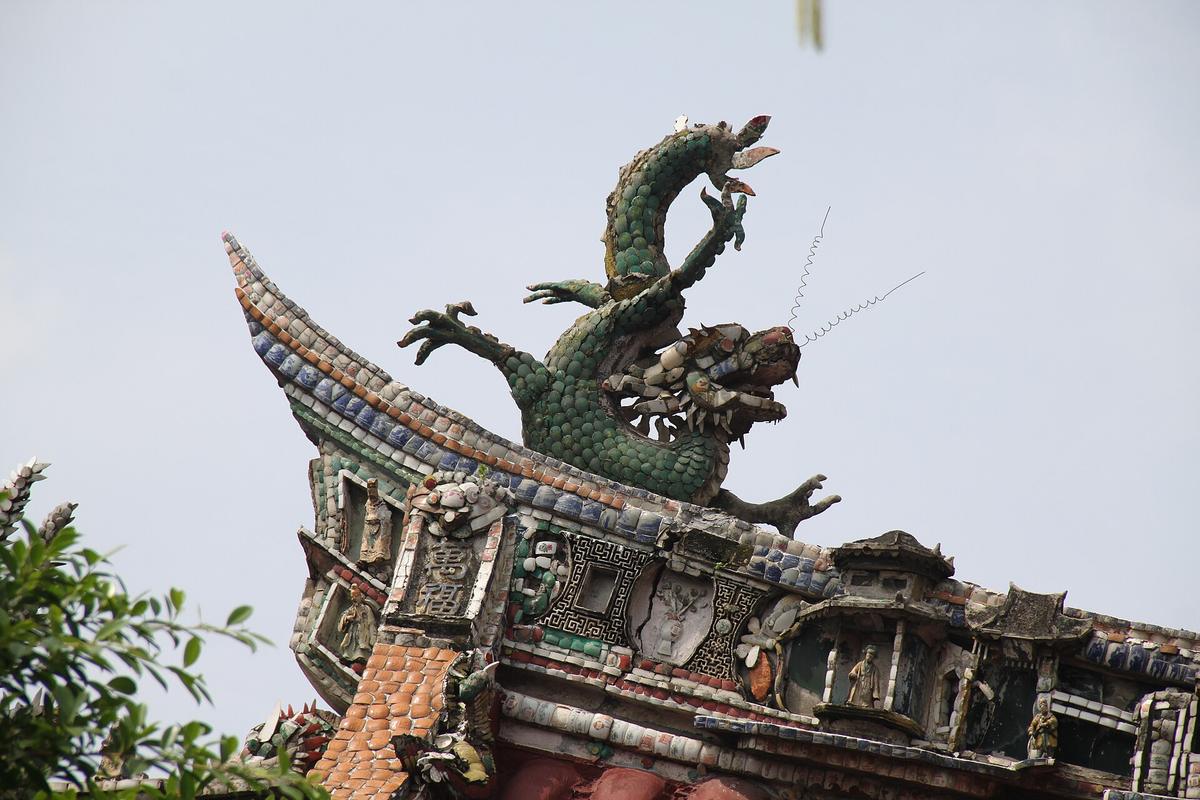
From Binh Tay, walk or take a short Grab ride to the Chinese assembly halls scattered through District 5. Thien Hau Temple at 710 Nguyen Trai opens 06:00 to 17:30, entry free, and is the most atmospheric of the five major halls. Incense coils hang from the ceiling. Small figurines dot the altars. The architecture is Cantonese, not Vietnamese, and the difference matters. Spend 30 minutes here, then explore the surrounding streets for sui cao, Cantonese dumplings in clear broth, at any stall with a queue.
Beat the Heat at the Fine Arts Museum
By midday the heat will be punishing. The Fine Arts Museum at 97A Pho Duc Chinh in District 1 opens 08:00 to 17:00. The 30,000 VND entry fee (2024 rate, set by the museum ticket office) buys you air conditioning and a beautiful colonial building with a central courtyard. The collection is uneven, but the building itself and the ground floor galleries of modern Vietnamese art justify the stop. Budget 45 minutes to an hour.
Jade Emperor Pagoda and a District 3 Evening
Late afternoon, visit the Jade Emperor Pagoda at 73 Mai Thi Luu in District 1, open 07:00 to 18:00, entry free. The interior is dense with incense smoke, carved wooden panels, and Taoist iconography. You will see locals burning paper offerings at the furnace outside. This is a working temple, not a museum. The devotion is palpable.
For dinner, head to District 3 around Nguyen Dinh Chieu Street and the Turtle Lake area. The streets here are leafier, the villas older, and the food stalls less tourist oriented. Try a sidewalk cart for com tam or find a vendor selling bo la lot. District 3 has some of the city's best hidden cafes if you want a coffee afterward. End the night at a rooftop bar in District 1 or just take a slow Grab ride through the neon-lit streets. Day two is about texture, not ticking boxes.
Practical Frictions You Will Encounter
You will need the Grab app. Download it before you arrive. Airport Wi Fi is unreliable and SMS verification can fail on foreign numbers. A local Viettel or Mobifone SIM costs around 200,000 VND for a month of data and is available at the official counter after baggage claim at Tan Son Nhat. Avoid street resellers. Grab drivers cancel frequently during rush hour, 07:30 to 09:00 and 16:30 to 18:30, and in heavy rain. Build buffer time into your schedule.
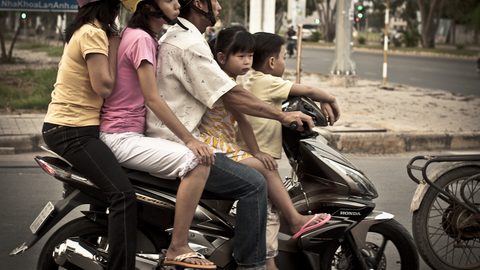
Crossing the street requires a slow, predictable pace into moving traffic. Do not stop. Do not run. The motorbikes will part around you. This will feel insane for the first two days. By day three, you will do it without flinching. Keep your phone and bag on your inside pocket, not dangling from your hand. Motorbike snatching is a real risk.
Sidewalk dining means you inhale exhaust. That is not a bug. That is the experience. If you cannot tolerate it, eat indoors. But you will miss the point of Ho Chi Minh City.
When to Go and What to Avoid
Peak season runs December to March, with lower humidity, average temperatures around 27 degrees Celsius, and minimal rain. Book accommodation and Cu Chi tours early. Avoid the Tet holiday period, late January to mid February on dates that shift annually, when the city empties out as millions return to hometowns. Many restaurants, markets, and shops close for up to a week. Also avoid late September and October, the peak of the monsoon, with heavy daily downpours and localised street flooding.
The wet season runs May to November. Downpours are heavy but brief, arriving between 14:00 and 16:00. Schedule indoor activities for those hours. The Fine Arts Museum, the Jade Emperor Pagoda, and the Cafe Apartments all work as rain shelters. Do not schedule Cu Chi for a wet afternoon; the tunnels flood and the experience turns miserable.
Read next
-
 Ho Chi Minh City Hotels From Converted Villas to Skydeck Towers by Price Band
Ho Chi Minh City hotels sorted by property type and price band, from converted District 3 villas to skydeck towers near the Saigon River.
Ho Chi Minh City Hotels From Converted Villas to Skydeck Towers by Price Band
Ho Chi Minh City hotels sorted by property type and price band, from converted District 3 villas to skydeck towers near the Saigon River.
-
 Ho Chi Minh City Where to Stay District by District for Every Travel Style
Where to stay in Ho Chi Minh City: a district-by-district breakdown of Saigon neighbourhoods from chaotic District 1 to the expat calm of Thao Dien.
Ho Chi Minh City Where to Stay District by District for Every Travel Style
Where to stay in Ho Chi Minh City: a district-by-district breakdown of Saigon neighbourhoods from chaotic District 1 to the expat calm of Thao Dien.
-
 Flying to Ho Chi Minh City Airport Guide and the Airlines That Serve SGN
Airlines flying into Tan Son Nhat Airport (SGN), terminal details, and a step-by-step arrival guide for getting from the plane into Ho Chi Minh City.
Flying to Ho Chi Minh City Airport Guide and the Airlines That Serve SGN
Airlines flying into Tan Son Nhat Airport (SGN), terminal details, and a step-by-step arrival guide for getting from the plane into Ho Chi Minh City.
-
 Ho Chi Minh City Things to Do Ranked From War History to Wholesale Flower Markets
Ho Chi Minh City things to do ranked with honest verdicts: which Saigon war-history sights, markets, and temples earn your three days and which to skip.
Ho Chi Minh City Things to Do Ranked From War History to Wholesale Flower Markets
Ho Chi Minh City things to do ranked with honest verdicts: which Saigon war-history sights, markets, and temples earn your three days and which to skip.
-
 Ho Chi Minh City Best Time to Visit Month by Month Avoiding Tet Closures and Monsoon Flooding
Ho Chi Minh City best time to visit month by month: dry season windows, Tet holiday closures that empty the city, and the monsoon flooding to avoid.
Ho Chi Minh City Best Time to Visit Month by Month Avoiding Tet Closures and Monsoon Flooding
Ho Chi Minh City best time to visit month by month: dry season windows, Tet holiday closures that empty the city, and the monsoon flooding to avoid.
-
 Ho Chi Minh City Getting Around Without Losing Your Phone or Your Nerve
Getting around Ho Chi Minh City: Grab app tactics, airport transfers from Tan Son Nhat, and how to cross a Saigon street without stopping or running.
Ho Chi Minh City Getting Around Without Losing Your Phone or Your Nerve
Getting around Ho Chi Minh City: Grab app tactics, airport transfers from Tan Son Nhat, and how to cross a Saigon street without stopping or running.
-
 War Remnants Museum
The War Remnants Museum in Ho Chi Minh City is the most emotionally affecting stop in the city. Here is what to expect and how to prepare.
War Remnants Museum
The War Remnants Museum in Ho Chi Minh City is the most emotionally affecting stop in the city. Here is what to expect and how to prepare.
-
 Reunification Palace
The Reunification Palace in Ho Chi Minh City is famous for its tank gate, but the basement war command bunker is the part that explains the building.
Reunification Palace
The Reunification Palace in Ho Chi Minh City is famous for its tank gate, but the basement war command bunker is the part that explains the building.
-
 Ben Thanh Market
 in Ho Chi Minh City is a tourist trap for souvenirs but genuinely good for lunch. Here is what to eat and what to skip.
Ben Thanh Market
Ben Thanh Market in Ho Chi Minh City is a tourist trap for souvenirs but genuinely good for lunch. Here is what to eat and what to skip.