A Saigon Coffee Guide: From Condensed Milk on the Pavement to the Cafe Apartment and Ordering in Vietnamese
Saigon runs on robusta and condensed milk. This guide covers ca phe sua da at sidewalk carts, the Cafe Apartment at 42 Nguyen Hue, and how to order when the menu is Vietnamese.

The Wrong Way to Think About Coffee in Saigon
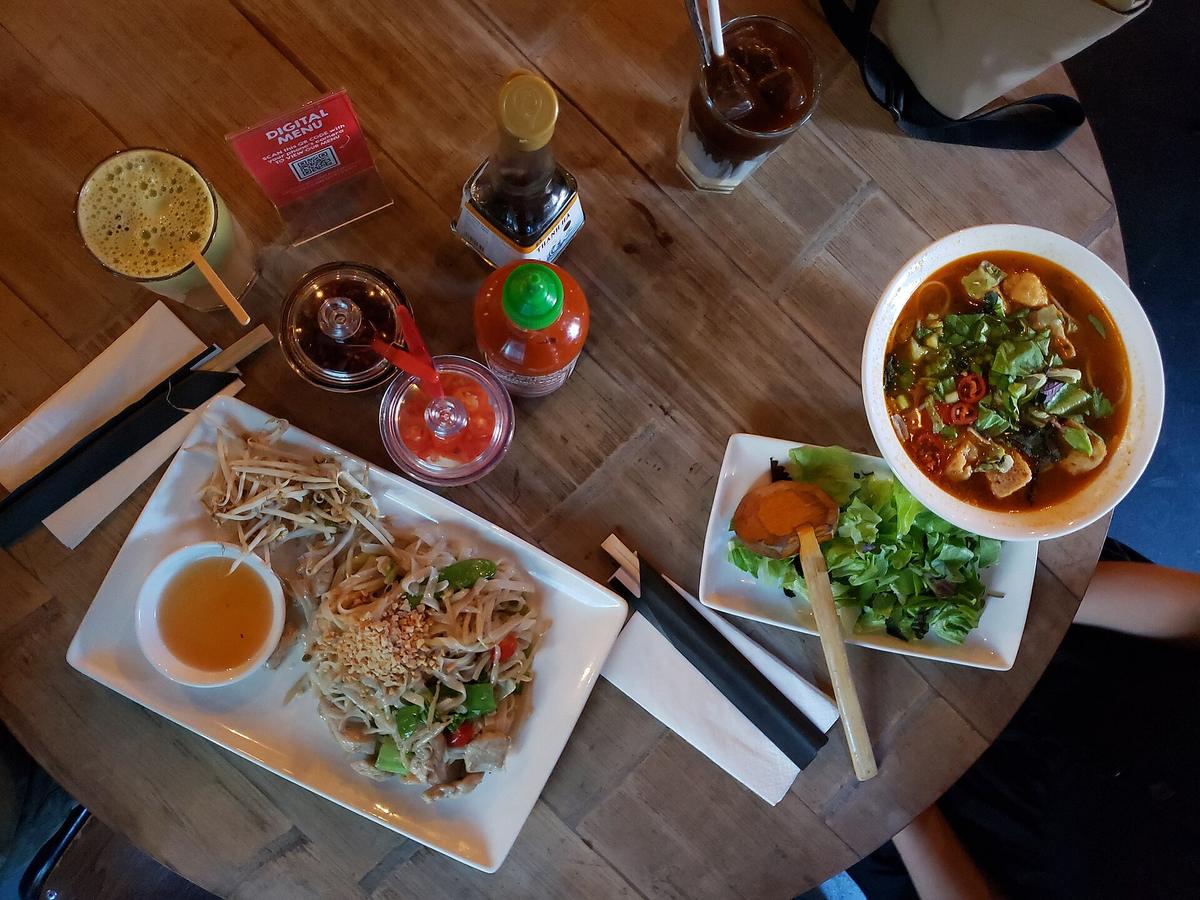
The mistake most visitors make is treating Saigon coffee as a regional variation on the third wave latte. It is not. The coffee culture here did not evolve through flat whites and single origin light roasts. It was built on robusta beans, a phin filter, and a can of condensed milk. That is the starting point for any useful Saigon guide: unlearn what you know about coffee, then order a cà phê sữa đá from a woman parked on a broken pavement. It will cost you less than a dollar. It will contain more caffeine than any pour over you have ever had. It will arrive in a glass of ice while motorbikes pass close enough to touch. And it will be the best coffee you drink in the city.
Cà Phê Sữa Đá Saigon: the Drink You Came for
A cà phê sữa đá is not complicated. Coarse ground robusta goes into a phin, a small aluminium or stainless steel chamber that sits on top of a glass. Hot water hits the grounds. It drips through for about four minutes into a layer of Ông Thọ condensed milk at the bottom. Then you stir, pour over ice, and drink. That is the entire recipe. The phin used for a single cup holds 20 to 25 grams of coffee, roughly double what a standard espresso basket takes. The caffeine content of Vietnamese robusta runs 1.7 to 3.5 percent, compared to arabica's 0.8 to 1.4 percent. This drink is not a morning pick me up. It is a tactical stimulant issued in a war against heat and traffic.
Where to Find It and What to Say
You will find this drink everywhere. A sidewalk cart in District 4 will charge you 15,000 to 25,000 VND. A plastic stool will be your seat. If you want black coffee, order cà phê đen đá and expect something bracing and bitter. If the coffee to milk ratio intimidates you, order bạc xỉu, a drink with a much higher milk proportion that originated as the way children and adults who found straight coffee too strong got their caffeine. The language matters: say "mot ly ca phe sua da" to order one. The word "da" means iced. If you want it hot, say "nong."
Vietnamese Coffee Types Beyond the Staple
There are more drinks than cà phê sữa đá, and some of them are worth hunting across neighbourhoods for.
Egg Coffee Saigon: The Hanoi Transplant That Works
Cà phê trứng was invented in Hanoi in 1946 at Giảng Café. It arrived in Saigon later and still surprises people. A whipped egg yolk and condensed milk mixture sits on top of a base of strong phin coffee. The texture is something between a stiff mousse and a warm custard. You drink it by tilting the cup, letting the bitter coffee cut through the sweet foam. It is not a breakfast drink. It is a dessert that happens to contain enough caffeine to keep you alert through it. Do not skip it. Do not order it from a chain. Find the version at a dedicated cafe in District 1 and pay attention to how it changes as the coffee mixes through.
Salt Coffee And Coconut Coffee: Two Regional Oddities Worth Your Time
Cà phê muối, salt coffee, originated in Huế and uses a base of phin coffee with condensed milk and a salted cream layer on top. The salinity does not make it savoury. It sharpens the sweetness and cuts the bitterness of the beans. Good versions are hard to find outside of Huế, but a handful of Saigon cafes in District 3 make a credible one. Cà phê cốt dừa, coconut coffee, is a different beast: blended with coconut cream and ice into a slush. It is sweet, cold, and barely recognisable as coffee. It is also excellent on a 35 degree afternoon when the humidity makes walking a negotiation with your own lungs.
Saigon Cafe Apartment Nguyen Hue: How to Do it Right
The building at 42 Nguyễn Huệ in District 1 is a vertical block of independent cafes across nine floors. It is not a secret. It is on every list. But most visitors waste time waiting for a slow lift that charges 3,000 VND per person to an attendant, then stand in a queue for the most photographed tables. Do not do that. Walk up. The stairwell is to the left of the ground floor shopfronts. It looks closed. It is not. A small sign marks the entrance. Climbing takes about two minutes per floor. You will pass doors to Saigon Ơi on floor five, The Letter on floor four, and Thinker & Dreamer on floor three. Every floor opens onto different independent spaces. Drink prices run 45,000 to 90,000 VND, higher than the pavement but low for a sit down experience with air conditioning and a view of Nguyen Hue walking street.
How to Order When the Menu Is Only in Vietnamese
The challenge for many visitors is a menu written only in Vietnamese. Do not panic. You already know the vocabulary: cà phê sữa đá, cà phê đen đá, bạc xỉu, cà phê trứng. Learn to say "da" for iced and "nong" for hot. That is enough. Point at the menu, say the drink, hold up a finger for one. The barista will understand. If you want to branch out, the chains are also useful practice: Highlands Coffee, Phúc Long Coffee & Tea, The Coffee House, and Trung Nguyên Legend all post bilingual menus at their counters. Highlands charges 39,000 to 49,000 VND for a cà phê sữa đá. Trung Nguyên Legend charges up to 65,000 VND for the same drink in a space styled like a coffee library. Phúc Long comes from a strong tea heritage and also sells packaged beans if you want to take coffee home.
Where the Real Coffee Scene Lives: District 3 and Thao Dien
The chains and the Cafe Apartment are where you start. The third wave roasters are where you graduate. The Workshop at 27 Ngô Đức Kế in District 1 does pour overs starting at 80,000 VND and espresso based drinks from 70,000 to 120,000 VND. Bosgaurus Coffee in Thảo Điền and 96B at 96B Phan Đình Phùng in District 1 both treat the local bean as a specialty crop worth a medium coarse grind and a careful pour. Lacàph in District 3 ships beans internationally to the US, EU, and Asia Pacific, and their retail price for specialty lots runs 250,000 to 500,000 VND per kilogram. That is triple what you pay for the commodity grade at the local market, but it is coffee designed to be drunk black, without condensed milk to hide flaws. If you buy beans to take home, ask the roaster to grind for phin: medium coarse, coarser than espresso, finer than French press. Domestic shipping runs 30,000 to 50,000 VND. International shipping for one to two kilograms costs 200,000 to 400,000 VND.
What Ordering in Vietnamese Sounds Like
You do not need to speak Vietnamese to get coffee. But the people running sidewalk carts do not speak English, and the difference between knowing five words and knowing zero is the difference between a smooth transaction and a confused silence. Memorise these: "Một ly cà phê sữa đá" for one iced coffee with milk. "Một ly cà phê đen đá" for one iced black coffee. "Bạc xỉu" for a milkier version. "Bao nhiêu?" to ask the price. Count the money before you hand it over; small bills are better. The cart operator will hand you a tall glass on a plastic stool. Do not ask for a table. Do not ask for oat milk. Sit, drink, watch the traffic, and leave the glass on the stool when you are done. The whole interaction takes less than three minutes. It is the most efficient transaction in the city.

Why the Pavement Matters and the Chains Miss it
Highlands Coffee is fine. Phúc Long is reliable. The Coffee House has good air conditioning. But none of them replicate the experience of drinking coffee on a 15 cm stool on a broken sidewalk while a woman who has been brewing phin filters for thirty years hands you a glass that tastes exactly like the one she handed the customer before you and the customer after you. The chains exist because they fill a need for air conditioning and consistent Wi Fi. They are not the culture. The culture is the cart. The culture is the plastic stool. The culture is paying 15,000 VND for a drink that tastes like the city: bitter, sweet, aggressive, and completely unpretentious. Do not skip the cart because it looks unsanitary or intimidating. Skip the chain if you only have three days. You can get a flat white anywhere. You cannot get a cà phê sữa đá on a pavement with motorbikes parting around you anywhere but here.
| Drink | Vietnamese Name | Key Ingredients | Cart Price | Cafe Price |
|---|---|---|---|---|
| Iced Coffee with Condensed Milk | Cà Phê Sữa Đá | Phin coffee + Ông Thọ condensed milk + ice | 15,000–25,000 VND | 39,000–65,000 VND |
| Iced Black Coffee | Cà Phê Đen Đá | Phin coffee + ice | 12,000–20,000 VND | 30,000–55,000 VND |
| White Coffee (Milkier) | Bạc Xỉu | Phin coffee + high ratio of condensed milk + ice | 15,000–25,000 VND | 35,000–50,000 VND |
| Egg Coffee | Cà Phê Trứng | Whipped egg yolk + condensed milk + phin coffee | Not sold at carts | 45,000–70,000 VND |
| Salt Coffee | Cà Phê Muối | Phin coffee + condensed milk + salted cream | Not sold at carts | 50,000–75,000 VND |
| Coconut Coffee | Cà Phê Cốt Dừa | Coffee blended with coconut cream and ice | Not sold at carts | 50,000–75,000 VND |
The One Thing to Do Before You Leave
Buy a Viettel SIM at the airport counter after baggage claim, download and verify your Grab app before departure, and memorise your five Vietnamese coffee words. The SIM costs about 200,000 VND for a month of data with 4G coverage across every neighbourhood. The Grab app is non negotiable: it is how you get to the Cafe Apartment, how you find the third wave roasters in District 3, and how you escape District 4 after a snail dinner. The five words are the difference between a transaction and an interaction. Walk to the nearest sidewalk cart, order a cà phê sữa đá on a plastic stool, and let the traffic do what it does. That is the city. That is the drink. That is the only introduction you need.
Read next
-
 Ho Chi Minh City Hotels From Converted Villas to Skydeck Towers by Price Band
Ho Chi Minh City hotels sorted by property type and price band, from converted District 3 villas to skydeck towers near the Saigon River.
Ho Chi Minh City Hotels From Converted Villas to Skydeck Towers by Price Band
Ho Chi Minh City hotels sorted by property type and price band, from converted District 3 villas to skydeck towers near the Saigon River.
-
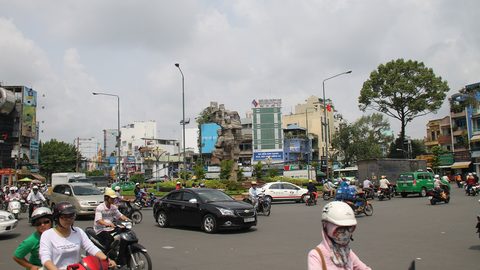 Ho Chi Minh City Where to Stay District by District for Every Travel Style
Where to stay in Ho Chi Minh City: a district-by-district breakdown of Saigon neighbourhoods from chaotic District 1 to the expat calm of Thao Dien.
Ho Chi Minh City Where to Stay District by District for Every Travel Style
Where to stay in Ho Chi Minh City: a district-by-district breakdown of Saigon neighbourhoods from chaotic District 1 to the expat calm of Thao Dien.
-
 Flying to Ho Chi Minh City Airport Guide and the Airlines That Serve SGN
Airlines flying into Tan Son Nhat Airport (SGN), terminal details, and a step-by-step arrival guide for getting from the plane into Ho Chi Minh City.
Flying to Ho Chi Minh City Airport Guide and the Airlines That Serve SGN
Airlines flying into Tan Son Nhat Airport (SGN), terminal details, and a step-by-step arrival guide for getting from the plane into Ho Chi Minh City.
-
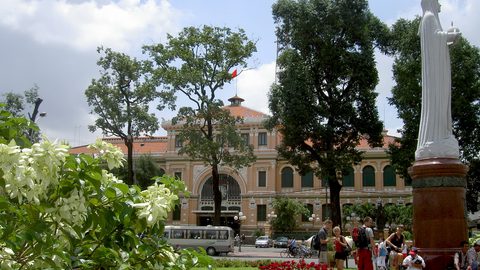 Ho Chi Minh City Things to Do Ranked From War History to Wholesale Flower Markets
Ho Chi Minh City things to do ranked with honest verdicts: which Saigon war-history sights, markets, and temples earn your three days and which to skip.
Ho Chi Minh City Things to Do Ranked From War History to Wholesale Flower Markets
Ho Chi Minh City things to do ranked with honest verdicts: which Saigon war-history sights, markets, and temples earn your three days and which to skip.
-
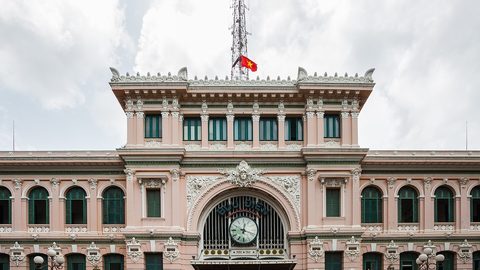 Ho Chi Minh City Best Time to Visit Month by Month Avoiding Tet Closures and Monsoon Flooding
Ho Chi Minh City best time to visit month by month: dry season windows, Tet holiday closures that empty the city, and the monsoon flooding to avoid.
Ho Chi Minh City Best Time to Visit Month by Month Avoiding Tet Closures and Monsoon Flooding
Ho Chi Minh City best time to visit month by month: dry season windows, Tet holiday closures that empty the city, and the monsoon flooding to avoid.
-
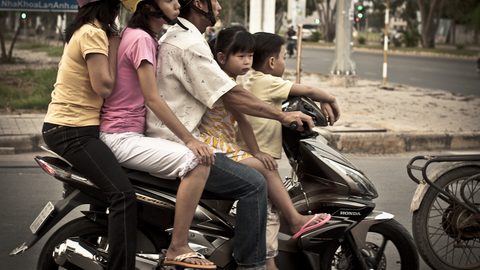 Ho Chi Minh City Getting Around Without Losing Your Phone or Your Nerve
Getting around Ho Chi Minh City: Grab app tactics, airport transfers from Tan Son Nhat, and how to cross a Saigon street without stopping or running.
Ho Chi Minh City Getting Around Without Losing Your Phone or Your Nerve
Getting around Ho Chi Minh City: Grab app tactics, airport transfers from Tan Son Nhat, and how to cross a Saigon street without stopping or running.
-
 War Remnants Museum
The War Remnants Museum in Ho Chi Minh City is the most emotionally affecting stop in the city. Here is what to expect and how to prepare.
War Remnants Museum
The War Remnants Museum in Ho Chi Minh City is the most emotionally affecting stop in the city. Here is what to expect and how to prepare.
-
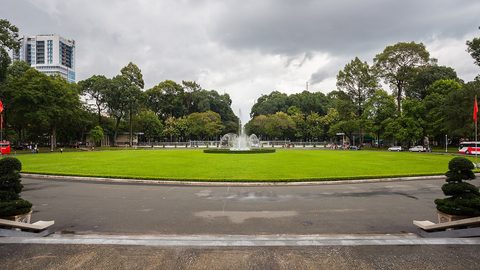 Reunification Palace
The Reunification Palace in Ho Chi Minh City is famous for its tank gate, but the basement war command bunker is the part that explains the building.
Reunification Palace
The Reunification Palace in Ho Chi Minh City is famous for its tank gate, but the basement war command bunker is the part that explains the building.
-
 Ben Thanh Market
 in Ho Chi Minh City is a tourist trap for souvenirs but genuinely good for lunch. Here is what to eat and what to skip.
Ben Thanh Market
Ben Thanh Market in Ho Chi Minh City is a tourist trap for souvenirs but genuinely good for lunch. Here is what to eat and what to skip.