Ho Chi Minh City Hotels Worth Booking Across Saigon by Property Type and Budget
Ho Chi Minh City hotels sorted by property type and price band, from converted District 3 villas to skydeck towers near the Saigon River.
The First Decision in Ho Chi Minh City Hotels is Not About Stars
The split between colonial grand hotels on Dong Khoi Street and skydeck towers along the Hai Ba Trung, Le Dien corridor is the real starting point. Star ratings tell you how many facilities exist. The category tells you how the city will feel from your window at 6 AM. A four-star converted villa in District 3 gives you leaf-filtered light and a terrace where a neighbour feeds a stray cat. A four-star tower in District 1 puts you level with the Bitexco Financial Tower's crown. Both are valid. Neither is interchangeable. The question is which specific Saigon hotel within each price band and property type delivers an experience that matches the way Ho Chi Minh City actually works, not the way a booking site categorises it.
Saigon Hotel Recommendations by Property Type and Price Band
Avoid the reflex to sort by star count. The four best hotels Ho Chi Minh City offers this year sit in three different price bands and four different building styles. The right question is what kind of Saigon you want waking you up.
Colonial Grand Hotels On Dong Khoi Street: USD 120-350 Per Night
Four colonial-era hotels still operate on or adjacent to Dong Khoi Street: Hotel Continental Saigon (opened 1880), Grand Hotel Saigon (1930), Majestic Saigon (1925), and Rex Hotel (1927). All share French colonial facades, internal courtyards, high ceilings, ceiling fans, and louvered shutters. Room sizes run 28-45 m². Breakfast is a buffet with Vietnamese and French stations. Each has a rooftop bar with a view of the Saigon River or the Saigon Opera House. The downside: soundproofing is period-appropriate rather than modern. You will hear corridor noise and street motorbikes. If you need absolute silence, choose a tower instead. Book one of these if you want to walk out the door onto the city's most historically intact block and reach Ben Thanh Market in under ten minutes. The nightly rate range is USD 120-350, verified for 2024; the hotel groups publish the annual revision on their own sites.
International Five-Star Towers: USD 180-600 Per Night
The tower cluster runs along Hai Ba Trung and Le Dien in District 1, plus riverside Thu Thiem. Properties with rooftop pools include InterContinental Saigon, Sheraton Saigon, Caravelle Saigon, Vinpearl Landmark 81, JW Marriott Saigon, Le Méridien Saigon, Hotel des Arts Saigon (MGallery), The Reverie Saigon, and Sedona Suites. Park Hyatt Saigon has a garden-level pool on the third floor, not a rooftop. Vinpearl Landmark 81 occupies floors 47 and above in the 461.2-metre Landmark 81 building; its pool sits on the 47th floor. The observation deck runs floors 79-81 and requires a separate SkyView ticket booked online in advance. Rates are quoted as "plus-plus": the advertised number excludes 5% service charge and 8% VAT, adding 13.4% to the total. The nightly range is USD 180-600, 2024 figures. The trade-off: floor-to-ceiling glass and skydeck views cost you connection to the street. From the 47th floor, the city is a graphic. From a colonial courtyard, it is a smell and a sound. Pick the tower if you want a rooftop pool as your primary amenity.
Mid-Range Vietnamese Chains: USD 45-100 Per Night
Saigontourist Hospitality, Muong Thanh, Liberty, Silverland, A25, and Harmony operate properties rated three to four stars with room sizes of 22-32 m². Breakfast, Wi-Fi, and a non-alcoholic minibar are included. The same star rating as an international chain costs 40-60% less. The downside: finishing quality is inconsistent. A Muong Thanh in one location may feel newer than the one three blocks away. Read recent reviews for the specific property, not the brand. These are District 1 hotels that work for travellers who want a clean bed, breakfast included, and a walking-distance position to Nguyen Hue Walking Street without paying for marble lobbies.
Boutique Hotels In District 3: USD 60-140 Per Night
District 3, around Turtle Lake and along Vo Van Tan and Nguyen Dinh Chieu, holds converted 1950s and 1970s villas and apartment blocks turned into boutique hotels with eight to twenty-five rooms. Features include internal courtyards, spiral staircases, terrazzo floors, and local art. The nightly range is USD 60-140. These are the best hotels Ho Chi Minh City has for someone who wants to wake up in a residential neighbourhood with hidden cafes and the War Remnants Museum a short walk away. The trade-off: no rooftop pool. Few have a gym. Most lack a lift beyond the third floor. You exchange amenities for atmosphere. Choose one if you are a second-time visitor ready for grit over temples and willing to use Grab to reach District 1 in ten minutes for 20,000 VND.
District 1 Hotels: the Practical Geography
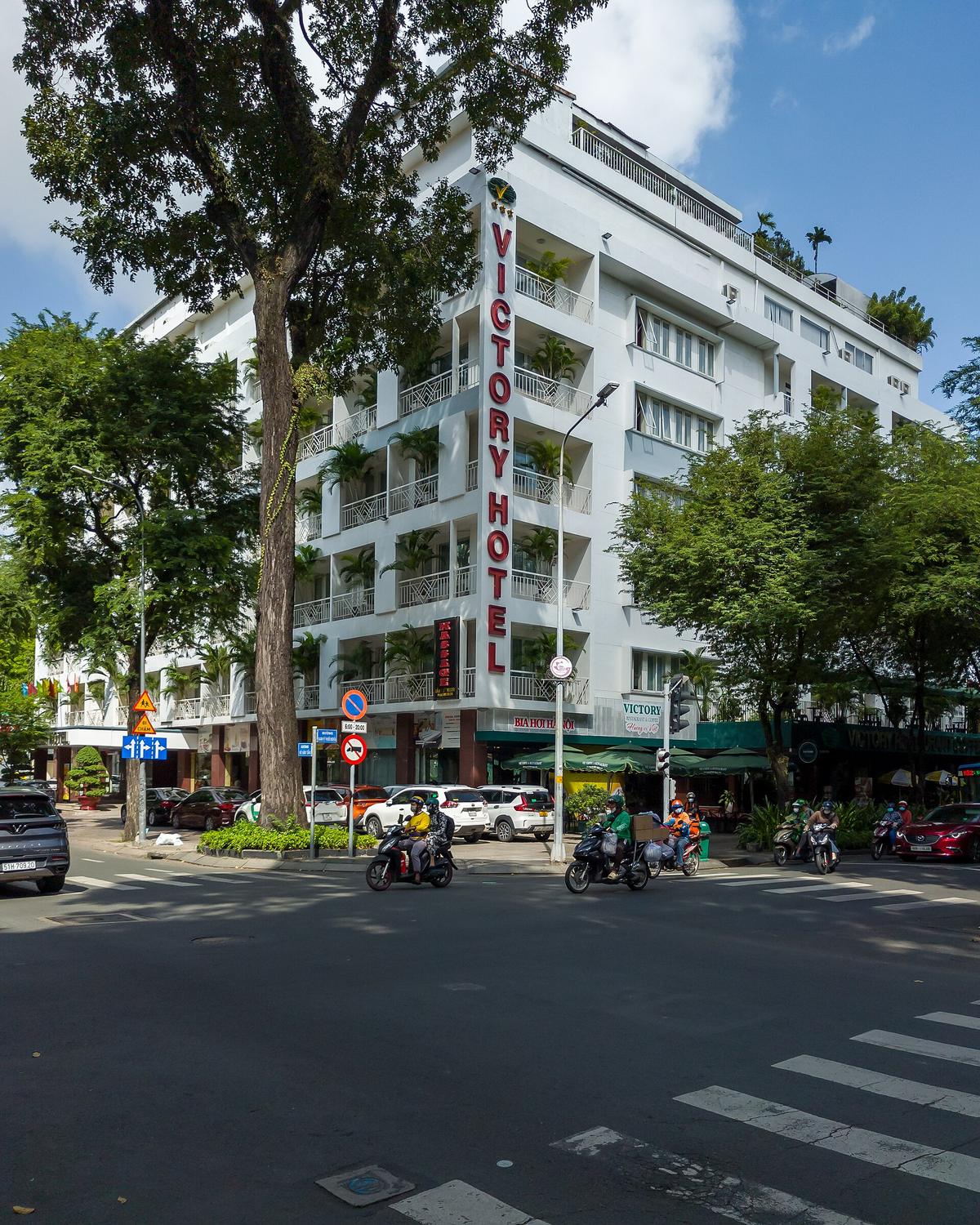
District 1 contains the colonial grand hotels, the international five-star towers, and the backpacker corridor of Pham Ngu Lao and Bui Vien Street. The worst mistake is staying within 200 metres of Bui Vien Walking Street. That zone hears audible bass from the bars until 02:00. Properties at 400 metres or more achieve street-noise-free sleep. Bui Vien is the loudest street in Vietnam, operating 24 hours. Hostel dorm beds run USD 4-10; private rooms run USD 15-30. Most buildings are four to six floors with no lift. If you want the lowest possible rate, book a hostel here, accept the noise, and treat it as a base for one or two nights. If you want budget accommodation without the noise, stay in District 3 or Phu Nhuan instead. Hotels that sit between Ben Thanh Market and the Saigon Opera House on streets like Dong Khoi, Nguyen Hue, or Hai Ba Trung give you walking distance to landmarks and a taxi rank, but the noise level rises the closer you get to the backpacker enclave. Use Grab to check pick-up points before you book: some hotels on one-way streets force drivers to circle several blocks.
Boutique Hotels: the District 3 Alternative
Boutique hotels are not a style choice. They are a neighbourhood choice. District 3's converted villas sit on streets that feel a decade behind the tower corridor. You get colonial bones, terrazzo floors, spiral staircases, louvered shutters, without the colonial grand hotel price. The nightly rate of USD 60-140 places these in the same budget as a mid-range chain but with materially different architecture. The downside: no rooftop pool, no skydeck views, and breakfast is a set plate rather than a buffet. The upside: you are within walking distance of the War Remnants Museum, Tan Dinh Church, and the best morning coffee carts on low plastic stools. For a traveller who wants to eat snail noodles on Vinh Khanh Street in District 4 and walk back to a quiet villa with a courtyard, this is the best option. For anyone who needs a business centre and a gym, it is the wrong one.
.jpg)

Budget Hotels That Avoid the Bui Vien Noise Trap
Staying on Bui Vien or Pham Ngu Lao costs USD 4-30 per night and guarantees sleep disruption. The alternative: a mid-range Vietnamese chain in District 3 or Phu Nhuan for USD 45-100 per night. Liberty, Silverland, and A25 run properties in the 22-32 m² range with breakfast included and a non-alcoholic minibar. Noise levels drop to residential. The trade-off: you lose walking distance to Ben Thanh Market and Nguyen Hue. You gain access to morning coffee carts and street food without the drunk-tourist soundtrack. For a traveller on a nightly rate of under USD 50, this is the safer choice. The Grab ride to District 1 landmarks costs 20,000-50,000 VND and takes ten minutes. Budgeting for that ride beats budgeting for earplugs.
If You Only Have One Morning To Decide
Open the Grab app. Search for the hotel address and check the estimated ride time to the Saigon Opera House, Ben Thanh Market, and the War Remnants Museum. If any route shows a pick-up point on a one-way street with cancellations during rush hour (7:30-9:00 AM, 4:30-6:30 PM), move the pin to the next candidate. Grab drivers cancel frequently in those windows. A hotel that forces your driver into a three-block loop will leave you stranded. The hotel's proximity to a clear taxi rank or a main avenue matters more than the lobby's marble. This is the practical filter that separates a recommendation that works from one that looks good on a screen.
Common Questions
What does 'plus-plus' mean on a hotel rate?
Plus-plus means the quoted rate excludes 5% service charge and 8% VAT. The total adds 13.4%. It is standard at four-star and above in Ho Chi Minh City. Hostels and two-to-three-star hotels include tax in the advertised price.
How far from Bui Vien should I stay to avoid noise?
At least 400 metres from Bui Vien Walking Street. Within 200 metres, audible bass continues until 02:00.
Do boutique hotels in District 3 have lifts?
Few have a lift beyond the third floor. Most are converted villas with staircases. If mobility is a concern, choose a mid-range chain or a tower with an elevator.
What is the cheapest way to get a room with a pool?
Mid-range Vietnamese chains rarely have pools. The cheapest entry to a rooftop pool is a four-star international tower in District 1, with nightly rates starting around USD 180 plus-plus.
Are colonial grand hotels worth the premium over a mid-range chain?
Yes, if you value location on Dong Khoi Street, architecture, and a rooftop bar. No, if you need modern soundproofing, a gym, or a pool. The room is 28-45 m² with ceiling fans and louvered shutters, not a soundproofed box.
Can I stay in Thao Dien for a short trip?
Thao Dien serviced apartments require a minimum one-month stay and monthly rates of USD 600-2,500. Short-term hotels exist but are limited. This area suits long-stay expats, not three-night visitors.
How do I check if a hotel is licensed for foreign guests?
Confirm in writing before booking. Look for 'licensed to host foreigners' in the listing. Vietnam requires all accommodation to register foreign guests with local police, and unlicensed properties cannot accept foreign passports.
Read next
-
 Ho Chi Minh City Where to Stay District by District for Every Travel Style
Where to stay in Ho Chi Minh City: a district-by-district breakdown of Saigon neighbourhoods from chaotic District 1 to the expat calm of Thao Dien.
Ho Chi Minh City Where to Stay District by District for Every Travel Style
Where to stay in Ho Chi Minh City: a district-by-district breakdown of Saigon neighbourhoods from chaotic District 1 to the expat calm of Thao Dien.
-
 Flying to Ho Chi Minh City Airport Guide and the Airlines That Serve SGN
Airlines flying into Tan Son Nhat Airport (SGN), terminal details, and a step-by-step arrival guide for getting from the plane into Ho Chi Minh City.
Flying to Ho Chi Minh City Airport Guide and the Airlines That Serve SGN
Airlines flying into Tan Son Nhat Airport (SGN), terminal details, and a step-by-step arrival guide for getting from the plane into Ho Chi Minh City.
-
 Ho Chi Minh City Things to Do Ranked From War History to Wholesale Flower Markets
Ho Chi Minh City things to do ranked with honest verdicts: which Saigon war-history sights, markets, and temples earn your three days and which to skip.
Ho Chi Minh City Things to Do Ranked From War History to Wholesale Flower Markets
Ho Chi Minh City things to do ranked with honest verdicts: which Saigon war-history sights, markets, and temples earn your three days and which to skip.
-
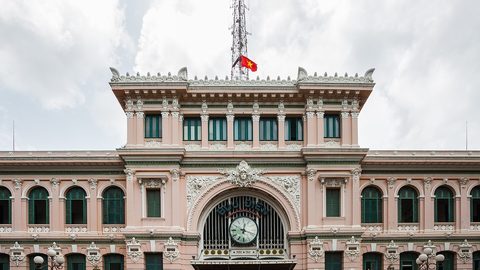 Ho Chi Minh City Best Time to Visit Month by Month Avoiding Tet Closures and Monsoon Flooding
Ho Chi Minh City best time to visit month by month: dry season windows, Tet holiday closures that empty the city, and the monsoon flooding to avoid.
Ho Chi Minh City Best Time to Visit Month by Month Avoiding Tet Closures and Monsoon Flooding
Ho Chi Minh City best time to visit month by month: dry season windows, Tet holiday closures that empty the city, and the monsoon flooding to avoid.
-
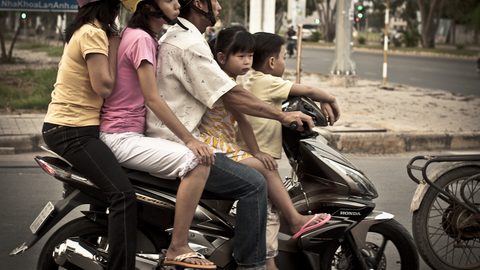 Ho Chi Minh City Getting Around Without Losing Your Phone or Your Nerve
Getting around Ho Chi Minh City: Grab app tactics, airport transfers from Tan Son Nhat, and how to cross a Saigon street without stopping or running.
Ho Chi Minh City Getting Around Without Losing Your Phone or Your Nerve
Getting around Ho Chi Minh City: Grab app tactics, airport transfers from Tan Son Nhat, and how to cross a Saigon street without stopping or running.
-
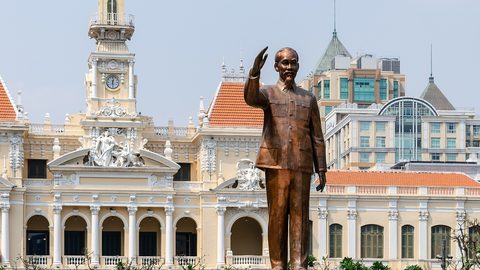 Ho Chi Minh City Itinerary for 3 Days of War History Markets and Street Food
A 3-day Ho Chi Minh City itinerary: District 1 war history on day one, Cholon markets on day two, and a Saigon street-food night on day three.
Ho Chi Minh City Itinerary for 3 Days of War History Markets and Street Food
A 3-day Ho Chi Minh City itinerary: District 1 war history on day one, Cholon markets on day two, and a Saigon street-food night on day three.
-
 War Remnants Museum
The War Remnants Museum in Ho Chi Minh City is the most emotionally affecting stop in the city. Here is what to expect and how to prepare.
War Remnants Museum
The War Remnants Museum in Ho Chi Minh City is the most emotionally affecting stop in the city. Here is what to expect and how to prepare.
-
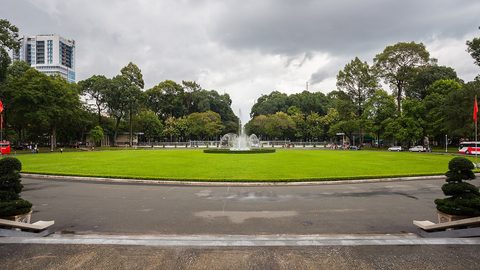 Reunification Palace
The Reunification Palace in Ho Chi Minh City is famous for its tank gate, but the basement war command bunker is the part that explains the building.
Reunification Palace
The Reunification Palace in Ho Chi Minh City is famous for its tank gate, but the basement war command bunker is the part that explains the building.
-
 Ben Thanh Market
 in Ho Chi Minh City is a tourist trap for souvenirs but genuinely good for lunch. Here is what to eat and what to skip.
Ben Thanh Market
Ben Thanh Market in Ho Chi Minh City is a tourist trap for souvenirs but genuinely good for lunch. Here is what to eat and what to skip.