Ho Chi Minh City Food: Eating Saigon From Sidewalk Carts to Cholon Dumpling Shops
Ho Chi Minh City food guide: Saigon's sweeter, herbier southern cuisine from Vinh Khanh snail street to Cholon dumplings and the 2:30pm banh mi ritual.
You have three days in Saigon and every street food list names the same five dishes, but none of them tell you what to order, at which exact stall, at what hour, or how to handle the exhaust fumes that come with the meal. Here is the answer. Ho Chi Minh City food is sweeter, herbier, and more structurally diverse than anything you will find in Hanoi. Three centuries of Chinese migration and a tropical pantry built a cuisine that reaches from charcoal-grilled broken rice on a District 1 sidewalk to Cantonese dumpling broth in a Cholon alley at 7am. The seven dishes and seven vendors below are the ones worth crossing the city for. Each comes with a specific time, a specific street, and a specific failure case if you arrive wrong.
Saigon Street Food Guide: What Defines Eating in This City
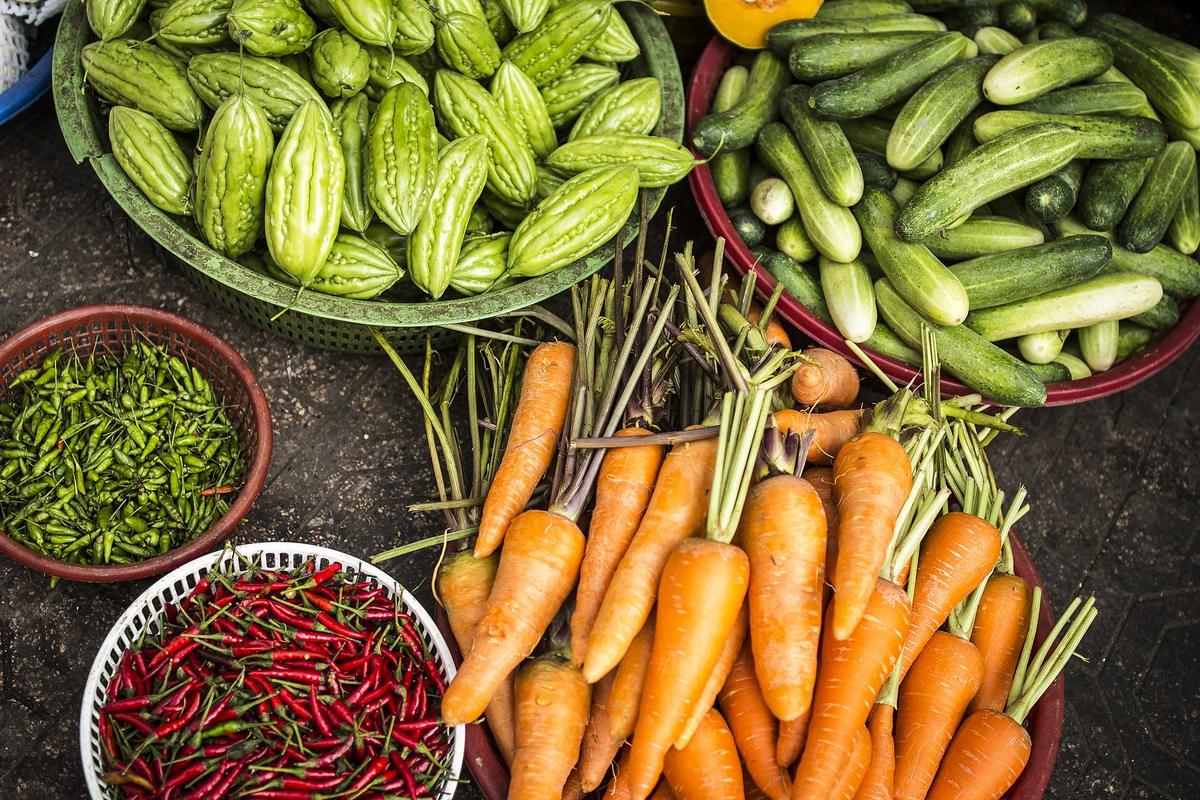
Southern Vietnamese cuisine runs on three things the north does not: coconut, sugar, and a Chinese-Cambodian noodle inheritance. The pho broth here is sweeter, darker, and loaded with more aromatic spices than the Hanoi version. The standard herb plate arrives with Thai basil, sawtooth coriander, bean sprouts, a lime wedge, and sliced bird's-eye chilli. Every bowl is a full assembly, not a garnish afterthought. Hu tieu, the Chinese-Cambodian noodle soup, is almost unknown above Da Nang; in Saigon it is a morning staple. Order the Phnom Penh-style hu tieu Nam Vang with its clear pork bone broth, chewy noodles, sliced pork, shrimp, quail egg, and chives. The city does not do minimalism. It does layers.
.jpg)
Best Food Ho Chi Minh City: the Seven Dishes and Where to Find Them
Banh Xeo 46A: The 30cm Sizzling Crepe In A District 1 Alley
Banh Xeo 46A sits in a chaotic alley off Nguyen Hue. It is the benchmark for the southern version of the dish. The southern banh xeo is larger than the central version, about 30cm in diameter, thinner, and heavy on turmeric. Crack the crepe with your chopsticks, tear off a piece, wrap it in mustard leaf and lettuce with the bean sprouts and pork inside, then dunk it in the fish-sauce-based nuoc cham. Arrive before 11am or after 4pm; the stall runs out of batter by 2pm on busy days. Vegetarians should skip this one. The filling is pork and shrimp and there is no chay alternative.
Com Tam Moc: Broken Rice With Charcoal-Grilled Pork Chop
Com tam, broken rice, the fractured grains once considered a milling by-product, is the Saigon carb base. Com Tam Moc in District 1 serves the definitive version: a charcoal-grilled pork chop over the fractured rice, topped with shredded pork skin, steamed egg meatloaf, and a fried egg. The grill is right on the pavement. You smell the char before you see the stall. The failure case: it closes by 9pm, so make this a lunch or early dinner play.
Banh Mi Huynh Hoa: The Monstrous Baguette With A 2:30pm Ritual
Banh Mi Huynh Hoa opens at exactly 2:30pm and sells out within three hours. The queue forms before 2pm. The baguette is a monster, butter-laden, stuffed with grilled pork, pâté, cold cuts, pickled daikon and carrot, cucumber, coriander, and chilli. The French introduced banh mi during the colonial period from 1887 to 1954, and Saigon evolved it into this overstuffed sandwich that bears almost no resemblance to a Parisian jambon-beurre. Arrive at 2:15pm, take a number, and wait your turn. The failure case: if you show up at 5pm, there is nothing left. The backup is Banh Mi Hong Hoa on Nguyen Trai, which opens earlier and runs later but is smaller and less famous.
Bo La Lot Co Lien: Betel-Leaf-Wrapped Beef On Charcoal
Bo la lot wraps seasoned beef in betel leaves and grills them over charcoal until the leaf smokes and crisps. Bo La Lot Co Lien in District 3 serves them with rice paper, a full herb platter, and nuoc cham. You roll your own, adding pickled carrot and daikon, then dip. The stall is a sidewalk operation on Nguyen Thuong Hien street, one of the area's notable food streets. The experience includes sitting on plastic stools while motorbike exhaust pools around your ankles. That is the trade-off for the smoke flavour.
Bun Thit Nuong: Cold Rice Vermicelli With Grilled Pork
Bun thit nuong is a cold rice vermicelli bowl with grilled pork, crushed peanuts, herbs, and nuoc cham poured over the top. Every District 1 alley hem off Bui Vien or Dong Khoi has a version. The best ones are the stalls with high customer turnover, because that means fresher ingredients. Look for the stall where the pork is still sizzling on the grill as you order, not sitting in a tray. The failure case: late-night bun thit nuong stalls are rare; after 10pm, switch to pho or snail street.
Sui Cao: Cantonese Dumplings In Cholon's Morning Window
Cholon, the Chinese quarter in Districts 5 and 6, opens for food between 6am and 10am. Sui cao are its delicate, essential breakfast. These are Cantonese dumplings, thin wrappers, pork and shrimp filling, served in a clear broth with chives. The best stalls cluster around Binh Tay Market, the chaotic wholesale hub. Order by pointing at the dumplings in the steamer and showing the number 2 on your phone calculator. The failure case: by 10:30am most stalls have packed up, so this is a morning-only play. If you miss it, the backup is dim sum at a Cholon teahouse, but the sui cao are the specific heritage item.
Oc On Vinh Khanh Street: Snails With Coconut, Tamarind, And Exhaust Fumes
Vinh Khanh Street in District 4 becomes snail street from 5pm to 11pm. Dozens of stalls serve shellfish in coconut milk, tamarind, and chilli. The experience is not quiet. You sit on plastic stools on the pavement, a metre from moving traffic, and you will inhale exhaust fumes while eating some of the best food of your life. Order oc len xao dua, snails stir-fried with coconut cream, and oc huong nuong mo hanh, sea snails grilled with scallion oil and peanuts. Use the cylindrical ice with a hole in the middle for your drink; that is factory-made filtered ice. Avoid irregular or crushed ice from street stalls. The failure case: rain cancels snail street. During monsoon downpours from late September to October, the stalls fold up and wait it out. If you are there on a rainy evening, head to a covered com tam stall instead.
What to Eat Ho Chi Minh City: the Full Dish Map by District and Hour
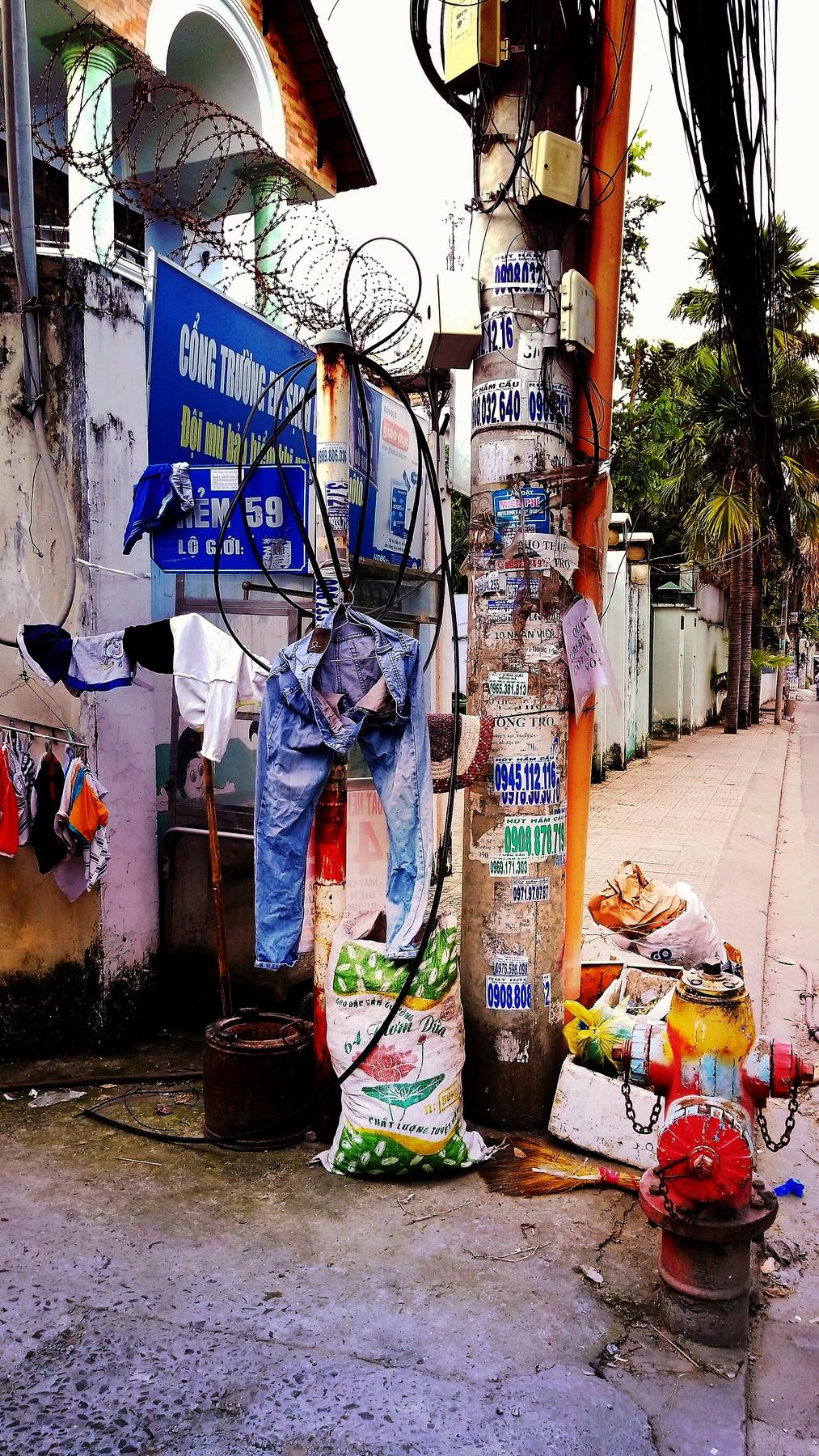
The geography of eating in Saigon follows neighbourhood rhythms. District 1's alley hems, the narrow lanes off Nguyen Hue, Dong Khoi, and Bui Vien, concentrate banh xeo, com tam, and bun thit nuong stalls that operate from late morning to early evening. District 3's tree-lined streets, particularly Nguyen Thuong Hien, Vo Van Tan, and Tu Xuong, hold the bo la lot stalls and the hidden cafes. The War Remnants Museum sits in District 3. Combine a morning at the museum with a 10-minute walk to Bo La Lot Co Lien for lunch.
Cholon demands an early start. The morning food window is 6am to 10am, peaking around Binh Tay Market. After 10am, the sui cao stalls have cleaned up and the area shifts to dried goods and wholesale commerce. The Museum of Traditional Vietnamese Medicine and the Jade Emperor Pagoda are in District 5. Build your Cholon morning around those landmarks and eat before the museum opens.
District 4's Vinh Khanh Street is strictly evening. Peak hours run 5pm to 11pm. The street is a straight shot by Grab motorbike from District 1, about 15 minutes. Do not walk it. The pavements in District 4 are an obstacle course of motorbike parking and broken concrete, and the street has no sidewalk dining in the western sense; you sit on the road edge.
For ca phe sua da, the iced coffee with condensed milk, you do not need a landmark. Any sidewalk cart with a high stool turnover and a cylinder of ice is your target. The cart version is the city's lifeblood. Sit on the plastic stool, watch the traffic move in waves, and drink it fast before the ice dilutes it.
Southern Vietnamese Cuisine Saigon: Why it Tastes Different from Hanoi
The key difference is the herb and sugar load. Southern Vietnamese cuisine uses coconut milk, palm sugar, and lemongrass the way Hanoi uses fish sauce and star anise. The hu tieu broth is sweeter because of the rock sugar. The banh xeo is thinner and crisper because the batter uses coconut cream. The pho comes with a platter of herbs that would make a Hanoi cook blanch. The Chinese influence, concentrated in Cholon, introduced sui cao and the technique of clear broth dumpling soups. The Cambodian influence, via the Mekong Delta, brought hu tieu Nam Vang and the use of freshwater shrimp and pork combinations. Hanoi's cuisine is restrained and broth-focussed. Saigon's is a pile-on.
This diversity means you can eat a different cuisine at every meal without leaving the city limits. Morning: Cantonese dumplings in Cholon. Midday: charcoal-grilled broken rice from a District 1 sidewalk. Afternoon: a monstrous banh mi at 2:30pm. Evening: snails and beer on Vinh Khanh Street. That sequence is not possible in Hanoi, where the food spectrum runs narrower and the kitchens close earlier.
.jpg)
The Real Friction: Eating Sidewalk Dining with Plastic Stools and Exhaust
Sidewalk dining in Saigon means you eat on plastic stools at knee height, with your bag on your lap and your phone in your pocket. Motorbike parking on the pavement forces pedestrians onto the road. You will eat while motorbike traffic passes within arm's reach. The exhaust is part of the price of the best food. Banh Mi Huynh Hoa's queue forms on a pavement that is also a parking lot. Com Tam Moc's grill sends charcoal smoke into the faces of diners two stools away. Vinh Khanh Street's air quality between 6pm and 8pm is measurable and poor.
Bag and phone snatching by motorbike riders is a real risk across all these locations. Hold your phone loosely in your hand, not in a death grip. A snatch with resistance can pull you off the stool. Keep your bag strap across your body, not hanging off one shoulder. The cylindrical ice from factory sources is safe; the irregular crushed ice from a cart is not. If you do not speak Vietnamese, order by pointing at what other diners are eating, use the phone calculator to agree on a price, and have Google Translate open on the screen. The word for vegetarian is "chay". Look for it on signage if you avoid meat.
The single thing that most often goes wrong on this food tour is the timing. Travellers show up at Vinh Khanh Street at 3pm expecting lunch, arrive at Com Tam Moc at 10pm expecting dinner, or wander into Cholon at noon and find the dumpling stalls shut. Every dish on this list has a narrow window. Banh Mi Huynh Hoa opens for two and a half hours. Cholon's sui cao vanish by mid-morning. Vinh Khanh Street does not start until the evening commute ends. Build your day around the stall schedules, not the other way around, and you will eat the city's best without chasing ghosts.
Common Questions
What time does Banh Mi Huynh Hoa open and how long does the queue take?
It opens at 2:30pm. Join the queue by 2:15pm. The wait is 20 to 40 minutes. The shop sells out by 5pm or earlier. If you arrive after 4pm, have a backup.
Is it safe to eat street food in Ho Chi Minh City?
Yes, with two rules. Eat at stalls with high customer turnover; fresh ingredients move fast. Drink only from cylindrical factory-made ice, not crushed or irregular ice. Bottled water is universal.
What is the difference between southern and northern pho?
Southern pho broth is sweeter, darker, and uses more aromatic spices. The herb plate is larger: Thai basil, sawtooth coriander, bean sprouts, lime wedge, and sliced bird's-eye chilli. Hanoi pho is leaner, clearer, and served with fewer garnishes.
Can I find vegetarian food on snail street?
No. Vinh Khanh Street is seafood exclusively. For vegetarian food, look for com chay (vegetarian rice) on Nguyen Van Nguyen Street in District 1, or any stall with "chay" on its sign. Buddhist vegetarian days on the 1st and 15th of the lunar month widen the options.
How do I cross the street to reach a sidewalk food stall?
Walk at a slow, predictable pace directly into moving traffic. Do not stop, do not run, and do not make eye contact with drivers. The motorbikes will flow around you. Stopping is the most dangerous move.
What is the backup plan when a famous stall is closed?
For banh mi, Banh Mi Hong Hoa on Nguyen Trai. For snail street in rain, go to a covered com tam stall. For sui cao after 10am, skip it and eat dim sum at a Cholon teahouse instead. Always have a mile-wide secondary for the morning-only Cholon options.
How much cash do I need for a full street food crawl?
Budget 150,000 to 250,000 VND per meal, about 6 to 10 USD at 2024 exchange rates. That covers one main dish, one drink, and one snack. Most street stalls do not accept cards. Carry small denominations.
Read next
-
 Ho Chi Minh City Hotels From Converted Villas to Skydeck Towers by Price Band
Ho Chi Minh City hotels sorted by property type and price band, from converted District 3 villas to skydeck towers near the Saigon River.
Ho Chi Minh City Hotels From Converted Villas to Skydeck Towers by Price Band
Ho Chi Minh City hotels sorted by property type and price band, from converted District 3 villas to skydeck towers near the Saigon River.
-
 Ho Chi Minh City Where to Stay District by District for Every Travel Style
Where to stay in Ho Chi Minh City: a district-by-district breakdown of Saigon neighbourhoods from chaotic District 1 to the expat calm of Thao Dien.
Ho Chi Minh City Where to Stay District by District for Every Travel Style
Where to stay in Ho Chi Minh City: a district-by-district breakdown of Saigon neighbourhoods from chaotic District 1 to the expat calm of Thao Dien.
-
 Flying to Ho Chi Minh City Airport Guide and the Airlines That Serve SGN
Airlines flying into Tan Son Nhat Airport (SGN), terminal details, and a step-by-step arrival guide for getting from the plane into Ho Chi Minh City.
Flying to Ho Chi Minh City Airport Guide and the Airlines That Serve SGN
Airlines flying into Tan Son Nhat Airport (SGN), terminal details, and a step-by-step arrival guide for getting from the plane into Ho Chi Minh City.
-
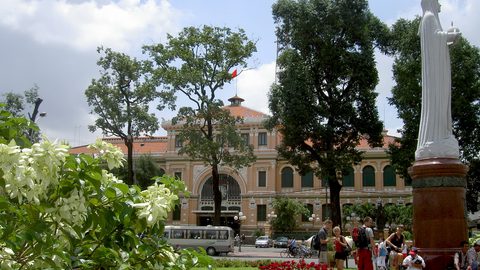 Ho Chi Minh City Things to Do Ranked From War History to Wholesale Flower Markets
Ho Chi Minh City things to do ranked with honest verdicts: which Saigon war-history sights, markets, and temples earn your three days and which to skip.
Ho Chi Minh City Things to Do Ranked From War History to Wholesale Flower Markets
Ho Chi Minh City things to do ranked with honest verdicts: which Saigon war-history sights, markets, and temples earn your three days and which to skip.
-
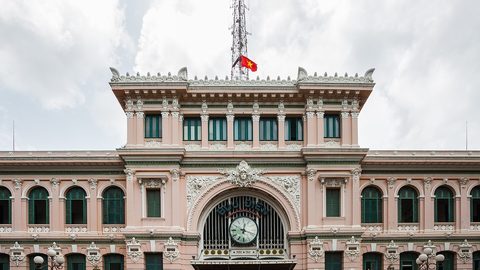 Ho Chi Minh City Best Time to Visit Month by Month Avoiding Tet Closures and Monsoon Flooding
Ho Chi Minh City best time to visit month by month: dry season windows, Tet holiday closures that empty the city, and the monsoon flooding to avoid.
Ho Chi Minh City Best Time to Visit Month by Month Avoiding Tet Closures and Monsoon Flooding
Ho Chi Minh City best time to visit month by month: dry season windows, Tet holiday closures that empty the city, and the monsoon flooding to avoid.
-
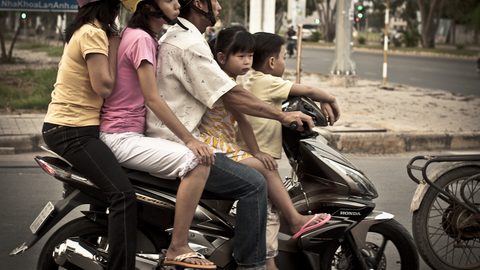 Ho Chi Minh City Getting Around Without Losing Your Phone or Your Nerve
Getting around Ho Chi Minh City: Grab app tactics, airport transfers from Tan Son Nhat, and how to cross a Saigon street without stopping or running.
Ho Chi Minh City Getting Around Without Losing Your Phone or Your Nerve
Getting around Ho Chi Minh City: Grab app tactics, airport transfers from Tan Son Nhat, and how to cross a Saigon street without stopping or running.
-
 War Remnants Museum
The War Remnants Museum in Ho Chi Minh City is the most emotionally affecting stop in the city. Here is what to expect and how to prepare.
War Remnants Museum
The War Remnants Museum in Ho Chi Minh City is the most emotionally affecting stop in the city. Here is what to expect and how to prepare.
-
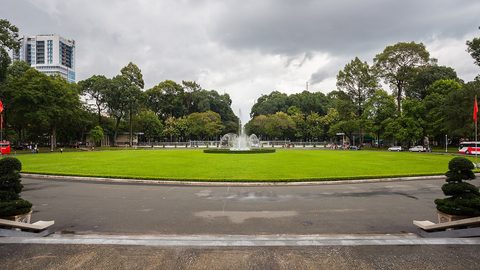 Reunification Palace
The Reunification Palace in Ho Chi Minh City is famous for its tank gate, but the basement war command bunker is the part that explains the building.
Reunification Palace
The Reunification Palace in Ho Chi Minh City is famous for its tank gate, but the basement war command bunker is the part that explains the building.
-
 Ben Thanh Market
 in Ho Chi Minh City is a tourist trap for souvenirs but genuinely good for lunch. Here is what to eat and what to skip.
Ben Thanh Market
Ben Thanh Market in Ho Chi Minh City is a tourist trap for souvenirs but genuinely good for lunch. Here is what to eat and what to skip.