Kitashinchi After Dark Osaka's Most Expensive Nightlife District
Kitashinchi is Osaka's most expensive nightlife quarter, a concentration of hostess bars and salaryman fine-dining restaurants that only comes alive after dark.
- Flag
-
- ISO code
- JP
- Currency
- JPY
- Timezone
- Asia/Tokyo
The Quiet Before the Night
At 3:00 on a Tuesday afternoon, Kitashinchi is a ghost. The east-west streets named after Osaka Castle gates, Doshin-dori and Shinchi-dori, sit empty under a grey sky. Delivery trucks idle outside unmarked doors. A single businessman in a suit walks fast, head down. Nothing is open. Nothing looks like it ever opens. Then dusk hits, the signs appear from nowhere, and the salarymen arrive. That is Kitashinchi.
This is Osaka's most expensive after-dark quarter. It is also one you almost certainly will not enter. Not because it is dangerous. Because its hostess clubs and fine-dining counters operate on a referral-only system that excludes walk-in tourists by design. The 800 hostess bars in this four-block zone do not take your credit card at the door because they do not expect you at the door. They exist for a single purpose: corporate entertainment on the expense account. Understanding why this enclave exists tells you more about Osaka's business culture than any shopping street ever could.
Kitashinchi sits just north of National Route 2, south of the Dojima River, pinned between Yotsubashi-suji and Midosuji. Five minutes on foot from JR Osaka Station in Umeda, through the underground passages or above ground past the taxi rank. The geography matters. It is deliberately close to the city's transport spine and deliberately far from the neon chaos of Minami. This is not Dotonbori. There are no takoyaki stalls, no arcades, no tourists taking photos of the Glico Sign. There is only business, conducted over kaiseki and champagne, behind doors that do not even have a nameplate.

The Hostess Club Economy
The hostess club is the beating heart of Kitashinchi. It is also the most misunderstood business model in Japanese nightlife. A hostess does not sell sex. She sells conversation, attention, and the illusion of intimacy. She pours your beer, lights your cigarette, sings karaoke beside you, makes you feel like the most interesting man in the room. That is the product. The price is steep.
You pay by the hour, from 20:00 until midnight or 01:00. The seat charge alone runs several thousand yen. Every drink the hostess has with you is charged at a premium rate that multiplies the bar's standard prices. Her compensation comes from a commission on those drinks plus an hourly base rate. No direct tipping. The bill can settle at the end of the night by cash or card, but the real economy runs on monthly corporate invoicing. That salaryman with the expense account does not pay himself. His company pays, and the receipt goes into a tax-deductible entertainment budget.
Walk-in admission is not possible. You need an introduction from an existing customer or a referral from a regular. The absence of displayed menus, prices, or even signage is a feature, not a bug. It guarantees that everyone inside has already been vetted. For tourists, this is an absolute barrier. Do not try. Even if you stood outside a door and asked, the answer would be a polite refusal. The value of this quarter to its users is precisely that you cannot replicate it without the connections.
How The Night Unfolds
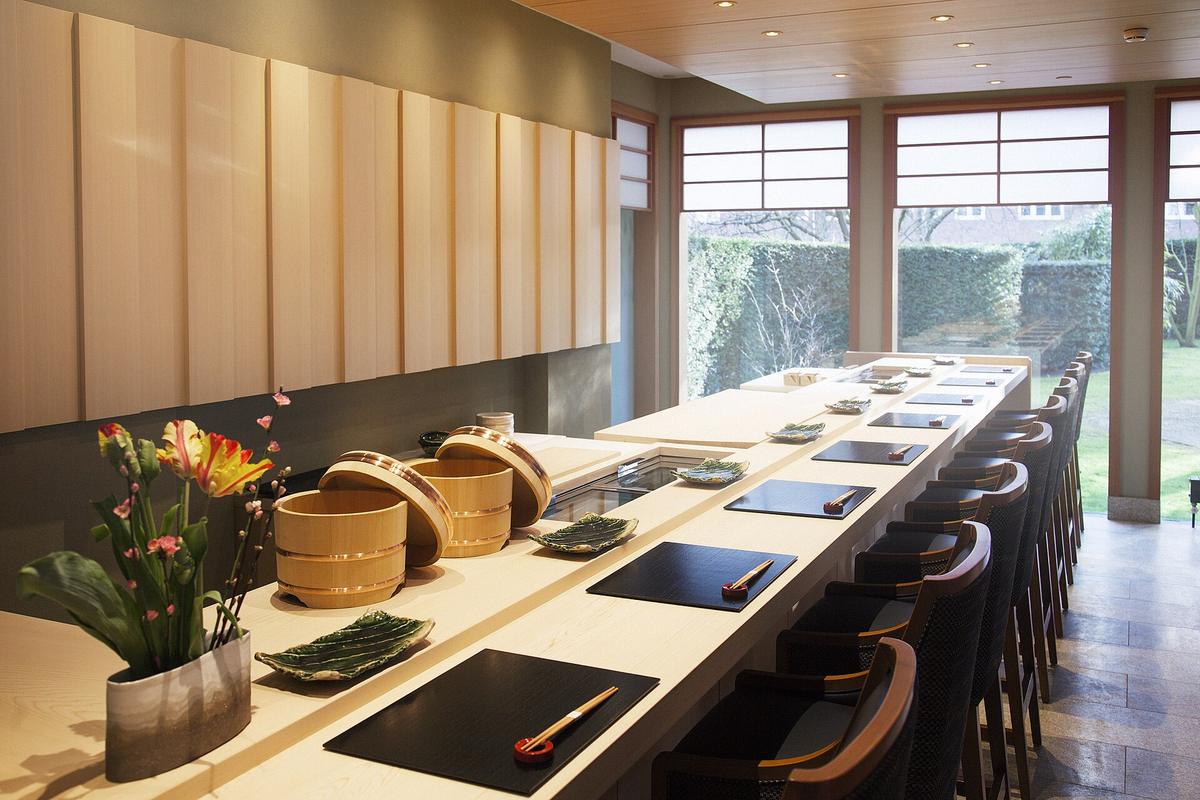
The business dinner comes first. The high-end restaurants of Kitashinchi, kappo counters, sushi bars, tempura specialists, French kitchens, seat six to twelve at a counter. The chef controls the pace. A dinner course runs ¥20,000 to ¥50,000 per person. Fifteen Michelin stars sit in this neighbourhood according to the 2025 guide, including the three-star Kashiwaya and Taian. You cannot book these counters yourself if you do not speak Japanese. The concierge at the Hilton Osaka, The Ritz-Carlton Osaka, or Hotel Granvia Osaka handles the reservation. Lead time is one to three months. Cancellation within 48 hours costs you 50 to 100 percent of the course price. Then, after the last course, the party moves to a hostess club. Dinner is the warm-up. The club is the main event.
What Kitashinchi Is Bad At
Kitashinchi is bad at being anything during daylight. The morning and afternoon streets feel abandoned because they essentially are. The high-end counters open for lunch on weekdays only, with courses from ¥5,000 to ¥15,000, but you still need a reservation. Arrive at 2:00 PM hoping for a spontaneous bowl of noodles and you will find locked doors and silence. The area has no hotels. No convenience stores of the kind that dot every other corner of Osaka. No standing bars where you can drink alone. It is a single-purpose machine, switched off for sixteen hours a day.
Walking the Grid After Dark
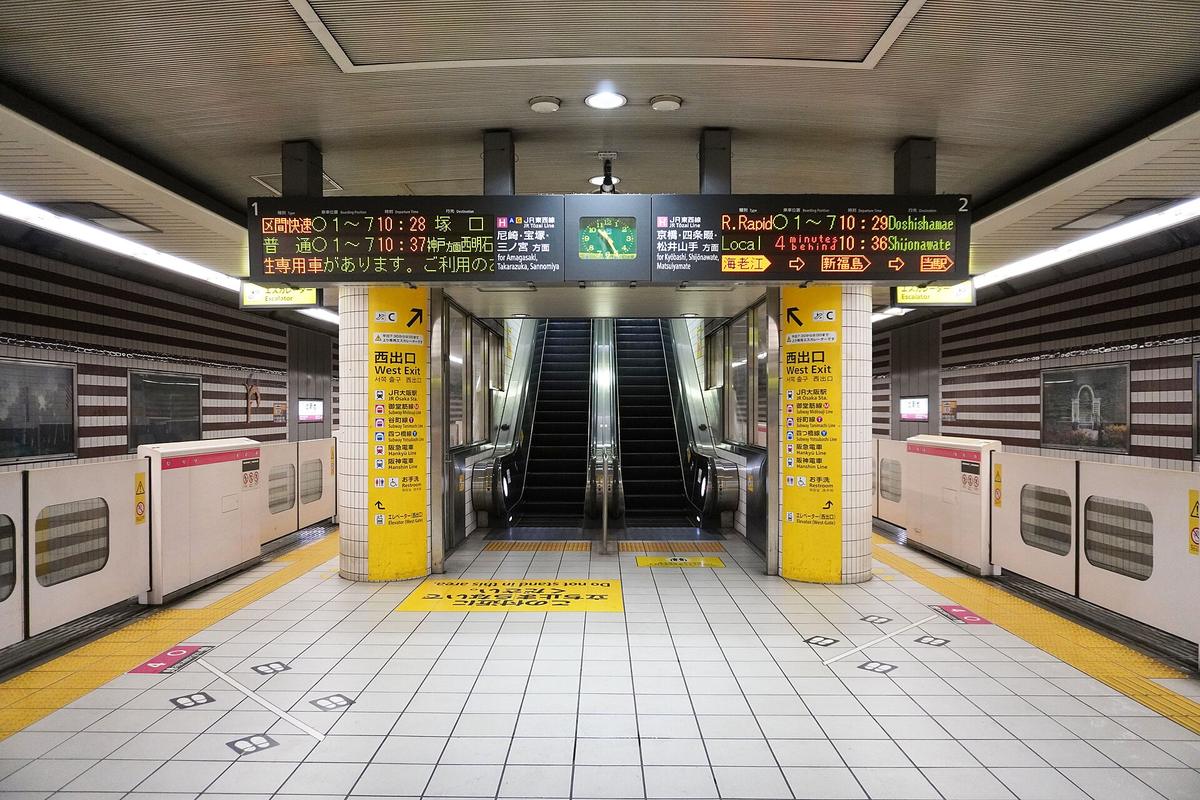
Start at JR Kitashinchi Station on the JR Tozai Line. Exit and walk south across Shinchi-dori. By 20:00, the street has transformed. Men in dark suits move in groups of two or three. Taxis idle at the ranks along Shinchi-dori and Doshin-dori, drivers waiting for the calls that come after midnight. The hostess club doors are unmarked, but you can identify them by the small plaques near the entrance, the absence of a menu in the window, and the bouncer in a suit standing just inside.
Cross south over Route 2 and you hit the boundary of Minami, the neon world of Dotonbori and Namba. The contrast is instant and total. One block north, the lighting is dim, the conversation is quiet, the prices are hidden. One block south, you cannot move for tourists, the signs are ten meters tall, and Osaka's loud commercial soul is on full display. Kitashinchi exists in deliberate opposition to that energy.
The grid of streets, east-west lanes named for the gates of the former Osaka Castle, north-south passages that run between the Dojima River and Route 2, gives you a clear walkable loop. Fifteen minutes at a normal pace covers the whole quarter. That is part of the point. Everything is close. A client can eat at a three-star counter, walk two minutes to a hostess club, and be home in Umeda within ten minutes of the last train.
Last Train Reality
The last train from JR Kitashinchi Station departs around 00:15 eastbound and 23:50 westbound. If you are the client, you leave before it. If you are the hostess, you stay later. The quarter does not sleep. Taxis are the backup, and the ranks fill after the trains stop. Budget for a ¥1,500 to ¥2,500 cab ride to the hotels of Umeda if you miss the final departure.
The Cultural Purpose of a Closed Door
Kitashinchi answers a question most visitors never think to ask: where does Osaka's business class go when the workday ends, and why does it need to be invisible? The quarter exists because corporate entertainment is a formal pillar of Japanese business culture. Deals are not sealed with a handshake and a contract. They are sealed over multiple evenings, across multiple venues, with the client's comfort managed at every stage. The hostess club creates a private space where hierarchy relaxes, where a junior salaryman can sing badly in front of his boss without career damage, and where the expense account becomes a relationship-building tool.
That economy has been under pressure. Police crackdowns on organised crime involvement in hostess clubs have been ongoing since the 2010s, and the yakuza presence in Kitashinchi, though historically documented, has receded. The billing model also attracts occasional scams, with inflated bills at unlicensed bars targeting intoxicated visitors. These are rare and concentrated in marginal establishments, not the top-tier clubs. Still, the risk exists. It is another reason the referral-only system matters. It filters out the predators as well as the tourists.
The honest caveat: Kitashinchi is not for you unless you have a Japanese business contact, a deep expense account, and a concierge making calls three months ahead. The quarter is fascinating as a cultural artifact, a living demonstration of how Osaka's commercial soul operates after dark. But it is not a place to visit. It is a place to observe from the boundary, to understand from the outside, and to respect for its refusal to pretend otherwise.

| Meal | Price Range Per Person | Reservation Lead Time | Access For Non-Japanese Speakers |
|---|---|---|---|
| Dinner at Michelin-starred counter | ¥20,000 - ¥50,000 | 1 - 3 months | Hotel concierge only |
| Lunch at high-end counter | ¥5,000 - ¥15,000 | 1 - 4 weeks | Hotel concierge only |
| Drink at hostess club | Variable, hourly seat charge plus premium drink fees | Referral required | Not available without introduction |
Other areas in Osaka
Common Questions
Can I walk into a hostess club in Kitashinchi as a tourist?
No. Hostess clubs require an introduction or regular-customer referral. Walk-in admission is not permitted. Even if you find an unmarked door, the bouncer will refuse entry.
How much does dinner cost in Kitashinchi?
Dinner courses run ¥20,000 to ¥50,000 per person at high-end counters. Lunch courses on weekdays cost ¥5,000 to ¥15,000. Reservations require a hotel concierge and lead time of one to three months.
Is Kitashinchi dangerous?
The area has a historically documented yakuza presence, but police crackdowns since the 2010s have reduced visibility. The greater risk is billing scams at unlicensed bars, not street crime. Stick to the main streets after dark.
What time does Kitashinchi come alive?
Most businesses open after 17:00 and hostess clubs operate from 20:00 to midnight or 01:00. By day the streets are largely empty. The neighbourhood has almost no daytime character at all.
Read next
-
 Osaka Hotels, Sorted by Price Band and Property Type Not Neighbourhood
Osaka hotels sorted by budget and type, business towers, luxury high-rises and the few ryokan, with the trade-off each choice demands.
Osaka Hotels, Sorted by Price Band and Property Type Not Neighbourhood
Osaka hotels sorted by budget and type, business towers, luxury high-rises and the few ryokan, with the trade-off each choice demands.
-
 Where to Stay in Osaka, Pick the District That Matches Your Nights
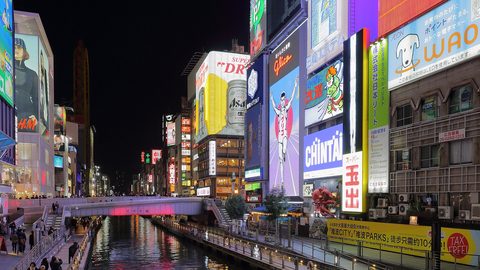
Osaka's districts switch character after sunset. Pick where to stay based on whether you want street food chaos, standing-bar crawls or a quiet lane.
Where to Stay in Osaka, Pick the District That Matches Your Nights
Osaka's districts switch character after sunset. Pick where to stay based on whether you want street food chaos, standing-bar crawls or a quiet lane.
-
 Osaka Flights Which Airport to Choose and When to Book
KIX or Itami? Which Osaka airport to fly into, when flight prices spike during cherry blossom and November, and the booking windows that matter.
Osaka Flights Which Airport to Choose and When to Book
KIX or Itami? Which Osaka airport to fly into, when flight prices spike during cherry blossom and November, and the booking windows that matter.
-
 Osaka Things to Do, What Earns a Slot in Two Full Days
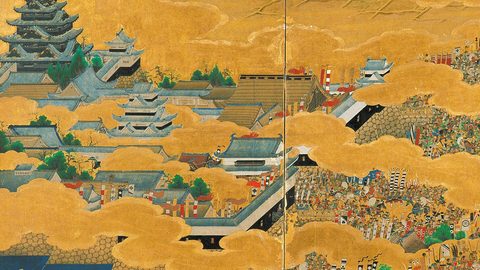
Osaka is not a monument city. This page ranks what earns a slot in two full days, from Dotonbori's neon to Shinsekai's retro grit.
Osaka Things to Do, What Earns a Slot in Two Full Days
Osaka is not a monument city. This page ranks what earns a slot in two full days, from Dotonbori's neon to Shinsekai's retro grit.
-
 Best Time to Visit Osaka, Month by Month and the Trade Off Each One Asks
-
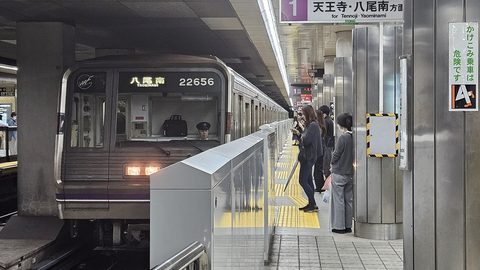 Getting Around Osaka, The Subway, the Private Railways and the Umeda Maze
Osaka's transit is fast but fractured. The Umeda station maze, private railway tickets and the ICOCA card explained before you go.
Getting Around Osaka, The Subway, the Private Railways and the Umeda Maze
Osaka's transit is fast but fractured. The Umeda station maze, private railway tickets and the ICOCA card explained before you go.
-
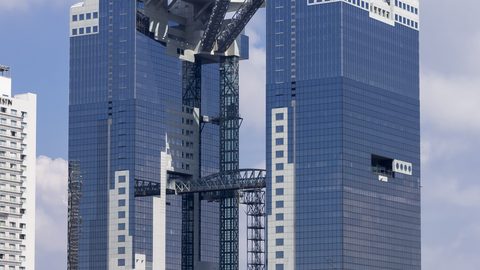 Umeda
How to navigate Umeda's multi-station maze in Osaka's Kita district: which exits to use, where to meet someone, and why the department stores are your best landmark.
Umeda
How to navigate Umeda's multi-station maze in Osaka's Kita district: which exits to use, where to meet someone, and why the department stores are your best landmark.
-
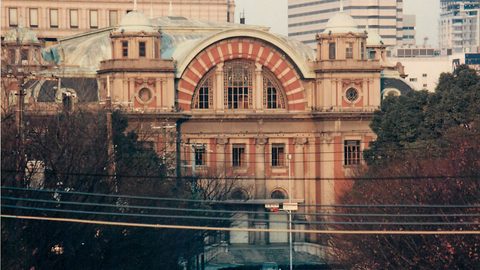 Nakanoshima
 is Osaka's museum island, a riverside strip of civic galleries, rose gardens and the quietest central walk in the city.
Nakanoshima
Nakanoshima is Osaka's museum island, a riverside strip of civic galleries, rose gardens and the quietest central walk in the city.
-
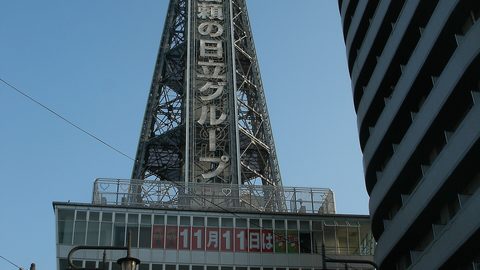 Shinsekai
 is Osaka's 1912 future district, home to kushikatsu alleys, Tsutenkaku tower and an unpolished Showa-era atmosphere that rewards the right visitor.
Shinsekai
Shinsekai is Osaka's 1912 future district, home to kushikatsu alleys, Tsutenkaku tower and an unpolished Showa-era atmosphere that rewards the right visitor.