Sumiyoshi Taisha Shrine and the Straight Roof Style Found Almost Nowhere Else
Sumiyoshi Taisha's straight-roof sumiyoshi-zukuri architecture predates Buddhist influence and survives almost nowhere else, plus its steep Sorihashi bridge and free grounds.
.jpg)
Sumiyoshi Taisha Osaka Shrine Guide
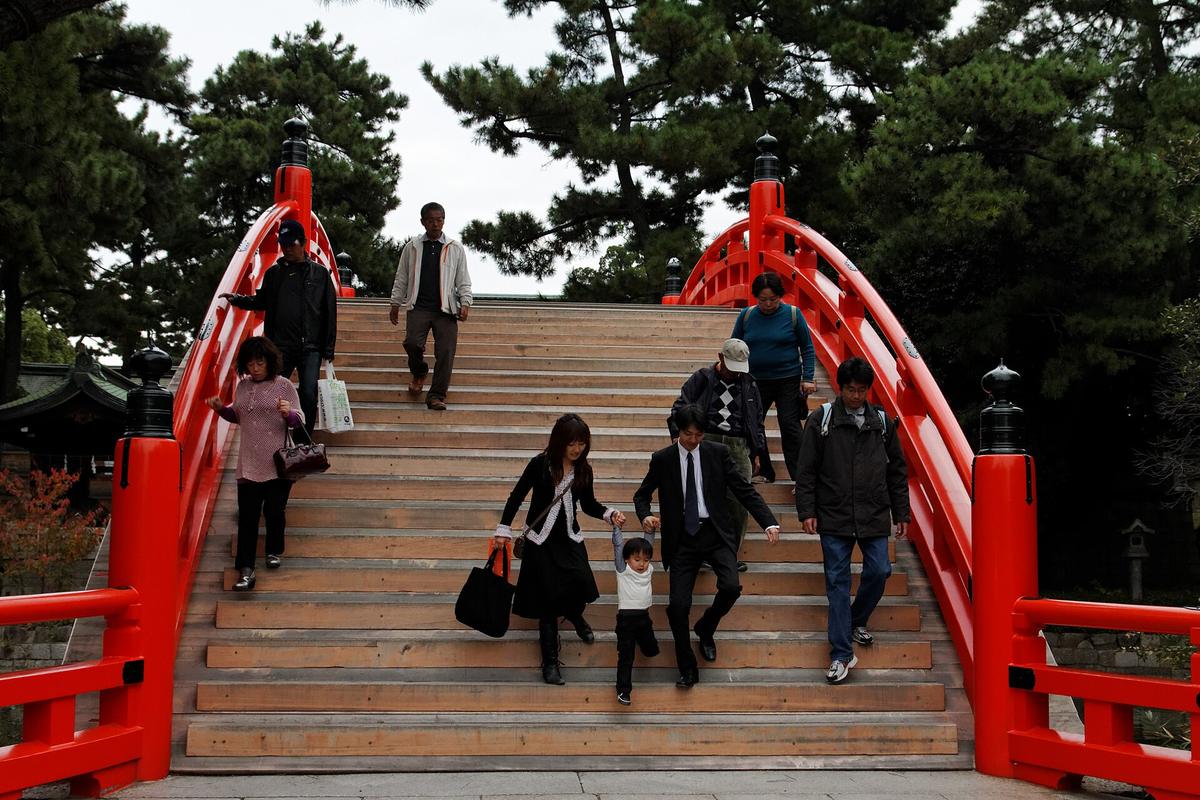
Every major shrine in Japan curls at the roof edge. Sumiyoshi Taisha does not. Its ridges run straight. No upturned eaves, no Buddhist temple DNA smuggled in. This is sumiyoshi zukuri, a form that predates Buddhism's arrival on the archipelago and survives almost nowhere else. The four main halls are National Treasures. The grounds are free. And the 48-degree arch of the Sorihashi bridge is the most photographed approach in Kansai outside the Kyoto circuit. You come here for a working Shinto site, not a tourist theatre piece.
Sumiyoshi Taisha is the head shrine of roughly 2,300 Sumiyoshi shrines across Japan, all dedicated to safe sea travel and voyage protection. At its legendary founding in 211 CE, the shrine stood on a sandbar facing Osaka Bay. Eighteen centuries of sediment from the Yamato and Yodo rivers pushed the coastline two to three kilometres west. The shrine never moved. What you see is a site that kept its original form while the sea retreated, while Buddhism reshaped every other major shrine, while Osaka grew into a concrete sprawl around it.
- Official Name: 住吉大社 (Sumiyoshi Taisha)
- Address: 2-9-89 Sumiyoshi, Sumiyoshi-ku, Osaka, 558-0045
- Admission: Free (grounds and outer precincts). Treasure Hall ¥300, closed Mondays, 09:00-16:30
- Nearest Station: Sumiyoshi Taisha Station (Nankai Main Line, 10 min from Namba, ¥210) or Sumiyoshi Torii-mae (Hankai Tramway, 18 min from Shinsekai, ¥230)
- Hours: 06:00-17:00 (Apr-Sep), 06:30-17:00 (Oct-Mar). No night illumination except Hatsumode.
What Sumiyoshi Zukuri Actually Looks Like
Walk past the first stone torii gate and you will notice it before you reach the bridge. The four honden, the main halls, sit side by side. Each one is four bays deep and two bays wide. The entrance is on the gabled end, not the long side. That is the opposite of later shrine styles that borrowed from temple layouts. There is no surrounding corridor. The roof is cypress bark, thick and layered, cut horizontal. No upward curve at the eaves. No Chinese or Korean influence. The ridge carries okichigi, forked finials that stand upright like antennae. They are the only decoration at the roofline.
This is Shinto architecture before Buddhism arrived in the 6th century and changed everything. The third honden, rebuilt in 1810, is the oldest surviving example of sumiyoshi zukuri in Japan. All four honden are designated National Treasures. That is four National Treasure buildings on the same site, a concentration matched by very few shrines in the country. The total count of Important Cultural Properties on the grounds is 21 buildings.
The Sorihashi Bridge Problem
The drum bridge, Sorihashi, spans the pond at the entrance. It arcs to roughly 3.6 metres above the water at its peak, and the angle hits about 48 degrees. Crossing it is a deliberate act. The steep climb forces you to look down, then up, the way a sailor scans the horizon. The current bridge is a 1930 concrete core faced with stone. The original was recorded in a 12th-century document as a donation from a consort of Emperor Toba. The Ministry of the Environment publishes the precise structural details; the exact date of first construction is not definitively established.
Two hundred metres before the bridge you pass over 600 stone lanterns. Most were donated by shipping merchants and traders during the Edo period. Read the inscriptions near the approach to Sorihashi. Donor names, vessel types, trade routes. These are not decorative. They are receipts. A merchant who made a safe return from a voyage donated a lantern as a public thank-you. The cluster acts as a physical log of Osaka's maritime economy.
How to Visit Without Wasting the Trip
Arrive at 08:00 on a weekday. The grounds open at 06:00 from April to September, 06:30 from October to March. By 09:00 the first domestic tour buses pull in. By 10:00 the Sorihashi bridge is a queue. Free admission means no ticket gate controlling flow. You walk straight in. That is the advantage. The disadvantage is that anyone can walk straight in, and at peak times they do.
Take the Nankai Main Line from Namba. The ride costs ¥210 and takes ten minutes, with departures every five to eight minutes during daytime. Get off at Sumiyoshi Taisha Station. The main gate is a two-minute walk east. The alternative is the Hankai Tramway from Ebisucho in Shinsekai. Eighteen minutes, ¥230 flat fare, cash or ICOCA only. The Hankai is the only streetcar line left inside Osaka city. Some cars date from the 1950s and 1960s. Take the tram for the ride alone if you have the time; it adds a genuine piece of Osaka to the morning.
When The Crowds Are A Problem
Hatsumode, the first shrine visit of the New Year, draws 2.3 to 2.5 million visitors over three days. The peak window is 23:00 on 31 December to 03:00 on 1 January. The queue for the main hall prayer at that point can hit two hours. The Nankai Main Line runs all night on that date. If you intend to pray, arrive before 22:00 on 31 December or wait until the morning of 2 January. The inner precinct barriers stay in place until approximately 4 January for crowd control, which means you cannot get close to the honden. You spend the time in a queue for a distant view. Not worth it.
The June Otaue Shinji rice planting festival and the Sumiyoshi Matsuri from 30 July to 1 August also surge. The 31 July Nagoshi Harai purification ritual inside the summer festival is a major draw. If you dislike dense crowds, avoid the last week of July altogether. The shrine is not illuminated at night outside these festival dates. What you see at 16:30 is what you get.
What Most Visitors Get Wrong
The mistake is treating Sumiyoshi Taisha like a Kyoto shrine. Do not plan an entire day around it. The grounds cover roughly 100,000 square metres. You can see the four honden, cross the bridge, read a dozen lantern inscriptions, and ring the bell at the main prayer hall in 45 minutes. An hour if you add the Treasure Hall. The Treasure Hall costs ¥300. It houses a rotating collection of maritime votive tablets, ancient mirrors, and documents from the shrine's 1,800-year history. Closed Mondays and over the New Year period. Do not build a half-day itinerary around this place unless you are a Shinto architecture specialist.
Pair it with something else in southern Osaka. The Hankai Tramway from Sumiyoshi Torii-mae goes straight to Ebisucho in Shinsekai. Eighteen minutes and you are at Tsutenkaku Tower and the kushikatsu alley. Or ride the Nankai Main Line one stop back toward Namba and walk to Abeno Harukas, Japan's tallest building, for the observatory. Buy the Abeno Harukas ticket online in advance. The on-site price at the rate at the time of writing was ¥1,500 versus ¥1,200 advance booking; Osaka City Museums publish the official schedule for rate changes.
Who Should Skip Sumiyoshi Taisha
Skip it if you have only one full day in Osaka. That day belongs to Kita and Minami, the food crawl, the Dotonbori sensory load, and the logistics of Umeda station which itself consumes an hour of navigation. Sumiyoshi Taisha is a 40-minute round trip from Namba plus the visit time. It is a morning add-on for a second or third day, not a priority item.
Skip it if you want photogenic shrine interiors. The honden are closed to the public. You view them from the outer precincts. No entering. No interior shots. The architecture is the attraction, not the contents.
Skip it if Hatsumode is your only available slot and you hate crowds. The 2.5 million visitor count is not an exaggeration. It is the published figure from the shrine's own administrative office.
What to Do Before You Go
Check the Hankai Tramway schedule if you plan to use it. The service runs every 10 to 15 minutes in daytime but drops to every 20 to 25 minutes after 20:00. The flat fare of ¥230 requires exact change or an IC card. No change given on board. The tram is a heritage experience. Hard seats, no air conditioning on some older cars, windows that open manually. If it is August, take the Nankai train instead.
Carry ¥5,000 in cash. Shinsekai kushikatsu joints and the small standing bars near the tram stop are cash only. The shrine itself takes no money except for the Treasure Hall, which also prefers cash. The shrine's omamori charms, ema wooden plaques, and goshuin stamps require cash payment at the respective counters. Do not expect a card terminal.
The shrine is a working Shinto site, not a tourist facility. The priests are there to conduct rituals, not to explain the architecture. The information boards on site are in Japanese only. Download the Japan National Tourism Organization's audio guide for Sumiyoshi Taisha before you leave your accommodation. It covers the sumiyoshi zukuri style, the bridge, and the maritime history in English. Free, no download required at the gate.
Common Questions
Is Sumiyoshi Taisha free to enter?
Yes. The grounds and outer precincts are free. The Treasure Hall costs ¥300. It is closed on Mondays and over the New Year period.
How long does it take to visit Sumiyoshi Taisha?
45 minutes for the main grounds. One hour if you add the Treasure Hall. It is not a half-day destination.
What is the best time to visit Sumiyoshi Taisha?
08:00 on a weekday. The grounds open at 06:00 (April-September) or 06:30 (October-March). The main crowd surge arrives around 10:00.
How do I get to Sumiyoshi Taisha from Namba?
Take the Nankai Main Line from Nankai Namba Station to Sumiyoshi Taisha Station. Ten minutes, ¥210, trains every five to eight minutes during daytime.
What makes Sumiyoshi Taisha's architecture different from other shrines?
The sumiyoshi zukuri style. Straight horizontal roof ridges with no upward curve at the eaves. No Buddhist influence. It predates the 6th-century arrival of Buddhism in Japan and exists almost nowhere else.
Read next
-
 Osaka Hotels, Sorted by Price Band and Property Type Not Neighbourhood
Osaka hotels sorted by budget and type, business towers, luxury high-rises and the few ryokan, with the trade-off each choice demands.
Osaka Hotels, Sorted by Price Band and Property Type Not Neighbourhood
Osaka hotels sorted by budget and type, business towers, luxury high-rises and the few ryokan, with the trade-off each choice demands.
-
 Where to Stay in Osaka, Pick the District That Matches Your Nights
Osaka's districts switch character after sunset. Pick where to stay based on whether you want street food chaos, standing-bar crawls or a quiet lane.
Where to Stay in Osaka, Pick the District That Matches Your Nights
Osaka's districts switch character after sunset. Pick where to stay based on whether you want street food chaos, standing-bar crawls or a quiet lane.
-
 Osaka Flights Which Airport to Choose and When to Book
KIX or Itami? Which Osaka airport to fly into, when flight prices spike during cherry blossom and November, and the booking windows that matter.
Osaka Flights Which Airport to Choose and When to Book
KIX or Itami? Which Osaka airport to fly into, when flight prices spike during cherry blossom and November, and the booking windows that matter.
-
 Osaka Things to Do, What Earns a Slot in Two Full Days
Osaka is not a monument city. This page ranks what earns a slot in two full days, from Dotonbori's neon to Shinsekai's retro grit.
Osaka Things to Do, What Earns a Slot in Two Full Days
Osaka is not a monument city. This page ranks what earns a slot in two full days, from Dotonbori's neon to Shinsekai's retro grit.
-
 Best Time to Visit Osaka, Month by Month and the Trade Off Each One Asks
-
 Getting Around Osaka, The Subway, the Private Railways and the Umeda Maze
Osaka's transit is fast but fractured. The Umeda station maze, private railway tickets and the ICOCA card explained before you go.
Getting Around Osaka, The Subway, the Private Railways and the Umeda Maze
Osaka's transit is fast but fractured. The Umeda station maze, private railway tickets and the ICOCA card explained before you go.
-
 Osaka Castle
's park and moat walks outshine the concrete-reconstructed keep, which houses a museum and observation deck rather than original interiors.
Osaka Castle
Osaka Castle's park and moat walks outshine the concrete-reconstructed keep, which houses a museum and observation deck rather than original interiors.
-
 Dotonbori
 is Osaka's neon-lit eating canal, best used as a full-evening food and bar crawl rather than a quick Glico Sign photo stop.
Dotonbori
Dotonbori is Osaka's neon-lit eating canal, best used as a full-evening food and bar crawl rather than a quick Glico Sign photo stop.
-
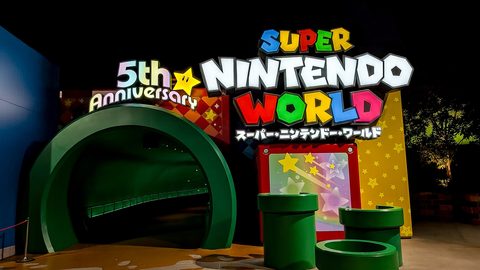 Universal Studios Japan
 demands a full day and a pre-purchased timed-entry ticket; here is whether USJ is worth it and how the ticketing actually works.
Universal Studios Japan
Universal Studios Japan demands a full day and a pre-purchased timed-entry ticket; here is whether USJ is worth it and how the ticketing actually works.