How Far Your Yen Goes in Osaka and Where the Cheap Options Run Out
Osaka is Japan's cheapest big city, but the floor is real. A realistic budget day priced out, from a Tennoji bed to a Kyobashi standing-bar round.

Osaka on a Budget: What Japan’s Cheapest Big City Buys and Where it Stops
A genuinely budget day in Osaka costs between ¥6,000 and ¥8,000 all in. That is the hard number. It covers a hostel dorm bed in Tennoji or Shinsekai, a kushikatsu lunch, a standing-bar dinner in Kyobashi or Tenma, free grounds at Sumiyoshi Taisha and Nakanoshima, and an ICOCA card to move between them. The common assumption that Osaka is uniformly cheap is wrong. The city is cheap for food and accommodation. It is not cheap for Universal Studios Japan, Kitashinchi nightlife, or the Umeda Sky Building observatory. The budget works only if you know exactly where to spend and where to walk past.
Osaka is not Tokyo with a smaller price tag. It is a louder, faster city that moves on food and commerce, and its geography works against the walking tourist. Key districts are separated by wide rivers and multi-level concrete. The famous friendliness does not always survive the morning rush on the Midosuji Line. The payoff for the friction is the lowest budget floor of any major Japanese city. A dorm bed costs ¥2,500 to ¥4,000 against Tokyo's ¥3,500 to ¥5,500. A casual lunch set runs ¥700 to ¥1,200 against Tokyo's ¥1,000 to ¥1,500. A draft beer at a standing bar costs ¥300 to ¥500. These numbers are real, but they assume you make deliberate choices.
The Hard Floor of a Cheap Day
Where to Sleep and Eat First
Start with accommodation. Base yourself in Tennoji or Shinsekai, where hostel dorm beds match the bottom of the range and budget private rooms run ¥5,000 to ¥8,000. These districts are blue collar and direct, not pretty. Shinsekai has Showa era grit, kushikatsu on every block, and a cash only culture that demands you carry at least ¥5,000 in notes. The area around Tsutenkaku Tower is street level, unpolished, and serviceable as a budget base. Avoid Shin Osaka. It is a sterile Shinkansen stop with no nightlife and a 40 minute round trip commute to where you actually want to be.
For lunch, skip the tourist queues at Dotonbori and head to Shinsekai. Kushikatsu averages ¥100 to ¥250 per skewer. The chain Daruma has a flagship here, and the rule is strict: no double dipping in the communal sauce pot. Three skewers, a rice dish, and a drink stay under ¥1,000. Eat standing, eat fast, and pay cash.
Getting Around Without Burning Cash
Transport eats into the budget faster than most visitors expect because key districts are not walkable. Osaka Metro single rides cost ¥190 to ¥390 by distance. An ICOCA card, available for a ¥2,000 initial charge including a ¥500 refundable deposit, saves you buying individual tickets. If you plan four or more rides in a day, the Osaka Metro 1 day pass breaks even at five weekday rides at ¥820 or four weekend rides at ¥620. The pass covers Metro and city bus only. It does not cover Hankyu, Hanshin, Nankai, or Kintetsu. The private railway network uses separate terminals, and a subway pass will not help you reach Kyoto or Nara.
Free Sights That Hold Their Own
Free sights are the backbone of a cheap day. Sumiyoshi Taisha has distinctive straight roof architecture and its grounds are free. Nakanoshima, the river island between Kita and Minami, offers the Osaka City Central Public Hall exterior and a rose garden without charge. Namba Yasaka Shrine, with its giant lion head stage, takes ten minutes and costs nothing. Dotonbori itself is free to walk, though it is shoulder to shoulder after 19:00 on weekends. Osaka Castle Park grounds are free; the Nishinomaru Garden costs ¥200. None of these require a ticket or a reservation.
Dinner at the Standing Bar
Dinner should be a standing bar, or tachinomi, in Kyobashi or Tenma. These districts are unvarnished local drinking zones. Average drink prices run ¥300 to ¥500, and snack skewers run ¥100 to ¥300. Tenma clusters around JR Tenma Station. Ura Namba in the Sennichimae area also has a dense strip of tachinomi. Cash is the only payment method. No credit cards, no IC. The atmosphere is loud, cramped, and direct. Solo travellers find conversation easier here than in Tokyo bars. A full evening of two drinks and three snacks costs ¥1,000 to ¥1,500.
Where the Cheap Options Run Out
Universal Studios Japan Has No Back Door
Some Osaka experiences have no budget version. Universal Studios Japan, specifically Super Nintendo World, is expensive regardless of strategy. A 1 day Studio Pass for 2026 runs ¥8,600 to ¥10,900 depending on the date. The Universal Express Pass, which guarantees timed entry to Super Nintendo World, costs ¥4,800 to ¥20,000 by tier and date. Without an Express Pass, you can try for a free Area Timed Entry Ticket through the official app after park entry, but by 10:00 those slots are often gone. If Super Nintendo World is a priority, budget for the Express Pass. Skipping it means risking the entire cost of the park ticket for a day spent in areas you could skip.
Observatories, Kitashinchi, and the Airport Floor
The Umeda Sky Building Floating Garden Observatory costs ¥1,500. There is no discount hour, no student rate that drops it below that floor. The Abeno Harukas observatory costs ¥1,600. These are fixed admission prices. If you want a city view from height, pay the fee or skip it.
Kitashinchi is inaccessible on a budget. This is the expensive hostess bar and salaryman fine dining district, north of Osaka Station. Drinks start at ¥1,500 and climb fast. There is no standing bar alternative in Kitashinchi. It is after dark only, dress code implied, and the math does not work for a ¥6,000 day budget. Do not walk in thinking you will find a cheap corner. You will not.
The Kansai Airport to city transfer also has a floor. The Nankai Limited Express Rapi:t to Namba costs ¥2,420 and takes 34 minutes. The commuter Airport Express costs ¥970 and takes 43 minutes. If you arrive after the last Airport Express around 23:30, a taxi to the city costs ¥15,000 to ¥20,000. That single ride obliterates two days of budget savings. Arriving late in Osaka requires either a pre booked hotel near KIX or a willingness to pay the transfer cost.
| Item | Osaka | Tokyo | Kyoto |
|---|---|---|---|
| Hostel Dorm Bed (per night) | ¥2,500–¥4,000 | ¥3,500–¥5,500 | ¥3,000–¥5,000 |
| Budget Private Room (per night) | ¥5,000–¥8,000 | ¥7,000–¥12,000 | ¥7,000–¥11,000 |
| Casual Lunch Set | ¥700–¥1,200 | ¥1,000–¥1,500 | ¥900–¥1,400 |
| Draft Beer (bar) | ¥450–¥700 | ¥600–¥900 | ¥550–¥800 |
| Metro Minimum Fare | ¥190 | ¥180 | ¥230 (bus flat) |
How to Make the Budget Work Across Multiple Days
The Two-Day Minimum
Two full days is the minimum for Osaka. One day for Kita, meaning Umeda and Nakanoshima. One day for Minami, meaning Namba, Shinsaibashi, Dotonbori, and Shinsekai. Evenings belong to Dotonbori and a food crawl. A single overnight stay undersells the city and forces you to choose between districts.
For transport, load an ICOCA card with ¥3,000 on arrival. That covers roughly 10 to 15 Metro rides and a day trip to Kyoto or Nara return. Do not buy a JR West Kansai Area Pass unless you are doing a Himeji day trip, which costs ¥1,520 each way by special rapid from Osaka Station. The pass costs ¥2,400 for one day. Osaka to Himeji return at ¥3,040 unreserved beats it, but only if Himeji is your single destination.
Eat Big at Midday
Lunch sets are your best friend. The saving versus dinner a la carte is 30 to 50 percent. Common lunch set hours run 11:00 to 14:00. A ¥1,000 lunch set at an okonomiyaki spot like Mizuno in Dotonbori or a kitsune udon at Usamitei Matsubaya delivers the same food you would pay ¥1,800 for at dinner. Eat your big meal at lunch. Dinner is for standing bar skewers and convenience store bento.
Supermarket markdowns stretch the budget further. First markdown of 20 to 30 percent off starts at 18:00. Second markdown of 40 to 50 percent off starts at 20:00. Chains with reliable markdowns include Life, Tamade, Super Tamade, and Aeon Style. A ¥600 bento at 20:00 costs ¥300. That is dinner and breakfast combined for less than a single standing bar drink.
Day Trips That Keep the Budget Intact
Nara, Kyoto, and Minoh
Osaka's transport hub status means you can leave the city on a budget without adding much to your daily spend. Nara costs ¥680 each way on the Kintetsu Nara Line from Namba, 39 minutes. The deer park and Todaiji temple grounds are free. Kyoto costs ¥580 on the JR Special Rapid from Osaka Station, 29 minutes, or ¥410 on the Hankyu Limited Express from Umeda, 43 minutes. Both day trips can be done for under ¥1,500 in transport plus a konbini lunch.
Minoh is the cheapest day trip at ¥280 each way on the Hankyu Minoh Line from Umeda, a half hour ride. The waterfall walk is free. Fried maple leaves are a seasonal snack for ¥200 to ¥400. This is a half day option that leaves your evening free for Osaka's standing bars.
Kobe Without the Beef
Kobe costs ¥330 on the Hanshin Limited Express from Umeda, 32 minutes, or ¥420 on the JR Special Rapid, 21 minutes. The waterfront and Nankinmachi Chinatown are free to walk. Do not budget for Kobe beef on this trip. A lunch set starts at ¥3,000 and blows a budget day completely.
The One Mistake That Wrecks the Budget
Booking accommodation near Shin Osaka station because it is a Shinkansen stop. Shin Osaka is a sterile business district with almost no nightlife or walkable food streets. A dorm bed there costs the same as in Tennoji, but your daily commute to Namba or Umeda eats 40 minutes round trip and ¥400 in Metro fares. That adds up to ¥800 in lost time and money per day. Book in Namba, Shinsaibashi, or Tennoji instead. The hostel concentration in these districts gives you better prices and immediate access to food and nightlife.
What to Do with the Money You Save
Put it toward one experience that cannot be done cheaply. If Super Nintendo World matters, buy the Express Pass. If you want a skyline view, choose the Umeda Sky Building or Abeno Harukas and accept the ¥1,500 or ¥1,600 cost. If you want a single splurge meal, book a tecchiri fugu hotpot dinner in winter at a Kuroshio Market restaurant. The point is to know where the cheap runs out and decide consciously where to spend the difference. Osaka rewards the planner who knows the floor, accepts the ceiling, and does not try to squeeze every yen out of a day that costs more than the sum of its parts.
Read next
-
 Osaka Hotels, Sorted by Price Band and Property Type Not Neighbourhood
Osaka hotels sorted by budget and type, business towers, luxury high-rises and the few ryokan, with the trade-off each choice demands.
Osaka Hotels, Sorted by Price Band and Property Type Not Neighbourhood
Osaka hotels sorted by budget and type, business towers, luxury high-rises and the few ryokan, with the trade-off each choice demands.
-
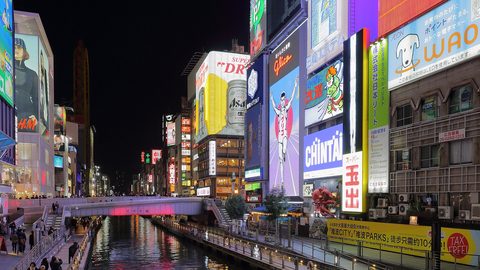 Where to Stay in Osaka, Pick the District That Matches Your Nights
Osaka's districts switch character after sunset. Pick where to stay based on whether you want street food chaos, standing-bar crawls or a quiet lane.
Where to Stay in Osaka, Pick the District That Matches Your Nights
Osaka's districts switch character after sunset. Pick where to stay based on whether you want street food chaos, standing-bar crawls or a quiet lane.
-
 Osaka Flights Which Airport to Choose and When to Book
KIX or Itami? Which Osaka airport to fly into, when flight prices spike during cherry blossom and November, and the booking windows that matter.
Osaka Flights Which Airport to Choose and When to Book
KIX or Itami? Which Osaka airport to fly into, when flight prices spike during cherry blossom and November, and the booking windows that matter.
-
 Osaka Things to Do, What Earns a Slot in Two Full Days
Osaka is not a monument city. This page ranks what earns a slot in two full days, from Dotonbori's neon to Shinsekai's retro grit.
Osaka Things to Do, What Earns a Slot in Two Full Days
Osaka is not a monument city. This page ranks what earns a slot in two full days, from Dotonbori's neon to Shinsekai's retro grit.
-
 Best Time to Visit Osaka, Month by Month and the Trade Off Each One Asks
-
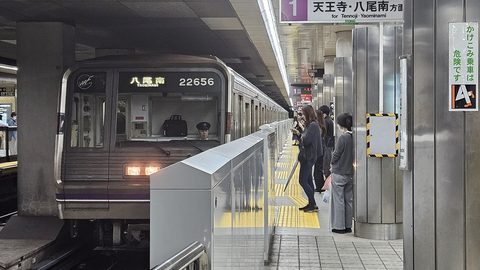 Getting Around Osaka, The Subway, the Private Railways and the Umeda Maze
Osaka's transit is fast but fractured. The Umeda station maze, private railway tickets and the ICOCA card explained before you go.
Getting Around Osaka, The Subway, the Private Railways and the Umeda Maze
Osaka's transit is fast but fractured. The Umeda station maze, private railway tickets and the ICOCA card explained before you go.
-
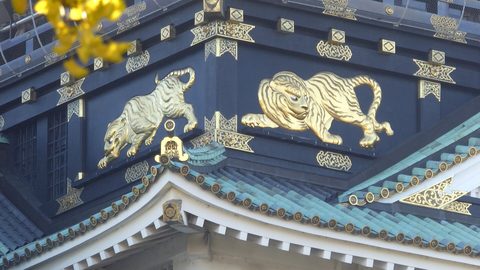 Osaka Castle
's park and moat walks outshine the concrete-reconstructed keep, which houses a museum and observation deck rather than original interiors.
Osaka Castle
Osaka Castle's park and moat walks outshine the concrete-reconstructed keep, which houses a museum and observation deck rather than original interiors.
-
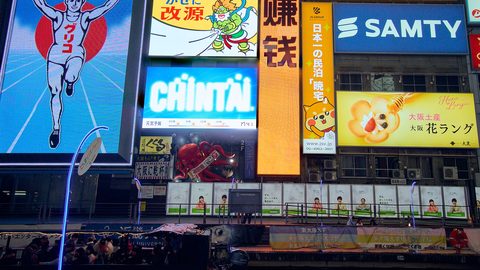 Dotonbori
 is Osaka's neon-lit eating canal, best used as a full-evening food and bar crawl rather than a quick Glico Sign photo stop.
Dotonbori
Dotonbori is Osaka's neon-lit eating canal, best used as a full-evening food and bar crawl rather than a quick Glico Sign photo stop.
-
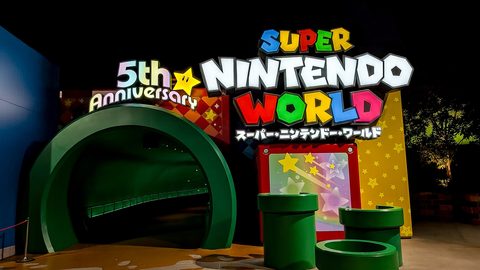 Universal Studios Japan
 demands a full day and a pre-purchased timed-entry ticket; here is whether USJ is worth it and how the ticketing actually works.
Universal Studios Japan
Universal Studios Japan demands a full day and a pre-purchased timed-entry ticket; here is whether USJ is worth it and how the ticketing actually works.