Kuidaore: Where Osaka's Street Food Obsession Comes From
Osaka's street-food obsession runs deeper than Dotonbori's neon. Learn the kuidaore culture, stall-by-stall ordering rules, and why eating while walking is genuinely frowned on.

Kuidaore: Where Osaka’s Street Food Obsession Comes from
At 19:30 on a Saturday in Dotonbori, a man in a white apron flips a tray of octopus balls near Ebisubashi bridge. They are not round yet. They will be in ninety seconds. Then a dozen hands reach in. This scene repeats every few minutes, all night, every night, and it answers the question directly: Osaka's street food culture comes from kuidaore, the eat-till-you-drop mindset born in the late Edo period (1603 to 1868) when this city was Japan's merchant capital. Rice brokers got rich fast, had disposable income, and wanted pleasure that did not require a formal kaiseki setting. Street stalls delivered it. They still do.
Kuidaore is not a marketing slogan. It is a local value that shapes every transaction at a batter-ball cart or a kushikatsu counter. You do not browse here. You queue, you order, you eat fast, you move to the next stall. The city's loud, unpolished, working-class energy makes this possible. Osaka moves faster than Tokyo's politeness allows. The friendliness is real, but it does not survive the morning crush on the Midosuji Line. It does not excuse hesitation when a skewer is in front of you.
The food guide covers which dishes to try. What follows teaches the mechanics of eating in the city's street food zones: how to queue, how to order, where to stand, the rule you must not break with the sauce, and why the street-party atmosphere does not permit eating while walking. The districts that anchor this culture are Shinsekai, Dotonbori and Tsuruhashi. Not a generic Japan street-food trope.
How to Queue and Order at Any Stall
The rules are the same whether you stand in Janjan Yokocho in Shinsekai or on the 400-metre stretch of Dotonbori Street between Ebisubashi and Daikokubashi bridges. Queue on the left. Do not block the stall front. When it is your turn, point at what you want and say "kore o kudasai" (this, please). If you already know the name, say "hitotsu" (one) plus the item: "takoyaki hitotsu". For two portions, "futatsu".
Payment happens when you receive the food, not before. Hand your cash to the tray or the small dish next to the cook. Do not pass it hand to hand. Exact change is preferred. A ¥1,000 coin or a ¥500 coin works. Break nothing larger. Do not pay with a credit card. Cash only survives in Shinsekai kushikatsu joints and standing bars, and it extends to many octopus-ball carts too. Carry ¥5,000 in notes minimum if you plan a food crawl.
Once you hold the food, do not walk away with it. Eat at the stall perimeter or in the designated standing area. On Dotonbori's main drag, walking with food is tolerated but frowned upon. In Shinsekai and Tsuruhashi, it violates a local norm. The street-party atmosphere looks like a free-for-all, but the etiquette is precise: finish before you move.
The No Double Dip Rule and Other Stall Mechanics
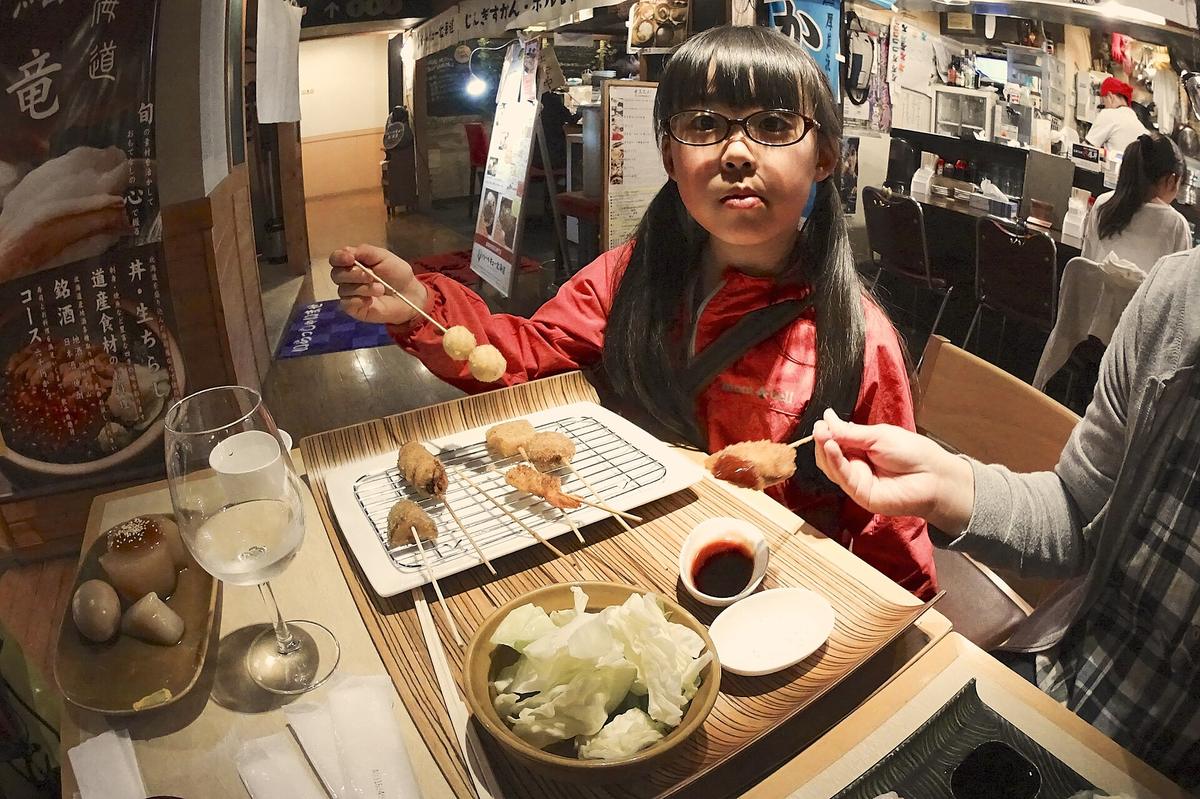
Kushikatsu has the strictest rule in Osaka street food. The skewers come breaded and deep-fried. A metal tray of Worcestershire-based sauce sits fixed to the counter. It is communal. You dip once. Double dipping (nijozuke) is enforced by the cook or by the customer next to you. If you need more sauce, use the raw cabbage wedge served as a palate cleanser. Dip the cabbage, not the skewer again.
Octopus balls come off the griddle at 80 to 90 degrees Celsius. The molten batter core retains heat longer than the browned exterior. The safe method: pierce the ball with the pick, blow on the exposed interior for 10 to 15 seconds, then eat. Do not bite into a whole ball. The burn risk is real and the local advice is correct.
Okonomiyaki at a teppan counter operates differently. The cook grills the batter in front of you on a flat iron griddle at 180 to 200 degrees Celsius. You do not touch the spatula. You wait until the cook slides it onto the plate in front of you and brushes on the thick sauce. Then you add aonori and katsuobushi yourself if they are on the counter. At Mizuno in Dotonbori, the queue forms before opening. Arrive at 11:00 for a seat before the lunch rush.
How To Identify a Quality Stall
Four indicators separate a good octopus-ball stall from a tourist trap. First, the molds are filled to the brim but not overfilled, producing spheres not discs. Second, the octopus piece is visible, not minced. Third, the exterior is crisp and browned while the interior stays molten. Fourth, the queue length at non-peak times. A line of five locals at 14:00 on a Tuesday beats a line of thirty tourists at 19:00 on Saturday. The dish was invented in 1935 by Tomekichi Endo at Aizuya in Osaka. The city takes it seriously. Trust the queue.
Ikayaki is the one you will miss. Whole squid pressed flat between hot plates and brushed with soy sauce appears at festivals and on Dotonbori but gets overshadowed by batter-ball and okonomiyaki signage. A whole squid costs ¥500 to ¥800. It is not batter-based. It is the second-fastest eat after a kushikatsu skewer. Look for the yatai cart with the press. It will be the one without a line. Visitors do not recognise it. You will now.
Districts and Their Street Food Zones
Each district has a dominant food form and a distinct etiquette. Mixing them up costs you time or puts you in the wrong queue.
Shinsekai is retro, gritty and built around kushikatsu. The primary street is Janjan Yokocho, an alley 180 metres long with more than twenty shops. The origin of the dish is here, early 20th century. Minimum order at a specialty shop is three to five skewers. A single skewer costs ¥100 to ¥300. After eating, walk to Tsutenkaku Tower for a 20-second photo stop. The observation deck is retro, not modern. That is the point.
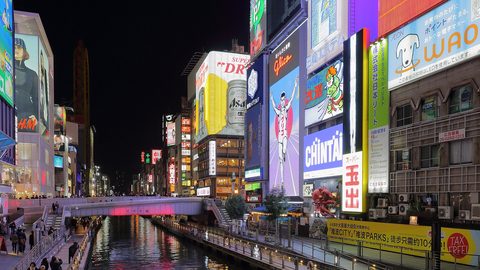
Dotonbori packs fifteen batter-ball stalls into a 400-metre stretch. The concentration peaks between Ebisubashi and Daikokubashi bridges. Wanaka is the Namba origin shop. Portions cost ¥400 to ¥800 for six to ten pieces. After 19:00 on weekends the main strip is shoulder to shoulder. Eating while walking is tolerated here more than elsewhere in the city, but do not push through a crowd with a hot skewer. Step to the canal railing or a shop alcove.
Tsuruhashi is Korea Town. The street food zone covers a 500-metre radius from Tsuruhashi Station. Specialties are yakiniku skewers, kimchi and jeon (Korean pancakes). The smoky alleyway grills are unvarnished. You order in sets, not by the skewer. Carry cash. The etiquette here is closer to Seoul than to Dotonbori. Do not wave chopsticks. Do not leave skewers on the communal grill. Ask for a separate plate if one is not offered.
Arcades and Markets
Tenjinbashi-suji is Japan's longest covered arcade at 2.6 kilometres. It runs north from Tenjinbashi and mixes korokke, taiyaki and octopus balls with clothing and hardware shops. This is a daytime crawl. Most shops close by 19:00.
Kuromon Ichiba is a 580-metre covered market arcade operating roughly 09:00 to 18:00. It has grilled seafood skewers, sea urchin, sashimi cups and batter balls. Mornings are best. By 11:00 the tour groups arrive. This market has its own dedicated page on the site. The key fact for street food mechanics: you pay at each stall, you eat standing at a narrow counter, and you do not walk through the market eating a grilled scallop skewer. Step to the side.
Umeda is not a street food district. It has the underground wholesale market (Umeda Shokudo) and the Hanshin Department Store depachika. The ikayaki at Hanadako is inside Umeda station underground. The eating-while-standing rule applies exactly. You are inside a transit hub, not a festival. Finish the pressed squid before you walk onto the platform.
What a Street Food Crawl Costs and How to Time it
One person eating three to four items across different stalls spends ¥1,500 to ¥2,500. A single item costs ¥300 to ¥800. Check the shop's posted menu before ordering. Never assume last year's price still applies.
Two full days is the minimum for the city. One day for Kita (Umeda) and one for Minami (Namba and Shinsaibashi), plus evenings for Dotonbori and a food crawl. A single overnight stay undersells the place. Arrive by 09:00 in Kuromon Ichiba for the best seafood. Hit Shinsekai for lunch and late afternoon. Dotonbori should be your evening session starting at 17:00. By 19:00 the queues are long and the walking pace is slow.
When to Go and When to Stay Away
Peak season runs late March to early April (cherry blossoms, domestic travel surge) and November (autumn foliage, ideal walking weather). Both periods fill hotels and raise rates sharply. Avoid Golden Week (late April to early May) entirely. Trains are standing room only, accommodation prices spike, and the street food queues double. Also avoid 24 to 25 July unless you want the Tenjin Matsuri crowds around Okawa River. The festival is worth seeing. The inability to move is not.
._(27636623640).jpg)
| District | Primary Food | Key Location | Per Item Cost (2024) |
|---|---|---|---|
| Shinsekai | Kushikatsu | Janjan Yokocho | ¥100-¥300 per skewer |
| Dotonbori | Takoyaki | Between Ebisubashi and Daikokubashi bridges | ¥400-¥800 for 6-10 pieces |
| Tsuruhashi | Yakiniku skewers, kimchi, jeon | 500 m radius from Tsuruhashi Station | ¥500-¥1,500 per set |
| Kuromon Ichiba | Grilled seafood, sashimi cups | 580 m covered arcade | ¥300-¥1,000 per item |
| Tenjinbashi-suji | Korokke, taiyaki, takoyaki | 2.6 km covered arcade | ¥200-¥600 per item |
One Thing That Will Go Wrong and How to Fix it
You will arrive at Dotonbori at 20:00 on a Saturday, hungry, and find every batter-ball queue fifty people deep. Do not join the longest queue out of desperation. Walk 200 metres east of the Glico Sign toward Daikokubashi bridge. The stall density drops by half. The queues drop by two thirds. The quality is the same because the batter is the same dashi-based mix. The octopus is the same 1-to-2-cm cube. The difference is the tourist herd stops at the first three stalls they see. Walk through it.
If you are in Shinsekai and the kushikatsu shop you wanted has a line out the door, check the shop next door. Japanese food writing fetishises the one famous shop, but the street food culture here is commercial density. Twenty shops in the same district means twenty shops using the same oil temperature (170 to 180 degrees Celsius), the same panko and the same sauce. The famous one is not twice as good. It is twice as known.
The practical thing to do before your trip: open Google Maps, drop a pin on the north exit of Namba Station (the Nankai side), and save it as "meet here." Do not save a landmark five minutes away. Do not save a bridge. Save that exact exit. It is the one place in Minami where you will not wander for twenty minutes trying to find your group. Then go eat.
Read next
-
 Osaka Hotels, Sorted by Price Band and Property Type Not Neighbourhood
Osaka hotels sorted by budget and type, business towers, luxury high-rises and the few ryokan, with the trade-off each choice demands.
Osaka Hotels, Sorted by Price Band and Property Type Not Neighbourhood
Osaka hotels sorted by budget and type, business towers, luxury high-rises and the few ryokan, with the trade-off each choice demands.
-
 Where to Stay in Osaka, Pick the District That Matches Your Nights
Osaka's districts switch character after sunset. Pick where to stay based on whether you want street food chaos, standing-bar crawls or a quiet lane.
Where to Stay in Osaka, Pick the District That Matches Your Nights
Osaka's districts switch character after sunset. Pick where to stay based on whether you want street food chaos, standing-bar crawls or a quiet lane.
-
 Osaka Flights Which Airport to Choose and When to Book
KIX or Itami? Which Osaka airport to fly into, when flight prices spike during cherry blossom and November, and the booking windows that matter.
Osaka Flights Which Airport to Choose and When to Book
KIX or Itami? Which Osaka airport to fly into, when flight prices spike during cherry blossom and November, and the booking windows that matter.
-
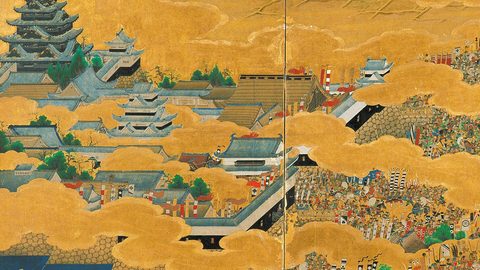 Osaka Things to Do, What Earns a Slot in Two Full Days
Osaka is not a monument city. This page ranks what earns a slot in two full days, from Dotonbori's neon to Shinsekai's retro grit.
Osaka Things to Do, What Earns a Slot in Two Full Days
Osaka is not a monument city. This page ranks what earns a slot in two full days, from Dotonbori's neon to Shinsekai's retro grit.
-
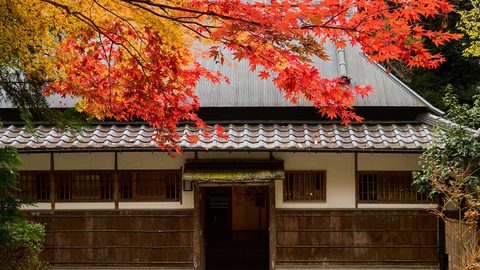 Best Time to Visit Osaka, Month by Month and the Trade Off Each One Asks
-
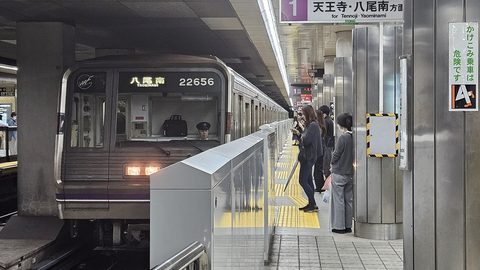 Getting Around Osaka, The Subway, the Private Railways and the Umeda Maze
Osaka's transit is fast but fractured. The Umeda station maze, private railway tickets and the ICOCA card explained before you go.
Getting Around Osaka, The Subway, the Private Railways and the Umeda Maze
Osaka's transit is fast but fractured. The Umeda station maze, private railway tickets and the ICOCA card explained before you go.
-
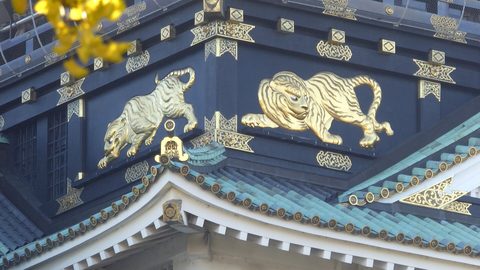 Osaka Castle
's park and moat walks outshine the concrete-reconstructed keep, which houses a museum and observation deck rather than original interiors.
Osaka Castle
Osaka Castle's park and moat walks outshine the concrete-reconstructed keep, which houses a museum and observation deck rather than original interiors.
-
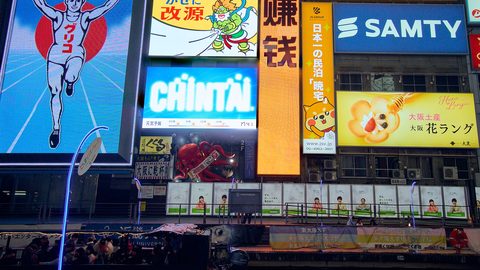 Dotonbori
 is Osaka's neon-lit eating canal, best used as a full-evening food and bar crawl rather than a quick Glico Sign photo stop.
Dotonbori
Dotonbori is Osaka's neon-lit eating canal, best used as a full-evening food and bar crawl rather than a quick Glico Sign photo stop.
-
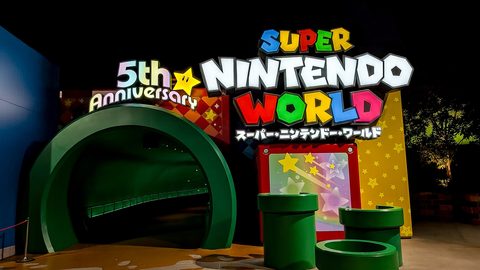 Universal Studios Japan
 demands a full day and a pre-purchased timed-entry ticket; here is whether USJ is worth it and how the ticketing actually works.
Universal Studios Japan
Universal Studios Japan demands a full day and a pre-purchased timed-entry ticket; here is whether USJ is worth it and how the ticketing actually works.