Travelling Osaka with Children Without Losing Your Mind
Osaka's short distances, universal food, and stacked family attractions make it Japan's easiest city with children, if you know which stations to avoid with a stroller.

Travelling Osaka with Children Without Losing Your Mind
Osaka is structurally easier for family travel than Tokyo or Kyoto, and the reason is not friendliness or food: it is the city's compact north-south spine. A single subway line, the Midosuji Line in red, runs straight from the aquarium in the Bay Area up through Namba, Shinsaibashi, Umeda and on to Shin-Osaka. Most kid-anchors sit along it or a short walk from a stop on it. You do not change trains. You do not traverse a city the size of Tokyo. You do not shush a child in a temple where silence is expected. Osaka works because it concentrates what matters into a corridor you can learn in an afternoon.
The North-South Spine That Saves Your Day
Kita and Minami: Your Two Districts
Build your itinerary around two districts: Kita (North) and Minami (South). Kita centres on the Umeda transport nexus, a genuine hazard. Five separate terminals (JR Osaka, Hankyu Umeda, Hanshin Umeda, Osaka Metro Umeda, Kitashinchi) stack across three dimensions. You will get lost.
Minami centres on Namba, where Nankai, Kintetsu, and the Midosuji Line meet. It is less confusing than Umeda but still sprawls underground. The key rule: pick a department store exit, not a line name. Tell your family "meet at the HEP Five Ferris wheel entrance" or "the south ticket gate of Namba, by the FamilyMart." Saying "meet at Umeda" guarantees a 40-minute phone call.
Why the Network Works for Strollers
The network outside these cores is dense but manageable. Osaka Metro operates 8 lines plus the Nanko Port Town automated guideway. Every one of its stops had a lift at every exit as of FY2020, and every stop has a multi-purpose toilet with a baby changing seat. You never carry a stroller up stairs. That alone makes Osaka more forgiving than Tokyo's older facilities, where lift construction lags years behind.
The Kid Anchors That Justify the Trip
Kaiyukan Aquarium and the Bay Area
Kaiyukan opened in 1990 and its centrepiece is the Pacific Ocean tank, 5,400 cubic metres of water holding a male whale shark named Kai-kun. Admission at the time of writing was JPY 2,700 for adults, JPY 1,400 for children aged 7-15, and JPY 700 for children aged 4-6. Queue peaks at 11:00. Arrive at opening time (usually 10:00, check the current schedule) and head straight to the top floor, then spiral down. The aquarium sits at Osakako on the Chuo Line. Next door, the Tempozan Marketplace holds the Legoland Discovery Centre Osaka, which opened in 2015. Adults must be accompanied by a young visitor aged 3-16. Online advance tickets from JPY 2,200 in 2024. The Kaiyukan Ferris wheel, one of the world's largest, is right there. Do not skip it after the aquarium: the view over the artificial islands gives kids a concrete sense of how Osaka sits on the water.
Kids Plaza Osaka and Cupnoodles Museum
Kids Plaza Osaka, near Ogimachi on the Sakaisuji Line, opened in 1997 and spans five floors of interactive exhibits. The 2024 adult admission was JPY 1,400, child (age 3 through elementary school) JPY 800. It is designed for sustained play, not a quick visit. Budget two to three hours. The Cupnoodles Museum Osaka Ikeda, a half-hour ride from Umeda on the Hankyu Takarazuka Line to Ikeda, is free to enter. The My Cup Noodle Factory experience costs JPY 500 per cup in 2024. Young visitors decorate the cup, choose broth and toppings, then watch it get sealed. It is a factory tour that ends with a souvenir they eat. Book the factory slot when you arrive; weekend slots fill by 11:00.
TeamLab Botanical Garden at Night
TeamLab Botanical Garden Osaka is an outdoor night-time digital art installation in the Nagai Park area. Advance booking is recommended. It runs from dusk to late evening. This works after a day at the aquarium or USJ: kids run through projected light landscapes, and the outdoor format means no enforced quiet. It is a stronger evening option than Dotonbori after 19:00, which is shoulder to shoulder on weekends and where eating while walking is locally frowned on despite the street food reputation.
Feeding the Family Without Konbini Reliance
Osaka is a street food city, but small children cannot eat standing in a narrow alley at 21:00. You need seated options with children's menus. Family restaurant chains like Saizeriya, Gusto, Bikkuri Donkey, and Royal Host all have children's sets. Conveyor belt sushi is the most tolerant restaurant type for young kids: you sit, you grab plates, no wait time, no judgment if a child drops a piece of salmon.
For specific Osaka food that children actually eat: Kitsune udon at Usamitei Matsubaya is a sweet-salty fried tofu noodle soup. Children who reject the savoury pancake okonomiyaki will eat udon. Takoyaki at Wanaka in Namba is crisp outside and molten inside. Let the octopus balls cool before handing them over. Kushikatsu in Shinsekai has a strict no-double-dip sauce rule, so give each child their own skewer. If you book a yakiniku restaurant with a private room, you control the noise level and the cooking mess. Some izakaya also have private rooms bookable in advance.
The Friction Points You Cannot Ignore
Umeda with a stroller is a nightmare. Avoid it during weekday morning rush hour. If you must transfer through it between 08:00 and 09:00, use the underground shopping arcade levels, not the concourses. The Midosuji Line during rush hour offers zero grace. Priority seating is marked near the doors, and women-only carriages run on weekday mornings in the first car, but the train is packed. Travel after 10:00 or before 07:00 with children.
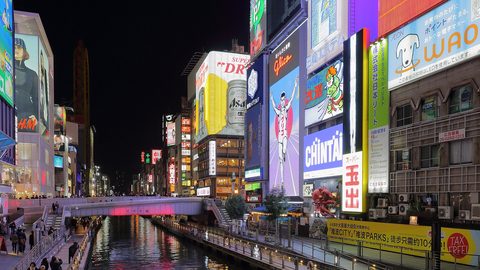
Dotonbori after 19:00 on weekends is too dense for small kids. The canal stretches roughly 2.5 km, and the main strip becomes immovable. Go at 16:00 instead. The Glico Running Man sign is a 20-second photo stop best taken before dark. Shinsekai and its Tsutenkaku Tower (103 metres, rebuilt in 1956) are more relaxed in the early evening. The retro atmosphere and kushikatsu bars on narrow streets suit families who want noise without crush.
Cash survives in Shinsekai kushikatsu joints and small standing bars. Carry JPY 5,000 in notes. The Osaka Free Wi-Fi network requires re-registration every half-hour. A prepaid eSIM or pocket Wi-Fi booked before arrival is standard practice. Google Maps handles the transit tangle well, but it sometimes routes through JR when a private line is faster. Check the operator name on the result before you walk to the platform.

When to Go and What to Skip
Late March to early April brings cherry blossoms and a domestic travel surge. The average first bloom date from 1953 to 2024 is 26 March, with full bloom around 3 April. November offers autumn foliage and ideal walking weather. Both periods fill hotels and raise rates sharply. Avoid Golden Week (late April to early May) when trains are standing room only and accommodation spikes. The Tenjin Matsuri on 24-25 July draws dense crowds around the Okawa River, though the festival itself is a draw for older children.
Summer is brutal. August average high is 33.5°C. The rainy season runs early June to mid-July, and typhoon season peaks August to September. If you come in summer, plan indoor activities for midday: Kaiyukan, Kids Plaza, and the Cupnoodles Museum are all fully air conditioned.
The Common Mistakes That Wreck a Family Day
- Booking accommodation near Shin-Osaka because it is a Shinkansen stop. The area has no nightlife and thin food options. The daily commute to Namba or Umeda eats 40 minutes round trip.
- Arriving at Universal Studios Japan without a pre-purchased timed ticket. Super Nintendo World requires a Timed Entry Ticket (free with your Studio Pass, subject to availability) or the paid Universal Express Pass. If you arrive at 10:00 without one, the timed entry slots for Nintendo World are gone. Buy your Studio Pass online before travel. The 2024 adult 1-Day Studio Pass ranged from JPY 8,600 to JPY 10,900 depending on date.
- Assuming Kuromon Market is a lunch spot. It is a walkable seafood and street-eat arcade best visited in the morning. By 13:00 the narrow aisles are clogged and strollers cannot pass. Go at 09:00, eat standing skewers, and leave before the crowd arrives.
- Using a subway pass on private railways. The private network (Hankyu, Hanshin, Nankai, Kintetsu, Keihan) uses separate terminals and tickets. Your Osaka Metro pass will not cover the ride to the Cupnoodles Museum on the Hankyu Takarazuka Line. Use an ICOCA card to avoid buying individual tickets for each operator.
Who Osaka with Kids Suits and Who it Does Not
This city suits families who eat their way through a trip, who prefer a loud and unpolished energy to Kyoto's refined silence, and who want a basecamp for Kansai day trips. Nara is 39 minutes from Namba via Kintetsu limited express. Kyoto is 29 minutes from Osaka via JR Special Rapid. Kobe is 21 minutes. The logistics are simple: one IC card, one spine line, one set of anchor attractions within walking distance of the subway.
It does not suit travellers seeking a quiet, traditionally beautiful Japanese city. Kyoto is next door and Osaka is not a substitute. Skip Osaka if your idea of a city break is serene temples, minimal crowds, or early nights. The subway during rush hour offers no grace. Dotonbori after 19:00 is dense. Umeda is a maze. But if you want a city that hands you its best family attractions in a straight line, that feeds a picky eater without negotiation, and that does not punish a tired child's meltdown, Osaka is Japan's easiest city. Use the spine. Skip the rush hour. Carry cash. Arrive at the aquarium before 10:00. You will not lose your mind.
Read next
-
 Osaka Hotels, Sorted by Price Band and Property Type Not Neighbourhood
Osaka hotels sorted by budget and type, business towers, luxury high-rises and the few ryokan, with the trade-off each choice demands.
Osaka Hotels, Sorted by Price Band and Property Type Not Neighbourhood
Osaka hotels sorted by budget and type, business towers, luxury high-rises and the few ryokan, with the trade-off each choice demands.
-
 Where to Stay in Osaka, Pick the District That Matches Your Nights
Osaka's districts switch character after sunset. Pick where to stay based on whether you want street food chaos, standing-bar crawls or a quiet lane.
Where to Stay in Osaka, Pick the District That Matches Your Nights
Osaka's districts switch character after sunset. Pick where to stay based on whether you want street food chaos, standing-bar crawls or a quiet lane.
-
 Osaka Flights Which Airport to Choose and When to Book
KIX or Itami? Which Osaka airport to fly into, when flight prices spike during cherry blossom and November, and the booking windows that matter.
Osaka Flights Which Airport to Choose and When to Book
KIX or Itami? Which Osaka airport to fly into, when flight prices spike during cherry blossom and November, and the booking windows that matter.
-
 Osaka Things to Do, What Earns a Slot in Two Full Days
Osaka is not a monument city. This page ranks what earns a slot in two full days, from Dotonbori's neon to Shinsekai's retro grit.
Osaka Things to Do, What Earns a Slot in Two Full Days
Osaka is not a monument city. This page ranks what earns a slot in two full days, from Dotonbori's neon to Shinsekai's retro grit.
-
 Best Time to Visit Osaka, Month by Month and the Trade Off Each One Asks
-
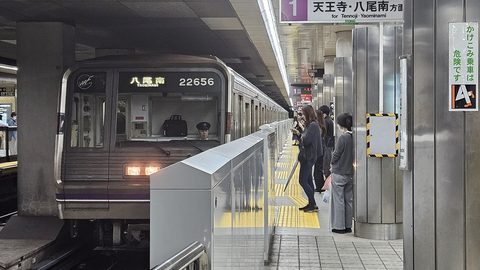 Getting Around Osaka, The Subway, the Private Railways and the Umeda Maze
Osaka's transit is fast but fractured. The Umeda station maze, private railway tickets and the ICOCA card explained before you go.
Getting Around Osaka, The Subway, the Private Railways and the Umeda Maze
Osaka's transit is fast but fractured. The Umeda station maze, private railway tickets and the ICOCA card explained before you go.
-
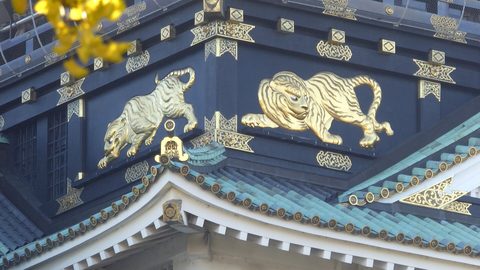 Osaka Castle
's park and moat walks outshine the concrete-reconstructed keep, which houses a museum and observation deck rather than original interiors.
Osaka Castle
Osaka Castle's park and moat walks outshine the concrete-reconstructed keep, which houses a museum and observation deck rather than original interiors.
-
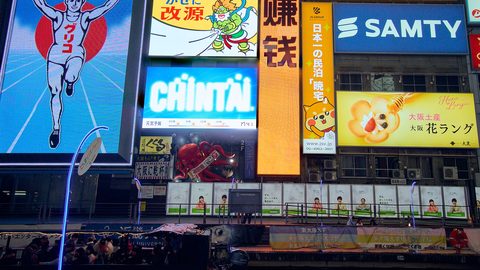 Dotonbori
 is Osaka's neon-lit eating canal, best used as a full-evening food and bar crawl rather than a quick Glico Sign photo stop.
Dotonbori
Dotonbori is Osaka's neon-lit eating canal, best used as a full-evening food and bar crawl rather than a quick Glico Sign photo stop.
-
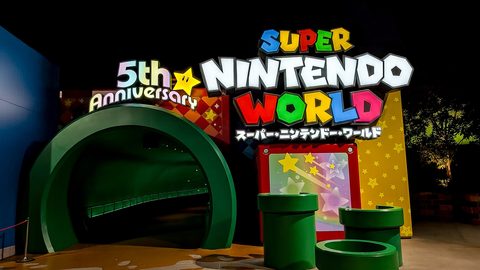 Universal Studios Japan
 demands a full day and a pre-purchased timed-entry ticket; here is whether USJ is worth it and how the ticketing actually works.
Universal Studios Japan
Universal Studios Japan demands a full day and a pre-purchased timed-entry ticket; here is whether USJ is worth it and how the ticketing actually works.