Kuramae Is Asakusa's Quieter Neighbour, Full of Makers and Roasters
Kuramae mixes old-world craft workshops with new-wave coffee roasters along the Sumida River, ten minutes on foot from Senso-ji.
- Flag
-

- ISO code
- JP
- Currency
- JPY
- Timezone
- Asia/Tokyo
Kuramae is Not a Souvenir District
The wrong assumption about Asakusa's quieter neighbour is that it is a smaller version of the same thing. It is not. Kuramae has no thunder gate, no rickshaw pullers, no rows of fried-sweet vendors. What it has is the opposite: a working network of hide ateliers, paper workshops, jewellery studios, and third wave coffee roasters operating out of former toy wholesale warehouses along the Sumida River. Stand on Leather Street and hear a metalworker hammering inside a building that shares its entrance with a pour over bar. That is the whole point.
How a Craft Quarter Took Shape
Kuramae sits 900 metres south of Senso-ji in Taito ward, separated from Asakusa's mass tourism by a short walk across Kappabashi-dori. Its nickname in English language media, the Brooklyn of Tokyo, dates to around 2015 and 2016, when young makers began moving into the old wholesale buildings that once supplied Tokyo's toy and stationery trades. The shift is not complete. Roughly 80 hide related businesses still operate in the area, along with about 50 jewellery ateliers and a significant number of paper (washi) workshops. The septuagenarian knife sharpener and the twenty something coffee roaster share the same block. Neither is performative. Both just do their work.
Your Morning Loop: River, Workshop, Coffee
The River Terrace First
Start at the Sumida River Terrace, the riverside path that forms Kuramae's eastern boundary. Walk it north toward Asakusa for ten minutes, then turn back. The terrace is a working river walk, not a sightseeing promenade. You get the river, the bridges, the occasional jogger, and a view of the Skytree that does not require a ticket or a queue. No souvenir stalls. No crowd.
Choose Your Workshop
From the terrace head west into the grid of narrow streets between Kuramae Station and Leather Street. This is where the workshops live. For hide goods, walk straight into And Leather at 4-20-8, a wholesale shop open to walk-ins that also runs sessions. Make a card case or a coin case in a class priced between ¥3,000 and ¥15,000. The exact figure changes annually, so check with And Leather directly before you go. For a wallet making class, BONIA Japan requires a reservation. For small goods, Kuramae Leather is the other option. None of these are tourist experiences designed for photo opportunities. They are working studios that let you sit at a bench and cut hide.
For paper, Kakimori on Paper Street at 1-6-2 lets you order a custom notebook and offers ink mixing and notebook binding classes for ¥1,500 to ¥5,000 per session. For jewellery, SIRI SIRI at 3-1-5 is open to walk-ins and runs ring making workshops by reservation for ¥3,000 to ¥10,000. Glanta offers ring, bangle and pendant workshops that accept walk-ins. Do one of these in under two hours and walk away with something you made.
Eleven Roasters, One Decision
After the workshop, pick a coffee roaster. There are at least eleven with on site cafés in the neighbourhood, most within a five minute walk of each other. SOL'S COFFEE ROASTERY at 2-19-10, Coffee Wrights Kuramae at 4-20-2, Leaves Coffee Roasters at 3-1-3, MIRROR at 2-4-3, EAST END COFFEE at 3-24-5, UNISON TAILOR Coffee at 3-3-3, KOKAGE at 3-4-2, DANDELION CHOCOLATE at 4-14-6, and two KOFFEE MAMEYA outposts. None of these require a reservation except KOFFEE MAMEYA Kakeru, which runs a tasting course format priced between ¥3,500 and ¥10,000. KOFFEE MAMEYA Kuramae does not require a reservation. Choose SOL'S if you want a straight pour over in a concrete shell. Choose Coffee Wrights if you want a light roast with a view of the street. Choose DANDELION CHOCOLATE if you want a drink that is not coffee. Choose KOFFEE MAMEYA Kakeru only if you budget for it and book ahead.
Who This District is for and Who Should Skip it
Kuramae belongs to the adult who cares about how things are made. If you are a solo explorer who thrives on anonymity, a food obsessed traveller planning trips around specific meals, a design enthusiast, or a repeat visitor who has already seen Senso-ji and wants the neighbourhood behind it, this is your half day. Set aside three to five hours. That is exactly enough for a river walk, one workshop, and one coffee stop.
Skip it if you are on a shoestring backpacker budget and want street food and hostels to be dirt cheap. Skip it if you are looking for nightlife, major landmarks, or large scale entertainment. Skip it if you find crowds and underground mazes anxiety inducing, because while Kuramae itself is calm, you still have to navigate the Toei Asakusa and Oedo lines to get here, and Kuramae Station itself is an underground interchange. Skip it if you have only two days in Tokyo and are trying to cover Shinjuku, Shibuya, Harajuku and Asakusa in one trip. Pick two areas maximum per day. Kuramae works best as a morning add on to a half day in Asakusa, or as its own quiet afternoon after a morning at Kappabashi's kitchenware street 400 metres away.


What Shuts Down and When to Plan Around it
Most workshops and many coffee shops close on Monday and Tuesday. The precise day varies by owner, but arrive on a Monday and expect locked doors on Leather Street. Wednesday through Sunday is the safe window. Coffee shops are also irregular: most close one weekday, but which weekday changes. Check the shop's Instagram or Google Maps listing the morning of your visit.
The two annual events that animate the quarter are the Kuramae Leather Festival, held in November, and the Kuramae Paper Festival, held in June. Time your visit around either if you want to see the area at full energy, with workshops open to the street and makers demonstrating. Neither is a crowded street fair. They are local, small, and exactly as focused as the neighbourhood itself.
Other areas in Tokyo
- Akihabara
- Asakusa
- Ebisu
- Futako-tamagawa
- Ginza
- Harajuku
- Ikebukuro
- Jimbocho
- Jiyugaoka
- Kagurazaka
- Kichijoji
- Kiyosumi-Shirakawa
- Koenji
- Marunouchi
- Nakameguro
- Nakano
- Nihonbashi
- Ningyocho
- Odaiba
- Omotesando and Aoyama
- Roppongi
- Ryogoku
- Sangenjaya
- Shibamata
- Shibuya
- Shimokitazawa
- Shin-Okubo
- Shinagawa
- Shinjuku
- Sugamo
- Takadanobaba
- Todoroki
- Tsukiji
- Tsukishima
- Ueno
- Yanaka
- Yurakucho and Shinbashi
Common Questions
How far is Kuramae from Senso-ji?
900 metres from Kuramae Station to the temple. A ten to twelve minute walk straight north on Kappabashi-dori, which separates craft quarter from tourist quarter. You will pass kitchenware shops along the way.
Do I need to speak Japanese for the workshops?
No. And Leather, Kakimori, SIRI SIRI and Glanta all handle English speaking visitors regularly. The instruction is visual and hands on. Reserve if the workshop requires it. Walk in if it does not.
Which coffee shop should I pick if I only have time for one?
SOL'S COFFEE ROASTERY if you want a straightforward pour over in a warehouse space. Coffee Wrights Kuramae if you want a light roast espresso. Both are walk in, no reservation needed, and both are within two minutes of Leather Street.
Is Kuramae worth visiting if I do not do a workshop?
Yes, but only for the coffee. The area's visual interest is in the workshop windows and the river terrace, neither of which takes more than 40 minutes to see. Without making something or tasting something, you will be done too fast.
Read next
-
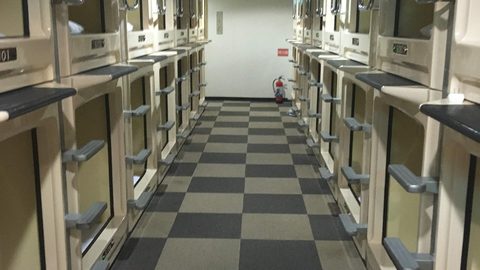 Tokyo Hotels by Type and Budget from Capsules to Luxury
Tokyo hotels organised by type and price band, from efficient capsule pods to full-service luxury towers, to help you book the right room.
Tokyo Hotels by Type and Budget from Capsules to Luxury
Tokyo hotels organised by type and price band, from efficient capsule pods to full-service luxury towers, to help you book the right room.
-
 Where to Stay in Tokyo by District and Travel Style
A comparison of Tokyo's major districts to help you choose the right base for your travel style, whether you want calm or chaos.
Where to Stay in Tokyo by District and Travel Style
A comparison of Tokyo's major districts to help you choose the right base for your travel style, whether you want calm or chaos.
-
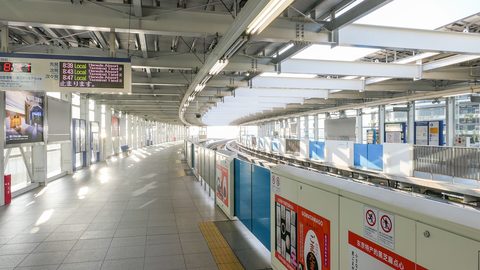 Narita or Haneda for Tokyo and What That Airport Choice Costs You
Narita or Haneda for Tokyo: compare door-to-district time, transfer cost, and what the wrong airport choice eats from your trip.
Narita or Haneda for Tokyo and What That Airport Choice Costs You
Narita or Haneda for Tokyo: compare door-to-district time, transfer cost, and what the wrong airport choice eats from your trip.
-
 Things to Do in Tokyo That Are Worth Your Limited Days
A curated list of Tokyo's highest-impact sights and experiences, from immersive art to quiet backstreets, to help you prioritise your days.
Things to Do in Tokyo That Are Worth Your Limited Days
A curated list of Tokyo's highest-impact sights and experiences, from immersive art to quiet backstreets, to help you prioritise your days.
-
 Best Time to Visit Tokyo Month by Month Tradeoffs
A month-by-month guide to visiting Tokyo, laying out the trade-off between weather, crowds, price, and what's actually open.
Best Time to Visit Tokyo Month by Month Tradeoffs
A month-by-month guide to visiting Tokyo, laying out the trade-off between weather, crowds, price, and what's actually open.
-
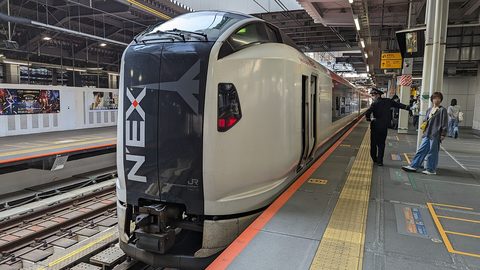 Getting Around Tokyo by Train Airport Transfers and IC Cards
A practical guide to Tokyo's rail network, covering airport transfers, IC cards, and how to avoid the station navigation mistakes that eat your day.
Getting Around Tokyo by Train Airport Transfers and IC Cards
A practical guide to Tokyo's rail network, covering airport transfers, IC cards, and how to avoid the station navigation mistakes that eat your day.
-
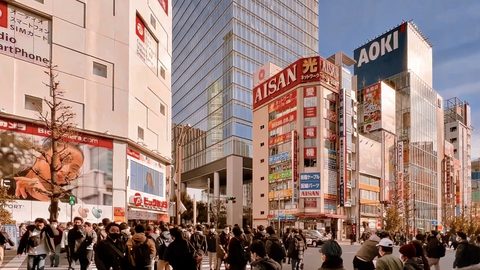 Akihabara
 Tokyo guide: electronics, anime, and arcades stacked floor by floor, from Radio Kaikan to the maid cafe touts.
Akihabara
Akihabara Tokyo guide: electronics, anime, and arcades stacked floor by floor, from Radio Kaikan to the maid cafe touts.
-
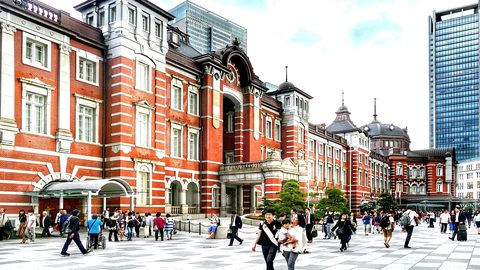 Marunouchi
Staying in Marunouchi puts you steps from Tokyo Station's Shinkansen platforms and Narita Express, trading nightlife buzz for unmatched rail connectivity and wide, quiet weekend boulevards.
Marunouchi
Staying in Marunouchi puts you steps from Tokyo Station's Shinkansen platforms and Narita Express, trading nightlife buzz for unmatched rail connectivity and wide, quiet weekend boulevards.
-
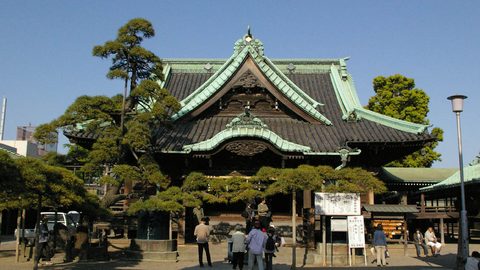 Shibamata
 preserves a 1950s Tokyo on its temple approach street, forever tied to the Tora-san film series and best visited for unagi and old-school snacks.
Shibamata
Shibamata preserves a 1950s Tokyo on its temple approach street, forever tied to the Tora-san film series and best visited for unagi and old-school snacks.