Reading the Architecture of Omotesando, from Zelkova Avenue to the Quiet Blocks
Omotesando is a gallery of flagship architecture by Pritzker winners, best read on foot from the zelkova trees to the Aoyama backstreets.
- Flag
-

- ISO code
- JP
- Currency
- JPY
- Timezone
- Asia/Tokyo
The Omotesando Walk is 1.1 Kilometres of Architecture Thesis
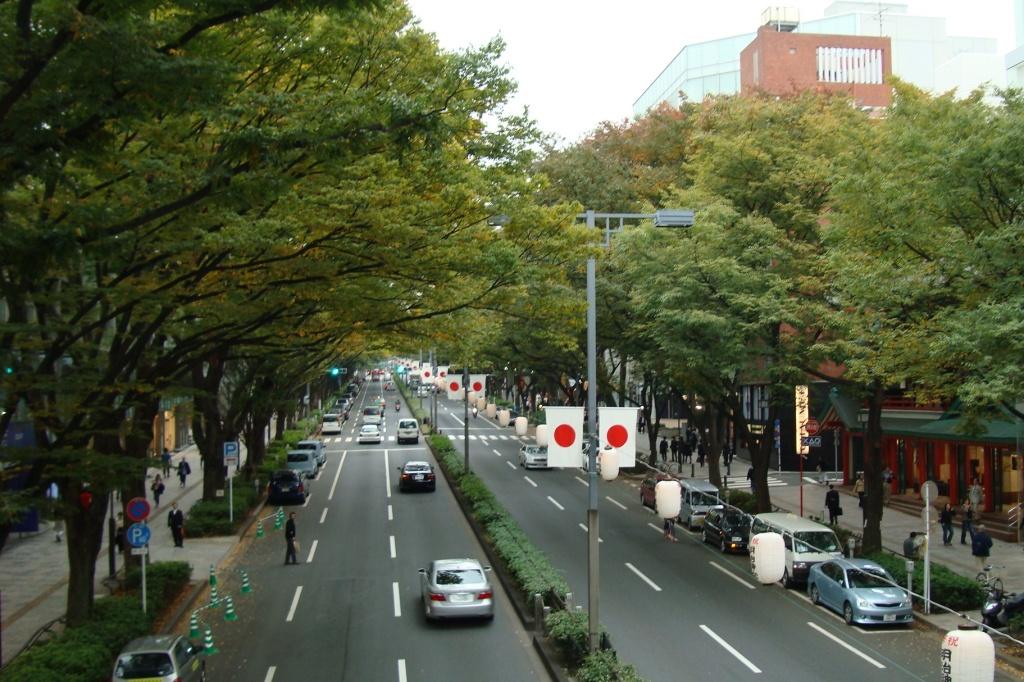
Pritzker Prize winners flank both sides of a single avenue. Herzog & de Meuron, SANAA, Toyo Ito, Jun Aoki, Tadao Ando. You can see all their buildings in about ninety minutes without crossing the same street twice. That is the point. Treat Omotesando-dori as a linear exhibition hall where the glass, concrete and lattice are the exhibits. The shops inside are not the reason you are here.
Start at the Harajuku end, walk uphill toward Aoyama-dori, then disappear into the backstreets before the retail crowd notices you have left the main drag.

Start at the Top: MVRDV and Herzog & De Meuron at the Harajuku End
Exit Omotesando Station by the B1 or B2 exit and you land at the east boundary of the avenue, the Meiji-dori crossing. Your first stop is at your left shoulder: Gyre, MVRDV's rotating shop box finished in 2007. A stack of shifted glass volumes that looks like someone spun each floor a few degrees off true. Across the street stands Prada Aoyama, Herzog & de Meuron's five-storey crystal rhomboid grid, completed 2003. Stand on the corner and watch the glass panels catch the light at different angles. The street is quiet before 10:00. Arrive then.
Why the Prada Building Works Better From the Outside
The rhomboid grid does not behave like a normal curtain wall. It buckles and bulges, compressing the interior into a sequence of diamond-shaped bays. You can see it from the street because the lowest two floors are transparent enough to read the structure. Go inside only if you want to confirm that the retail rack is secondary to the architecture. On the opposite side of the avenue, Tod's Omotesando, Toyo Ito's 2004 concrete-and-glass tree-branch lattice, repeats the logic in reverse: the facade is the structure, not a skin wrapped over it. The branches form a rigid frame that carries the building. No columns inside. That is the kind of fact that makes this walk worth doing.
The Middle Section: SANAA, Jun Aoki and Tadao Ando’s Hills
Walk west toward the Aoyama-dori crossing. On your left at 5-9-11 Jingumae, Dior Omotesando, SANAA's 2003 white acrylic box. The seven storeys look like a single folded sheet of paper with horizontal slit windows cut by a razor blade. SANAA's trick is that the lightness of the skin disguises the engineering: the acrylic panels are backlit at dusk, turning the building into a lantern. Two blocks further, Jun Aoki's Louis Vuitton Omotesando, completed 2002, wraps the corner in a facade of stacked aluminium frames inspired by traditional Japanese luggage trunks. The building was designed to be read from the diagonal, not head-on. Cross the street to get the angled view.
Omotesando Hills: Tadao Ando's Concrete Canyon
At 4-12-10 Jingumae, the avenue widens into Tadao Ando's Omotesando Hills, completed 2006 on the site of the Dojunkai Aoyama Apartments. The building runs 250 metres along the street, six floors above ground and six below, housing about 100 shops and restaurants. Ando buried most of the retail underground so the pedestrian experience at street level feels like a covered walkway, not a mall. The exposed concrete walls and a sunken central ramp mimic a dry riverbed. Critics call it a shopping centre dressed as architecture. They are right. But the ramp descent is worth doing once because you see how Ando resolved the 10-metre elevation change between the two ends of the site. Exit at the Aoyama-dori side and you are at the west boundary of the axis.
Into the Backstreets: Kotto-Dori, Aoyama Crematory Street and Independent Boutiques
Turn south onto Aoyama-dori and immediate left onto Kotto-dori, the 700-metre antique and gallery street running through Minami-Aoyama 5-chome and 6-chome. The galleries here are not the kind you wander into unannounced. Taro Nasu Gallery, Tomio Koyama Gallery, ShugoArts and Ota Fine Arts require timed appointments or a doorbell press. Book one visit in advance, ideally ShugoArts. The exhibition space is a converted warehouse with a raw concrete double-height ceiling that changes the scale conversation from the avenue. The rest of Kotto-dori is a hit-and-miss window-shopping street where the antique dealers keep irregular hours.
Where the Independent Boutiques Hide
Move to Aoyama Crematory Street, the road running south of Aoyama Cemetery. This is where the independent boutiques hide. Issey Miyake at 3-18-11 Minami-Aoyama, Yohji Yamamoto at 5-3-6 Minami-Aoyama, Comme des Garçons at 5-2-1 Minami-Aoyama in the Future Systems building from 1998. The architecture here drops from Pritzker scale to single-storey residential conversions. The point is the contrast: the same design sensibility applied to a house rather than a tower.
Ending at Nezu Museum as a Palate Cleanser
Walk 800 metres south from Omotesando Station to Kengo Kuma's Nezu Museum, completed 2009. The approach is a bamboo-walled path over gravel and stone paving that filters out the city. The museum holds 7,400 pre-modern Japanese and East Asian works. The real draw is the 17,000-square-metre garden with four tea houses. Sit on the veranda for ten minutes. Do not talk. The garden is the architectural palate cleanser after an hour of glass, concrete and retail ambition. Kuma designed the building to recede behind the bamboo so the garden dominates. It works.
.jpg)
An Honest Caveat About This Walk
The avenue is a luxury corridor. Rents here rank among the top three in Tokyo. The architecture serves the retail. You are walking a street designed to sell expensive objects, and the facades are marketing as much as art. The Prada rhomboid, the Dior lantern, the Tod's tree lattice were commissioned to sell handbags. Acknowledge that and the walk becomes more interesting, not less. The backstreets are where the motives shift to pure design. The Nezu Museum garden is where the motives disappear entirely.
Do not skip the shopping street to reach the garden. The tension between the two is what makes Omotesando different from Ginza, where the luxury is conventional, or Harajuku, where the energy is youth culture. Here the architecture is the attraction and the shops are the tax you pay to keep the building standing. Accept that trade-off before you start.
Other areas in Tokyo
- Akihabara
- Asakusa
- Ebisu
- Futako-tamagawa
- Ginza
- Harajuku
- Ikebukuro
- Jimbocho
- Jiyugaoka
- Kagurazaka
- Kichijoji
- Kiyosumi-Shirakawa
- Koenji
- Kuramae
- Marunouchi
- Nakameguro
- Nakano
- Nihonbashi
- Ningyocho
- Odaiba
- Roppongi
- Ryogoku
- Sangenjaya
- Shibamata
- Shibuya
- Shimokitazawa
- Shin-Okubo
- Shinagawa
- Shinjuku
- Sugamo
- Takadanobaba
- Todoroki
- Tsukiji
- Tsukishima
- Ueno
- Yanaka
- Yurakucho and Shinbashi
The Four Questions Most People Ask Before This Walk
How long does the architecture walk take?
Ninety minutes if you only walk the avenue. Three hours if you include the backstreets, stop for coffee and enter the Nezu Museum garden. Six hours if you add gallery appointments.
Should I visit on a Sunday?
No. Closures are frequent for independent galleries and boutiques on Sunday and Monday. Tuesday through Saturday is when everything open. Aim for a weekday morning when the street is empty.
Is Omotesando Hills worth going inside?
Only for Ando's interior ramp. The shops are standard luxury mall tenants. Skip on a tight schedule. The exterior walkway at street level gives you the architectural experience without the crowds.
Where should I stop for lunch on the route?
Step off the avenue onto Cat Street or Kotto-dori for a light meal. Green Aoyama does a solid Japanese set lunch. Or walk five minutes to Butagami in Nishiazabu for tonkatsu in a converted house, but reserve a week ahead.
Read next
-
 Tokyo Hotels by Type and Budget from Capsules to Luxury
Tokyo hotels organised by type and price band, from efficient capsule pods to full-service luxury towers, to help you book the right room.
Tokyo Hotels by Type and Budget from Capsules to Luxury
Tokyo hotels organised by type and price band, from efficient capsule pods to full-service luxury towers, to help you book the right room.
-
 Where to Stay in Tokyo by District and Travel Style
A comparison of Tokyo's major districts to help you choose the right base for your travel style, whether you want calm or chaos.
Where to Stay in Tokyo by District and Travel Style
A comparison of Tokyo's major districts to help you choose the right base for your travel style, whether you want calm or chaos.
-
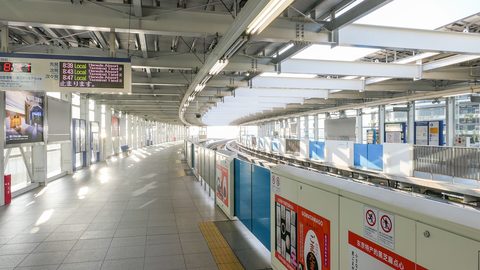 Narita or Haneda for Tokyo and What That Airport Choice Costs You
Narita or Haneda for Tokyo: compare door-to-district time, transfer cost, and what the wrong airport choice eats from your trip.
Narita or Haneda for Tokyo and What That Airport Choice Costs You
Narita or Haneda for Tokyo: compare door-to-district time, transfer cost, and what the wrong airport choice eats from your trip.
-
 Things to Do in Tokyo That Are Worth Your Limited Days
A curated list of Tokyo's highest-impact sights and experiences, from immersive art to quiet backstreets, to help you prioritise your days.
Things to Do in Tokyo That Are Worth Your Limited Days
A curated list of Tokyo's highest-impact sights and experiences, from immersive art to quiet backstreets, to help you prioritise your days.
-
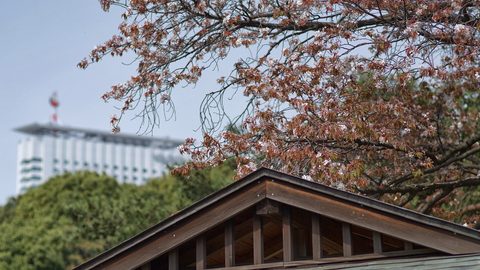 Best Time to Visit Tokyo Month by Month Tradeoffs
A month-by-month guide to visiting Tokyo, laying out the trade-off between weather, crowds, price, and what's actually open.
Best Time to Visit Tokyo Month by Month Tradeoffs
A month-by-month guide to visiting Tokyo, laying out the trade-off between weather, crowds, price, and what's actually open.
-
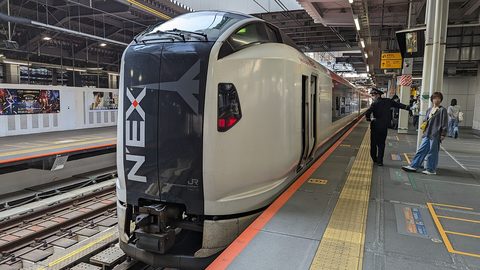 Getting Around Tokyo by Train Airport Transfers and IC Cards
A practical guide to Tokyo's rail network, covering airport transfers, IC cards, and how to avoid the station navigation mistakes that eat your day.
Getting Around Tokyo by Train Airport Transfers and IC Cards
A practical guide to Tokyo's rail network, covering airport transfers, IC cards, and how to avoid the station navigation mistakes that eat your day.
-
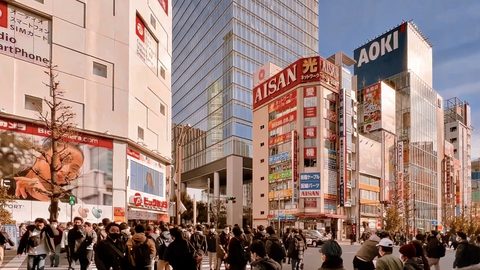 Akihabara
 Tokyo guide: electronics, anime, and arcades stacked floor by floor, from Radio Kaikan to the maid cafe touts.
Akihabara
Akihabara Tokyo guide: electronics, anime, and arcades stacked floor by floor, from Radio Kaikan to the maid cafe touts.
-
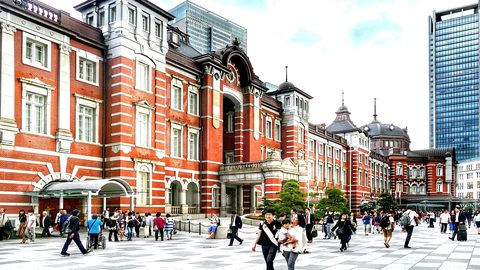 Marunouchi
Staying in Marunouchi puts you steps from Tokyo Station's Shinkansen platforms and Narita Express, trading nightlife buzz for unmatched rail connectivity and wide, quiet weekend boulevards.
Marunouchi
Staying in Marunouchi puts you steps from Tokyo Station's Shinkansen platforms and Narita Express, trading nightlife buzz for unmatched rail connectivity and wide, quiet weekend boulevards.
-
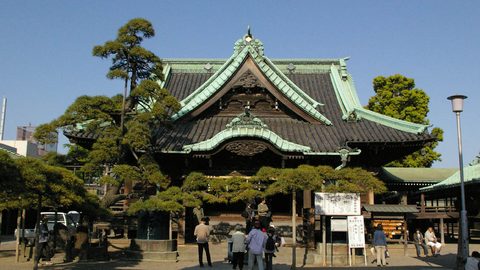 Shibamata
 preserves a 1950s Tokyo on its temple approach street, forever tied to the Tora-san film series and best visited for unagi and old-school snacks.
Shibamata
Shibamata preserves a 1950s Tokyo on its temple approach street, forever tied to the Tora-san film series and best visited for unagi and old-school snacks.